
Terumi Alana Murao
Terumi Alana Murao hasn't bought new clothes in eleven years.
For the stylist, model, and athlete, that refusal isn't deprivation, it's the most generative constraint she's ever set for herself. With creative director Ciaraleaf Meaney, Terumi talks about the rag box of her childhood, the difference between vintage as obsession and old things as luxury, and why personal style is a language you speak most fluently when you've agreed to use fewer words.
Photography FERNANDO FRIERE
Creative Direction & Interview CIARALEAF MEANEY of TOMORROW COLLECTIVE
Talent & Styling TERUMI MURAO
Film Director FLAVIO MELGAREJO
Hair & Makeup REBECCA ARNOLD
Post-Production BITELAND
Editor GUILHERME SOARES
—
All clothing sourced from THEREALREAL
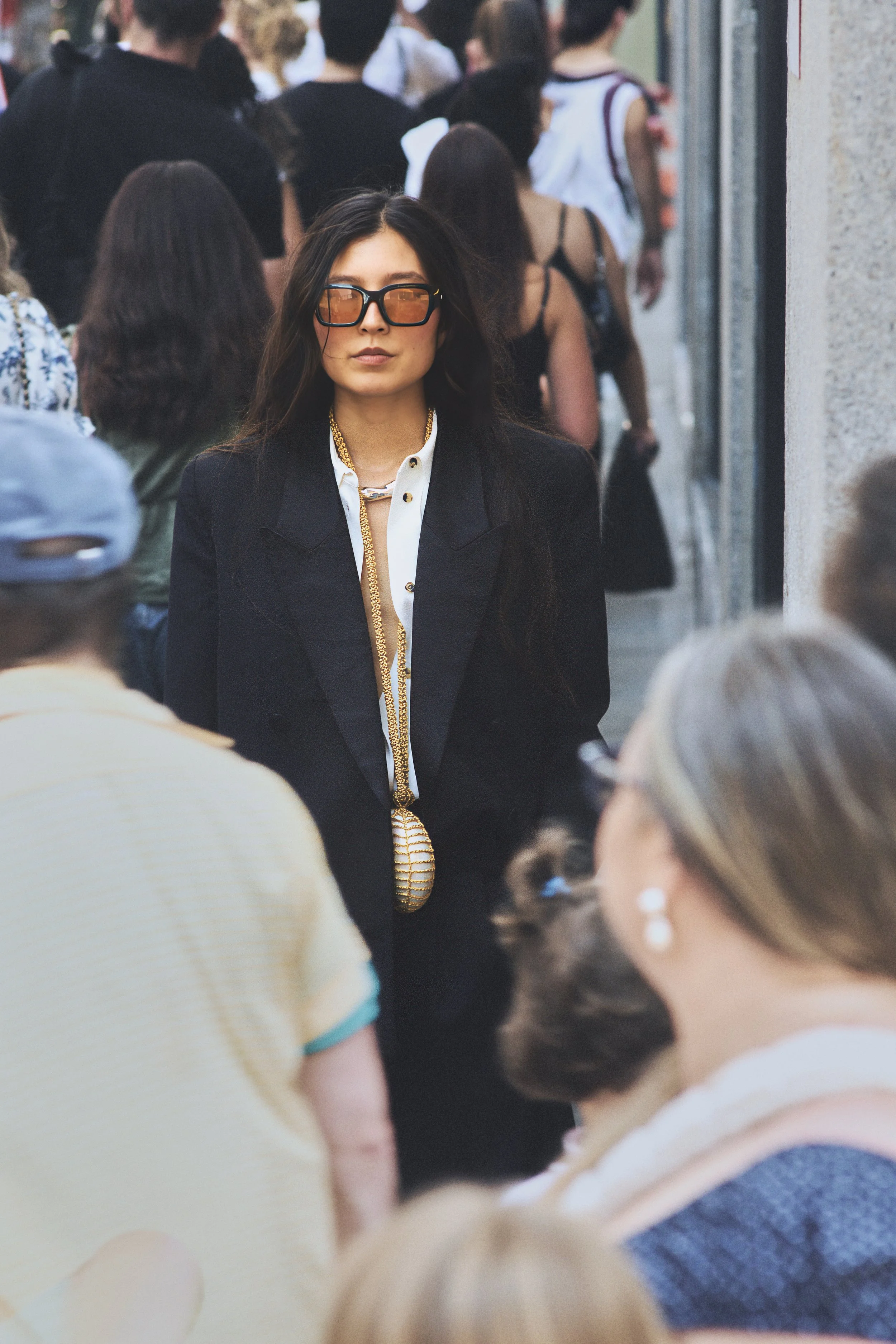
blazer Anine Bing, shirt Khaite, and pants Nili Lotan from The RealReal. necklaces Renata Q and Agmes
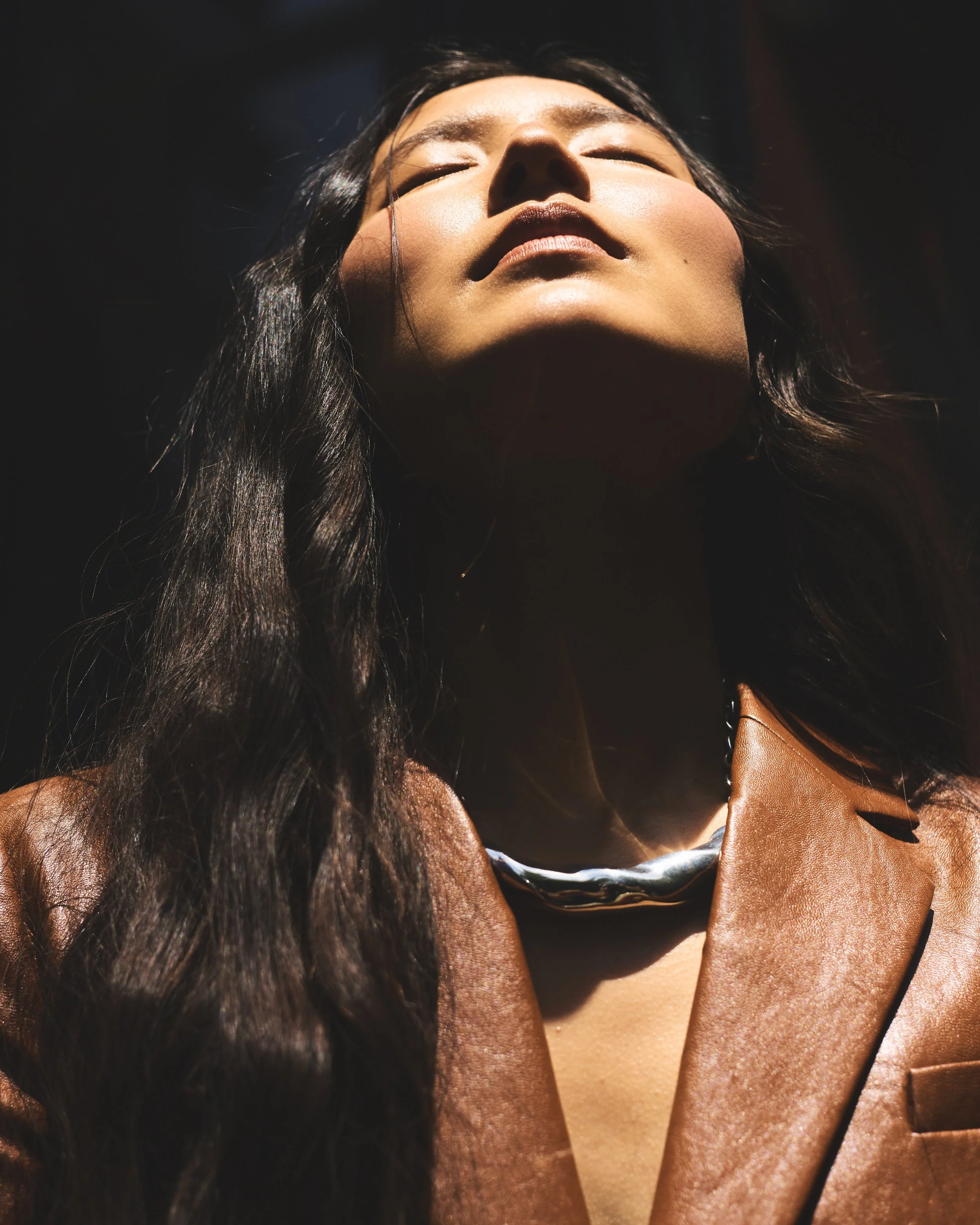
suit A.L.C. from The RealReal, necklace Agmes
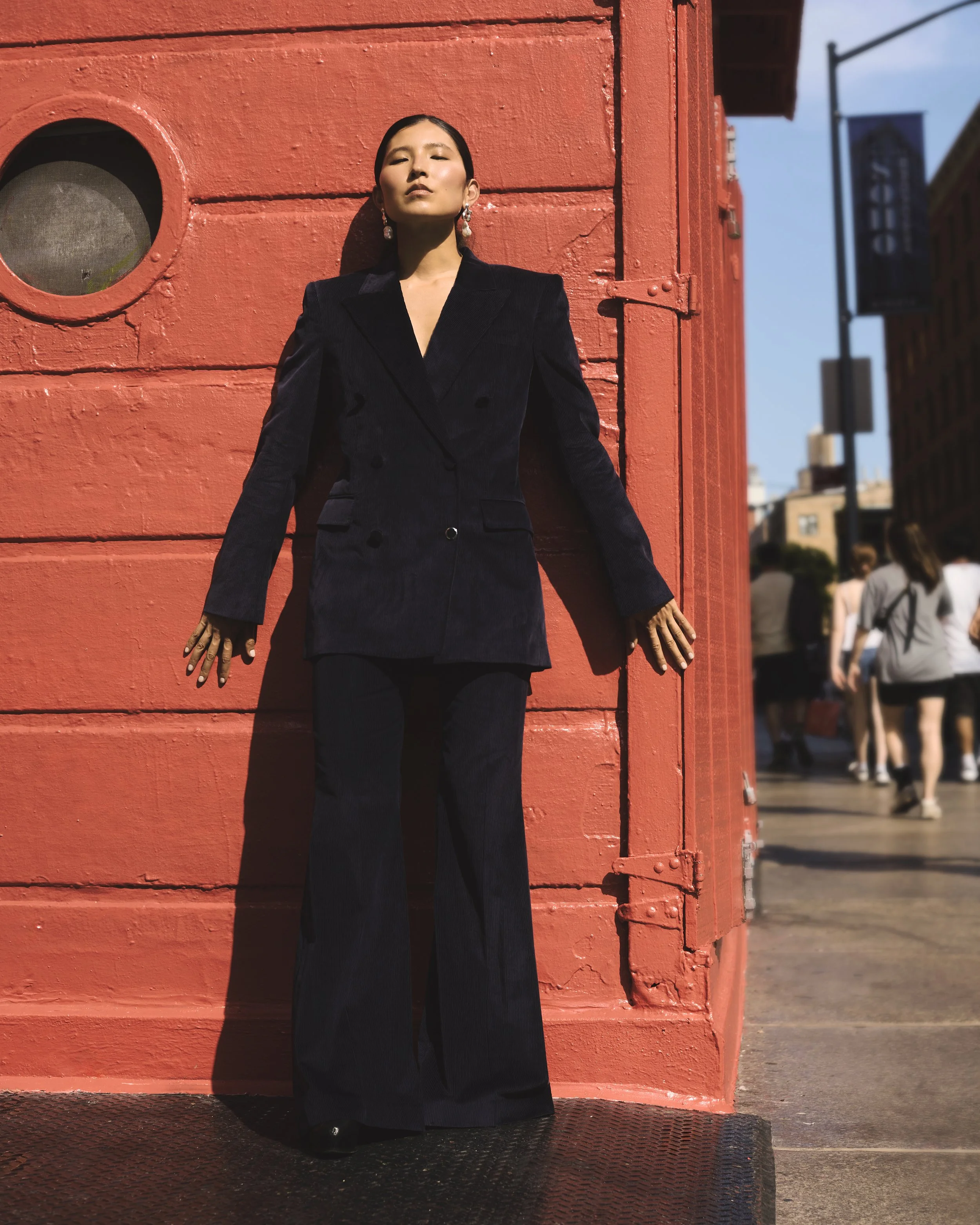
suit Gabriela Hearst from The RealReal, earrings Agmes
Where do you think your relationship with clothing and consumption comes from Were there experiences growing up that shaped the way you think about what we own, keep, and value?
As far as I can remember, I have always been more interested in finding beauty and meaning in old things than in new things.
I distinctly remember my childhood fascination with the “zoukin” (雑巾) box. The “zoukin” or “cleaning rag” box sat above the washing machine, where my mom would relegate all of the clothes we’d outgrown or damaged. They were off-limits, too small or ripped to be worn, and yet while I ignored them when still in my drawer, I became obsessed with them once they’d been labeled as rags.
Something about being discarded, or no longer useful or fit for their original purpose, piqued my curiosity. Mom was frustrated when she’d discover that I’d climbed on top of the machine and pulled things out of the top shelf and reclaimed them, but it was likely her own practice of creative repurposing in her artwork that inspired me to do the same.
What originally influenced your decision to stop buying new clothes, and what has made you sustain that commitment over the past decade?
I watched “The True Cost,” a documentary by Andrew Morgan that exposed the environmental and human costs of fast fashion. While I appreciated the democratization and access that fast fashion provided, I was inspired to engage in a lower-impact way. Cold-turkey overnight, I decided I’d never buy any new clothing again. Since 2015, everything I purchase to wear is secondhand. I am also fortunate to work on many photo sets as a stylist, and do receive a lot of samples after the shoots.
What started as an environmental stand has become a design constraint for my everyday dressing. It is a daily catalyst for resourcefulness and creativity.
Over this time of consuming less new fashion, how do you feel your style developed? And has living in New York (one of the world's great consumer capitals) influenced the way you express your personal style?
New York City is home to vibrant, dynamic, diverse, and expressive people. In order to make it in NYC, you have to be as “you” as you can be, because the competition to be anything else is too tough.
Abstaining from shopping new encourages me to define and express my style from the inside out, versus outside (trends, new collections, brands) in. Not to say that I’m not influenced by the art and fashion in the world, just that the daily prompt for what I wear is more spiritual and most often starts within.
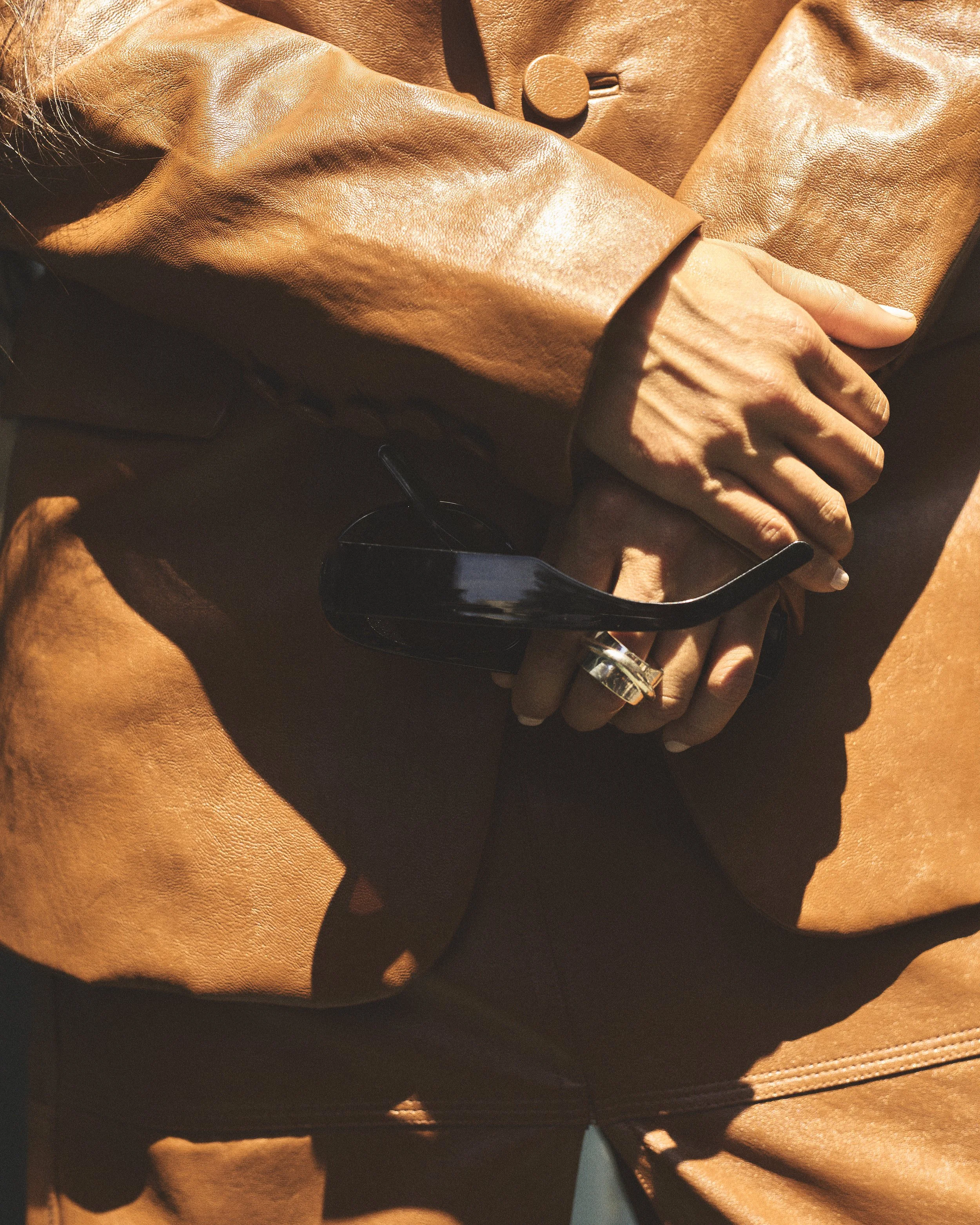
suit A.L.C. from The RealReal, ring Agmes
“Style doesn’t really have to do with the clothes you’re wearing. Styling is an underlying entity beneath the clothing that gets expressed through clothing, its about how you wear it.”
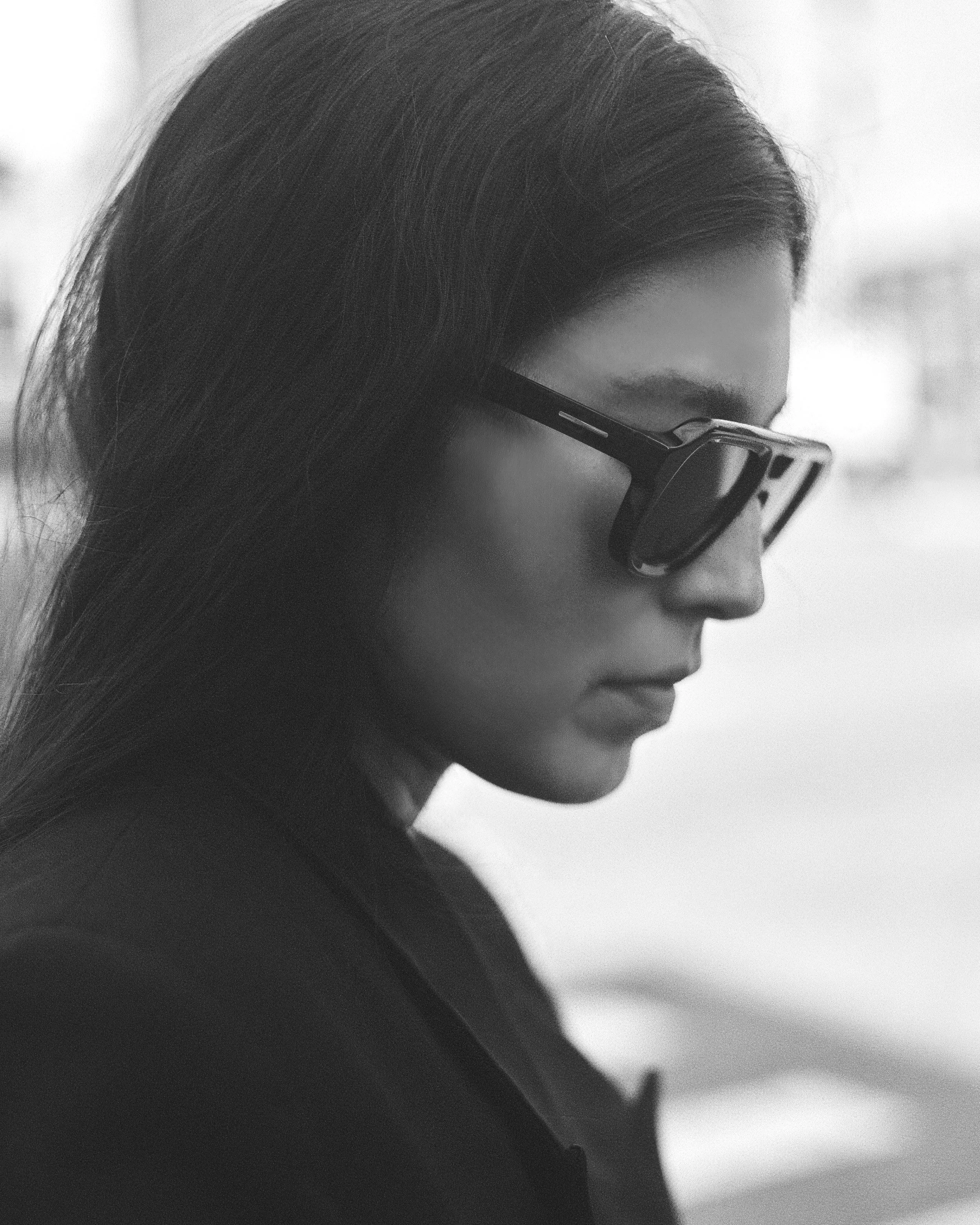
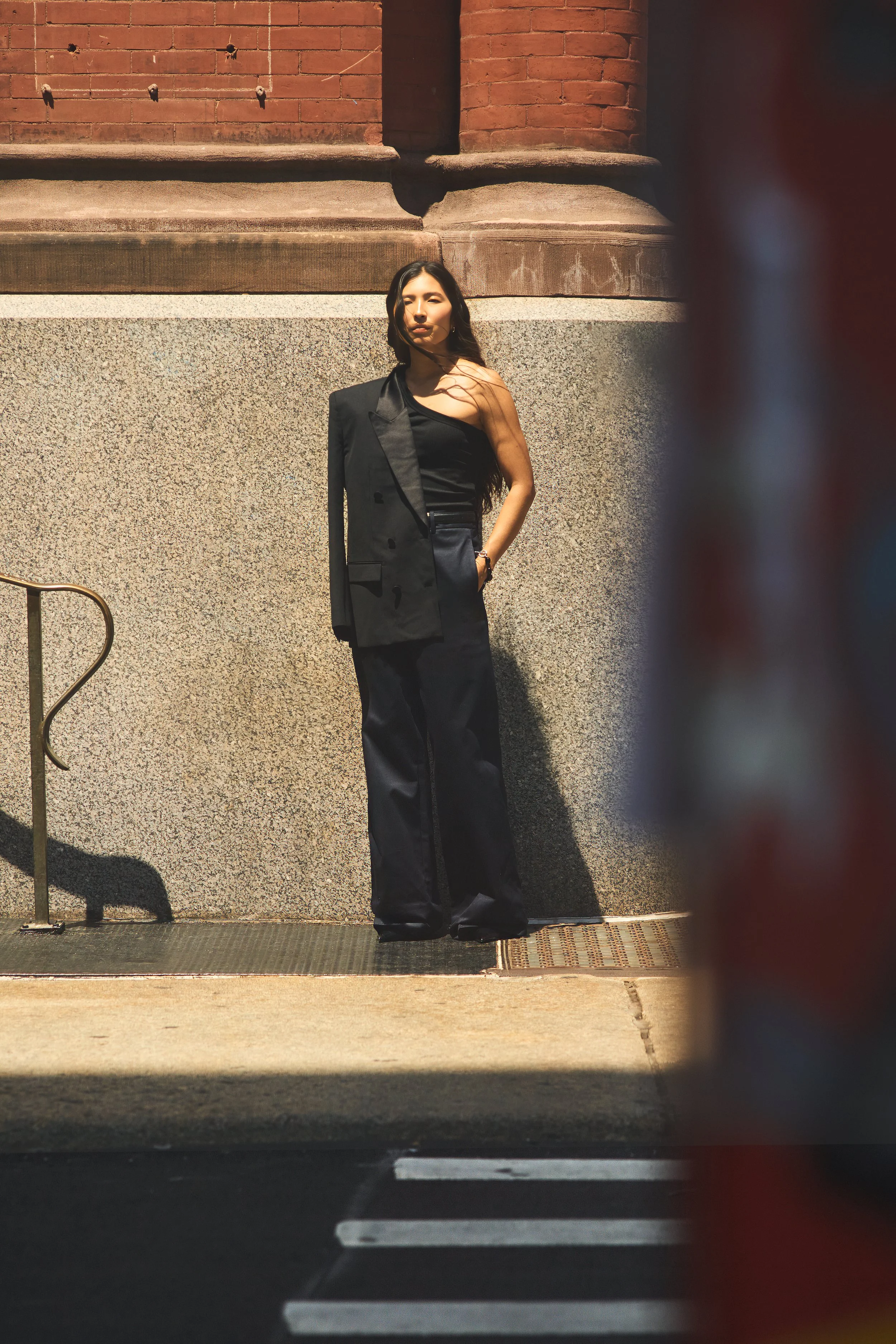
blazer & top Anine Bing, and pants Nili Lotan from The RealReal
How has your philosophy on personal style changed since you stopped buying new clothes?
Personal style is perhaps the most powerful language that we have to communicate with each other–it is certainly the one I speak most fluently. When I stopped buying new clothes, it was akin to limiting my vocabulary. Instead of relying on endless word choice, I learned to distill what I wanted to say to its essence and creatively combine the available words to convey a message. It’s learning to say more with less.
When Ciaraleaf of Tomorrow Collective approached me with the tailored suiting concept, it fit perfectly with my recent interest in dressing simpler, but with clear structure and defined lines. My style has gone through many eras, but generally, I’d say it’s shifted from eclectic and loud, to a more contemplative and understated sophistication–just as inspired by what is absent / unspoken versus what is seen and obvious.
What do you feel makes a piece of clothing feel valuable? If newness is not a guiding principle, what are the elements that make a piece of clothing luxurious and valuable to you?
Thoughtful design, good craftsmanship, and fit. But context is everything. The clothes that I outgrew weren’t valuable to me when in my closet, but became desirable once they were in the “zoukin” box. That you could regenerate beauty out of something undesirable really moved me.
The shirt that was too short could be cut into a bolero and worn as a decorative layer. It is not the piece of clothing itself that is luxurious and valuable, it’s the ability to iterate on its meaning and continually redefine its function and form that is luxurious and valuable.
When finding secondhand or pre-owned piece, is a garment’s history compelling Can the people who have worn it, the way it has been lived in, how it has been made or designed feel like elements of luxury to you?
Absolutely. My most treasured pieces are from my grandparents or parents, or other people I admire. I used to work at a cool design firm called IDEO, and for my leaving-party (when I decided to move to NYC to become a stylist), each of my team members gave me a piece from their own wardrobes, with a note explaining why. It doesn’t get more touching than that.
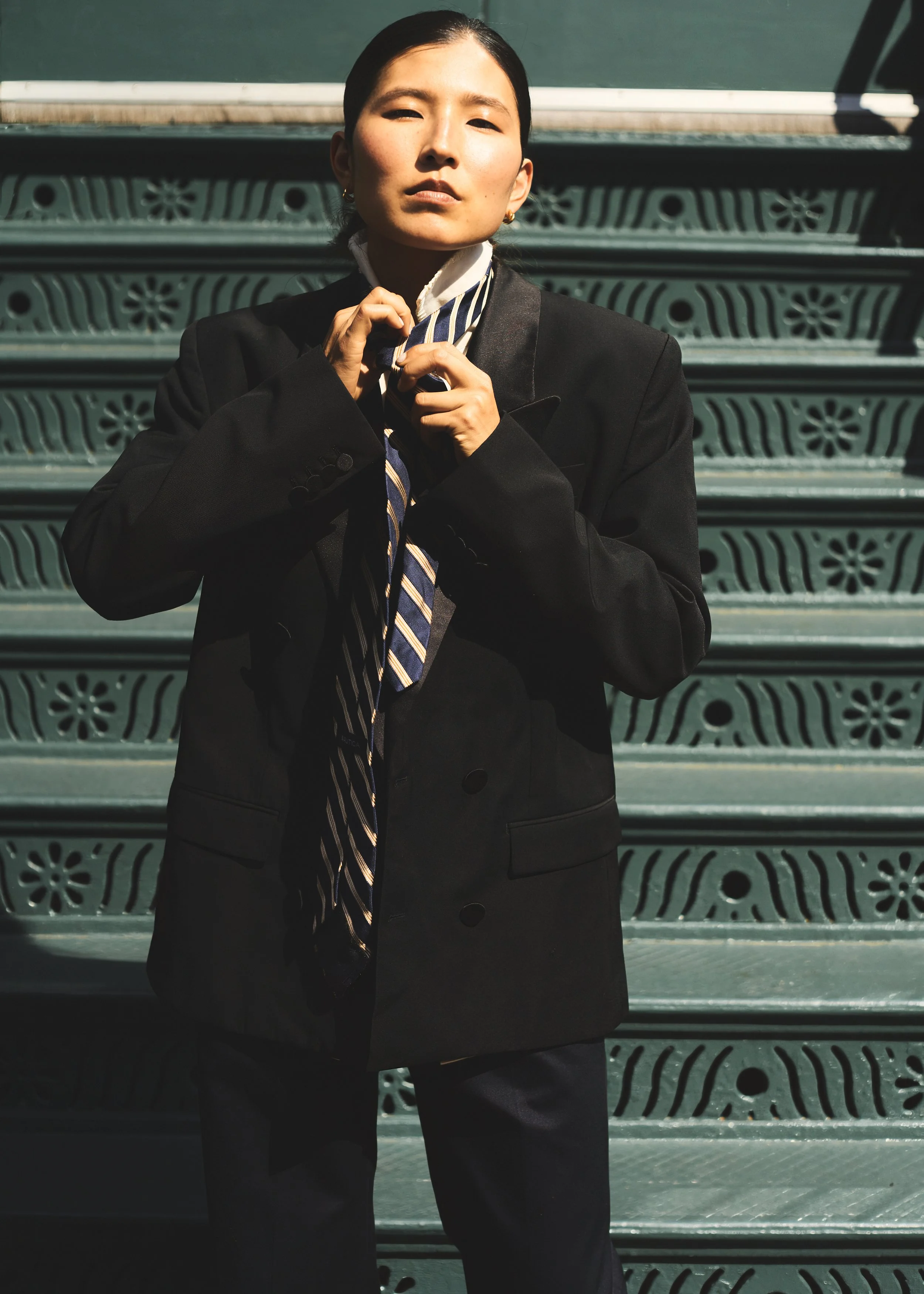
blazer Anine Bing, shirt Gabriela Hearst, and pants Nili Lotan from The RealReal with a vintage tie
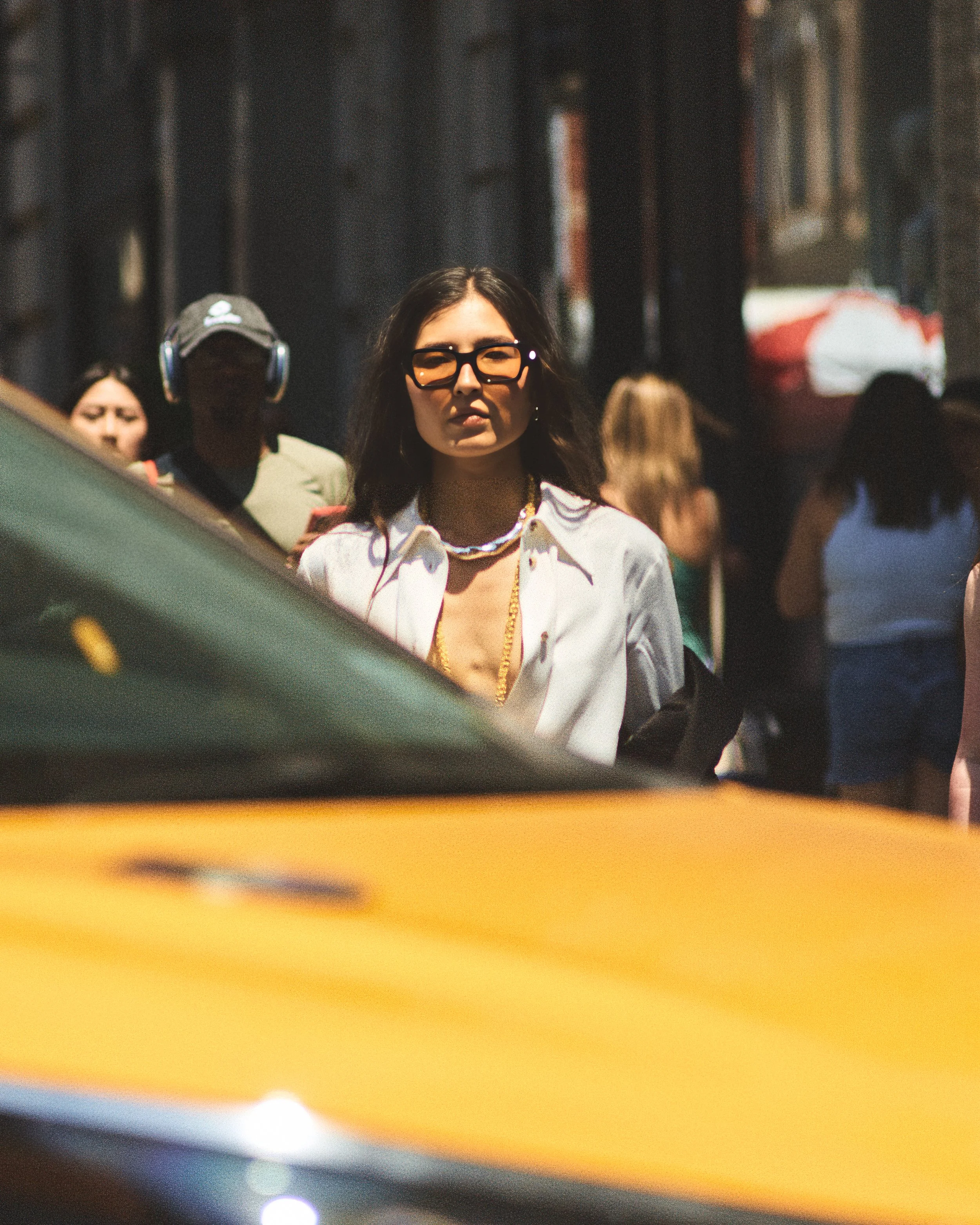
trench & dress Another Tomorrow from The RealReal. necklace Renata Q
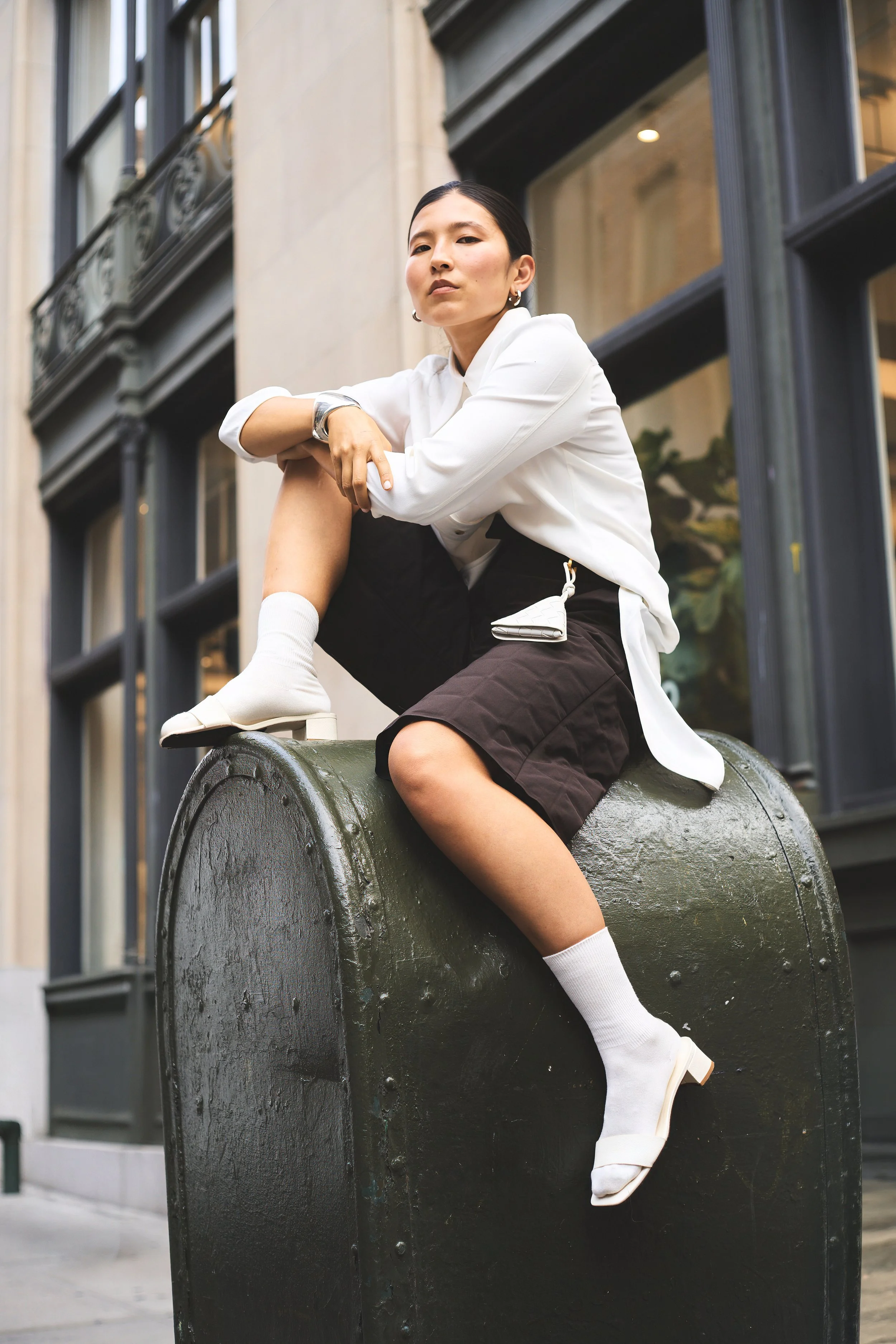
shirt Khaite, shorts & purse Bottega Veneta, and shoes Reformation from The RealReal
What does ownership mean to you when it comes to clothing? Do you think differently about a piece once you’ve lived with it for a long time, or when you eventually pass it on?
Shopping secondhand for 11 years sort of blurs the idea of ownership. It was someone’s, now it’s mine, then it’s someone else’s–ownership is both collective and temporary. If someone really likes something of mine, or if I misplace or forget a piece in a hotel during my travels, I try to pass it on or let it go and become someone else’s.
Fashion is increasingly questioning its obsession with newness. Do you think the future of luxury might lie less in having something new and more in having something with quality, character, history, and the possibility of another life?
We were obsessed with new, then we became obsessed with old and “vintage,” and then we became obsessed with creating new things that looked like old things. Luxury to me is spiritual–it has to have metaphysical value.
Does something provide peace, beauty, and meaning beyond understanding? Does it encourage me to live with more love, kindness, and creativity? Pieces that are thoughtfully designed and made, that have an interesting story, and whose value can be continually redefined are luxury to me.
After 11 years of consuming less fashion, what has it taught you about desire and happiness — and about the idea that we always need something new?
Stepping off the treadmill of desire feels good. When we keep chasing the next worldly object that is forever just ahead of our grasp, it’s easy to miss the good that’s sitting right in front of us.
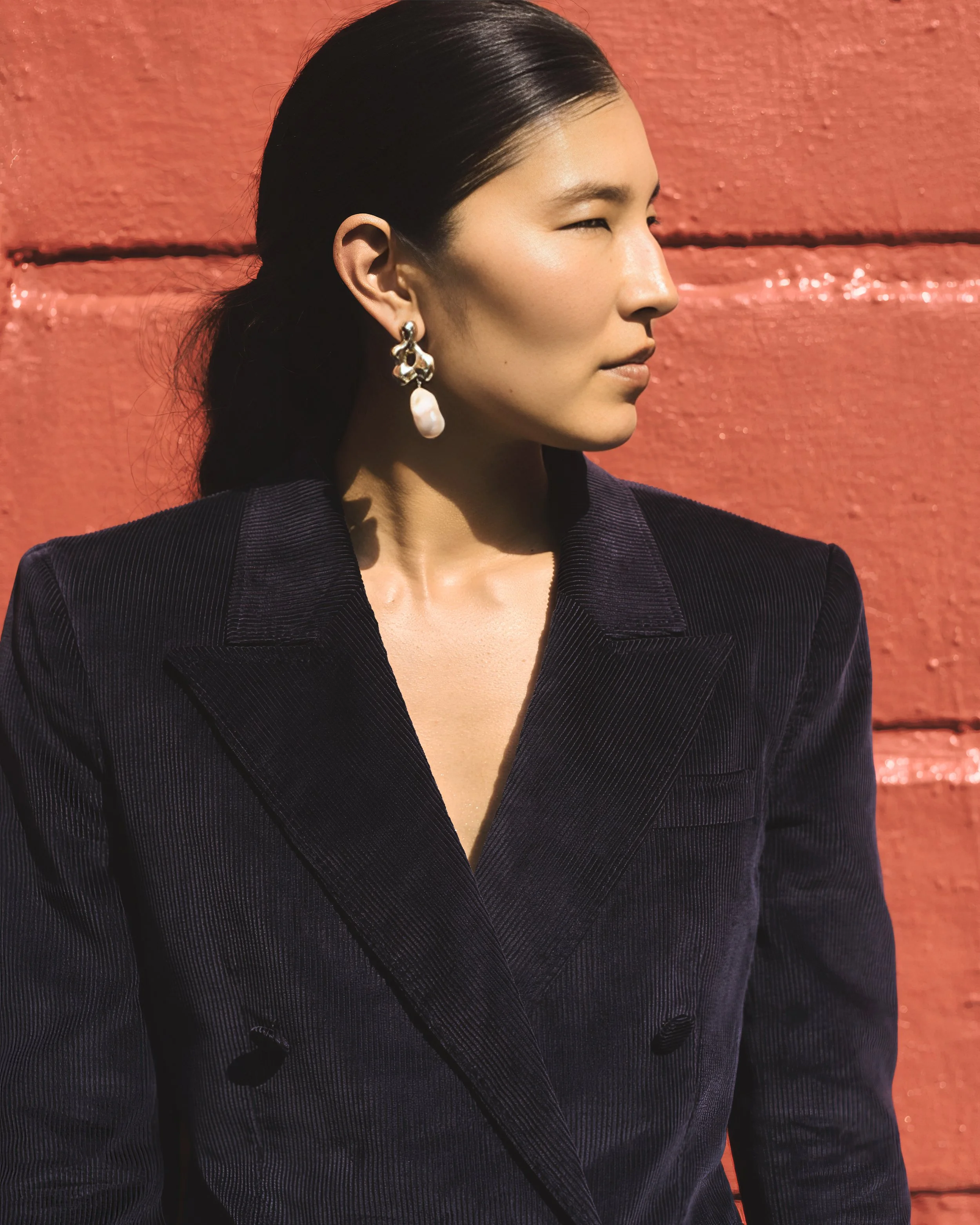
suit Gabriela Hearst from The RealReal, earrings Agmes
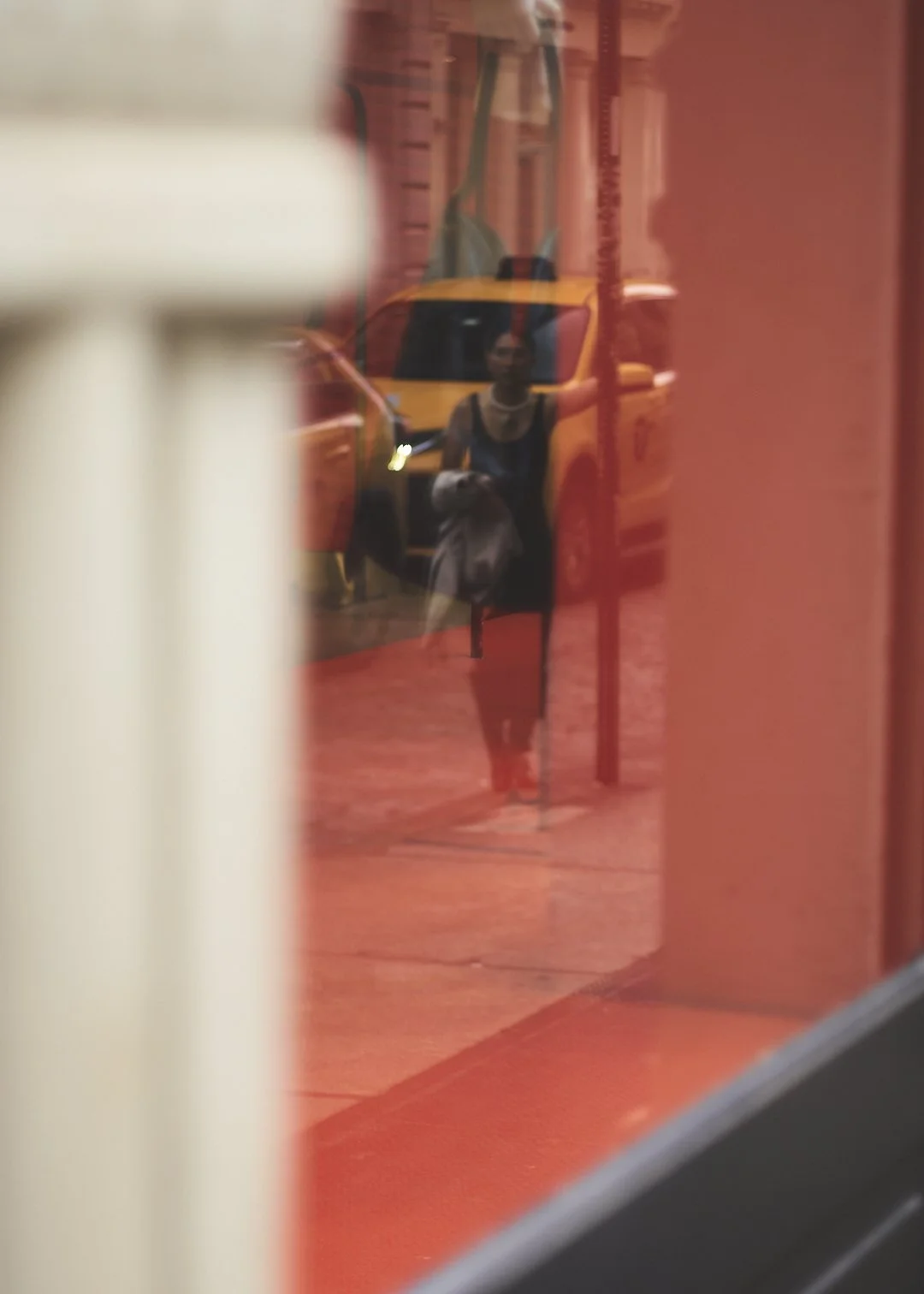
trench & dress Another Tomorrow from The RealReal. necklace Renata Q, bracelet Agmes