
aiayu x Corali
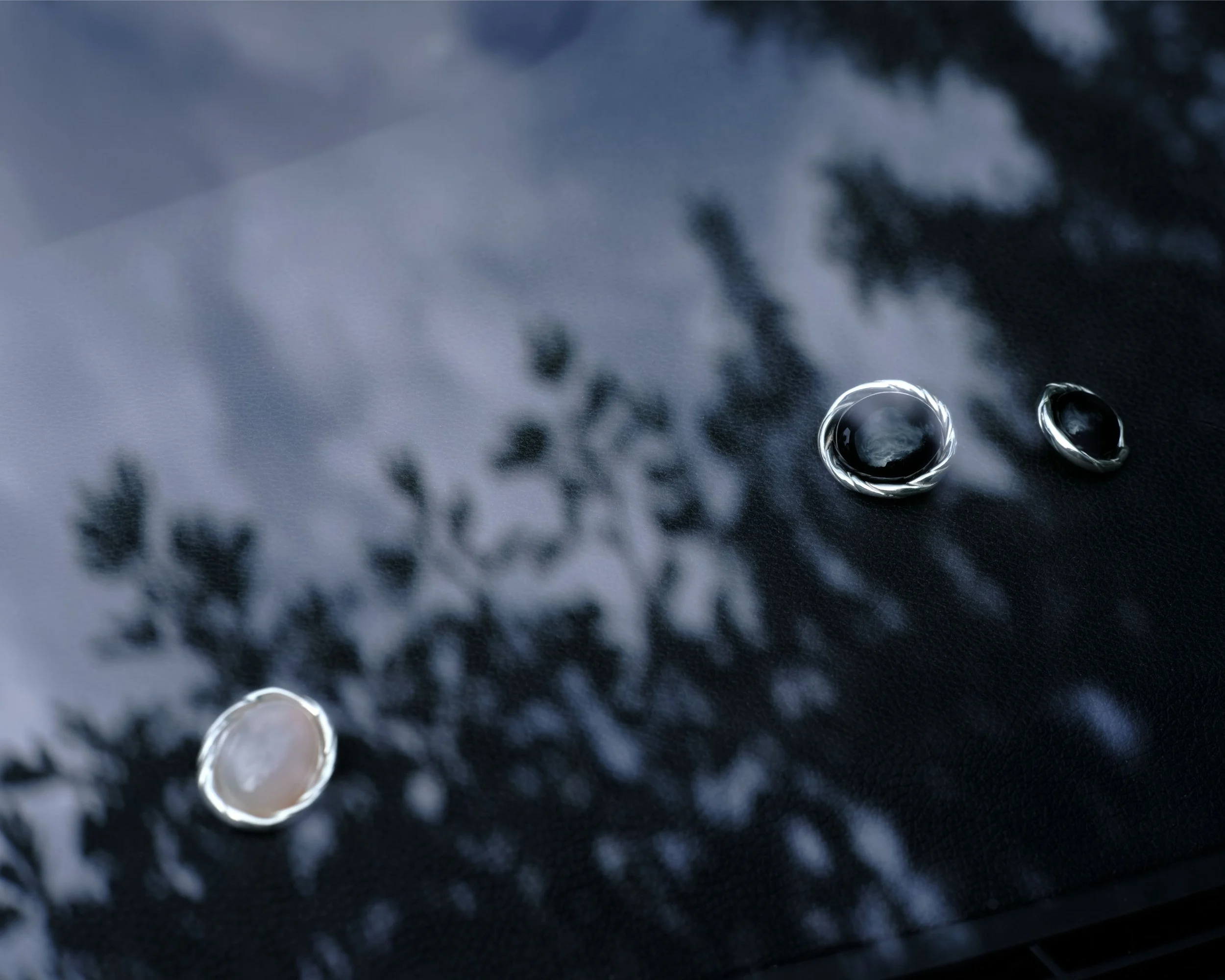
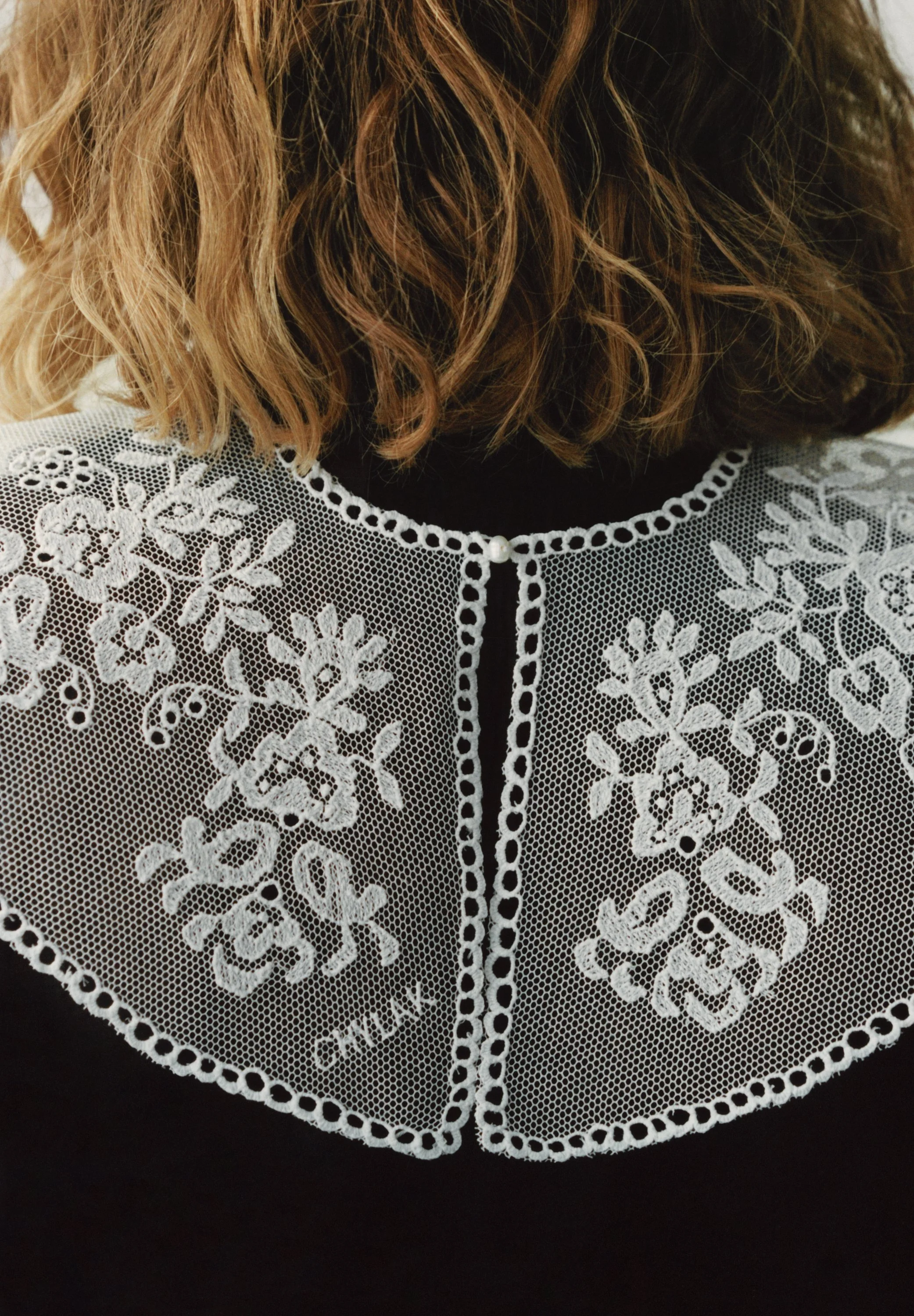
aiayu and Corali reimagine the humble button as a "tiny sculpture"—a hybrid of jewelry and brooch crafted from recycled silver and natural stones.
Born from a shared reverence for time and craft, this partnership unites aiayu’s slow fashion ethos with Caroline Vogel’s architectural jewelry design. These pieces are designed to be worn, removed, and recombined, turning the act of dressing into a ritual of care and renewal.
We speak with Maria Høgh Heilmann and Caroline Vogel about the origins of their friendship, the meditative process of creation, and how a single button has transformed into a personal narrative of longevity.
Photography SARAH STENFELDT at BAD LAND
Styling & Model CLAIRE O’KEEFE
Makeup CARLA ABRAMS
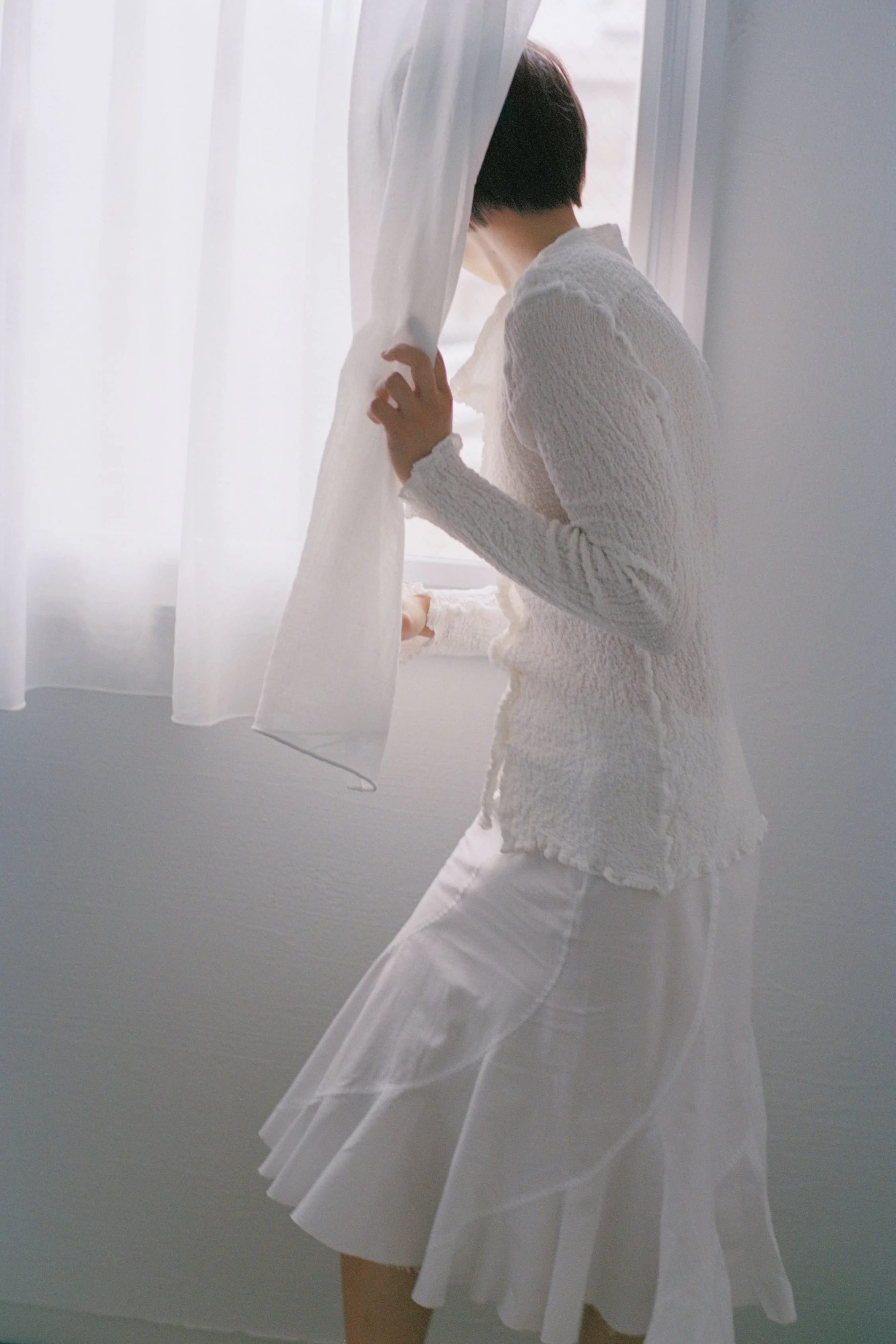
All clothing by aiayu
Interview NICOLE GAVRILLES
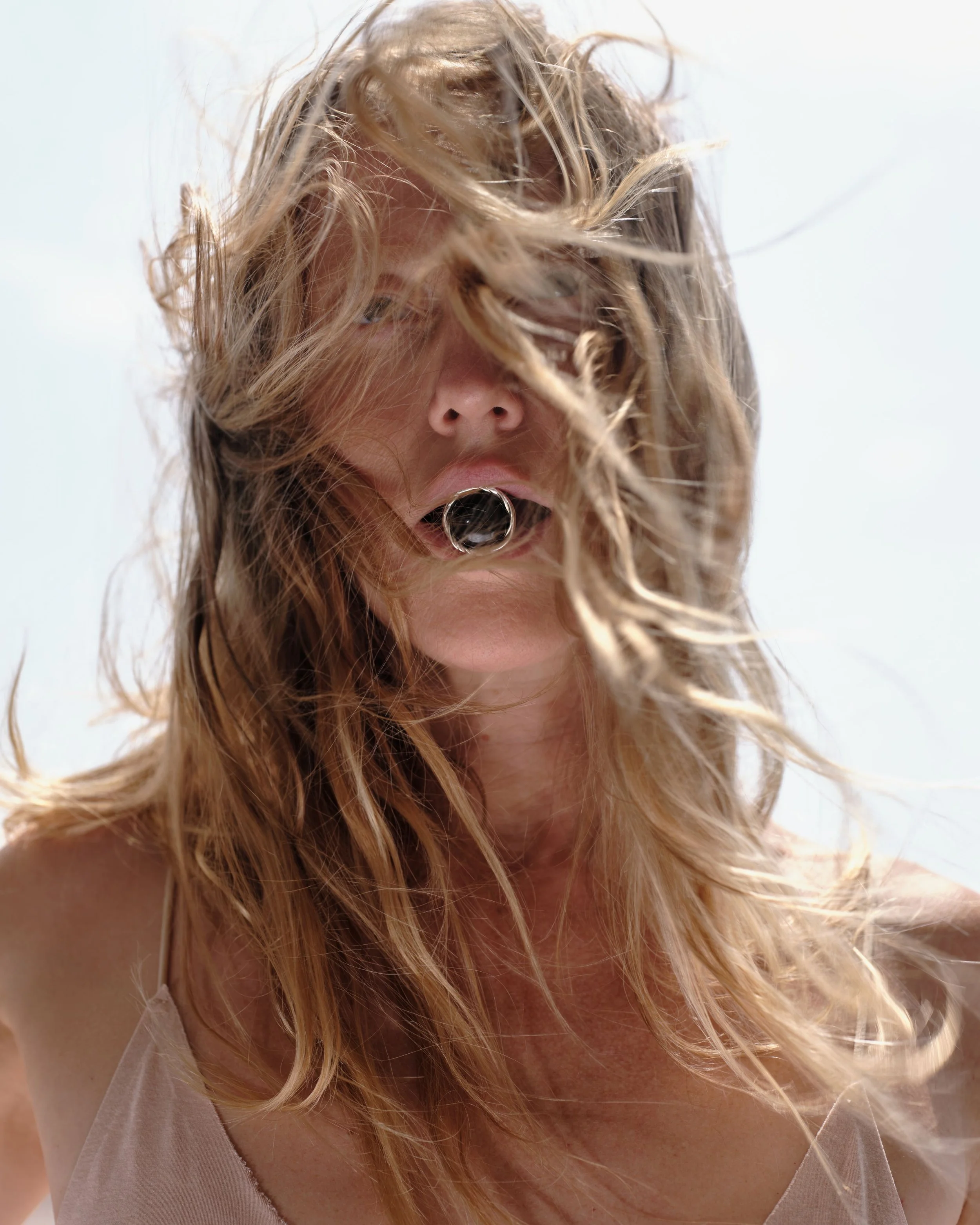
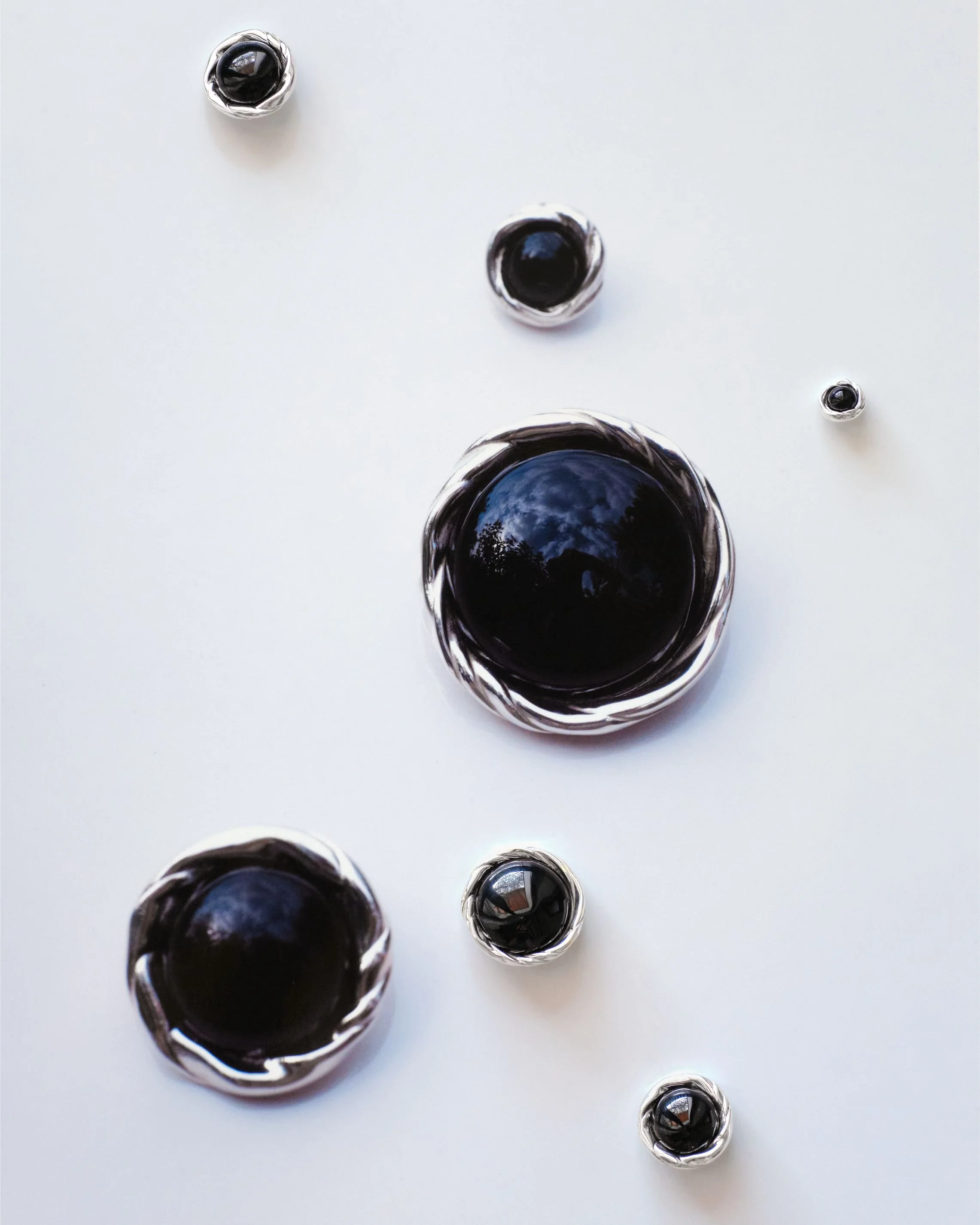
Maria, looking back at the partnership and collaboration between you and Caroline Vogel, can you share the moment when the idea of transforming a simple button into a piece of jewelry first began to take shape between you two?
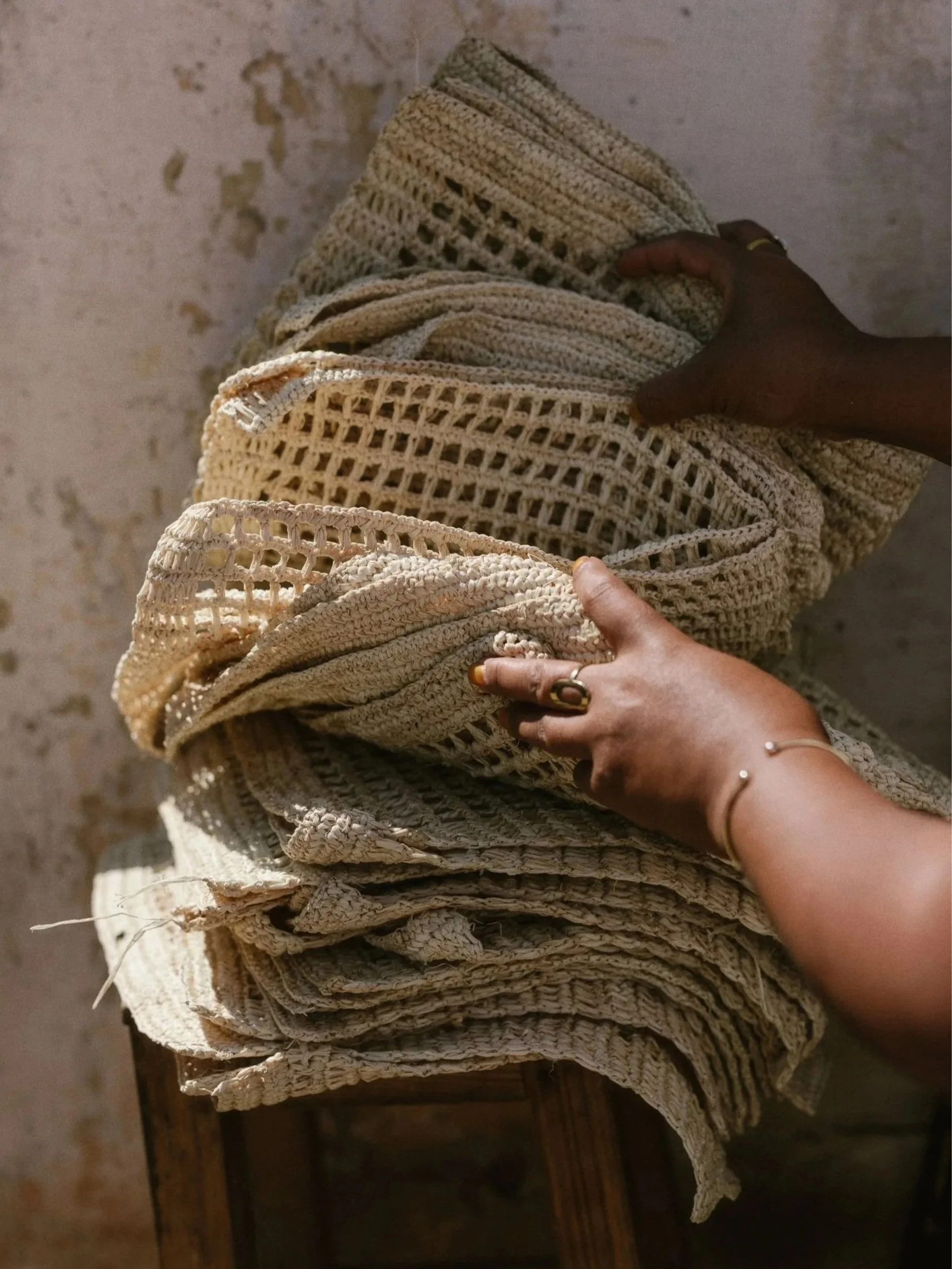
The first initial idea began in a quiet, practical moment – choosing buttons for a new collection. At aiayu, we’ve long aimed to balance craft, function, and aesthetics, so inviting Caroline and Corali into that conversation felt natural. For years we’ve partnered with a workshop in Kathmandu, where artisans carve buttons from wood, horn, and bone, carrying forward a long tradition in refining these materials for decoration of their temples and homes. In their hands, a closure is deeply unique and precious already, so the idea of transforming one into jewelry was less an invention and more an acknowledgment of what buttons have always been to us.
You mention that buttons are seen as 'tiny sculptural elements' within the aiayu universe; could you tell us how your personal appreciation for Caroline’s work as a 'tiny sculptor' naturally evolved into this specific partnership?
I’m endlessly curious about materials – and about the hands and skills that bring them to life. What drew me to Corali is how the jewellery’s organic forms give space for the material to speak. Caroline is a tiny sculptor in the truest sense. The gemstones and recycled silver carry a quiet presence and novelty that sits beautifully alongside our timeless wool, silk, and cotton. From there, the partnership felt like a continuation of that respect for craft: taking small, sculptural elements and letting them resonate together. Jewel to button, stone to textile – each elevates the other and adds longevity to our favourite garments.
Caroline has described these buttons as a 'hybrid between jewellery and brooch'; as the creative director, how did you navigate the challenge of reimagining a purely functional object into something that holds such deep personal and artistic meaning?
For me, the starting point was that I have never seen buttons as purely functional objects. Buttons hold a special place in my heart and within the aiayu universe and collections. They are understood as small sculptural elements – tiny objects of design that bring beauty to both an individual piece and the collection as a whole. Much like Caroline's description of them as a hybrid between jewellery and a brooch, this collaboration felt like a very natural extension of that perspective. Rather than reimagining the button entirely, it allowed us to highlight and celebrate qualities that were already there: craftsmanship, beauty, and the emotional value that can be found in even the smallest details.
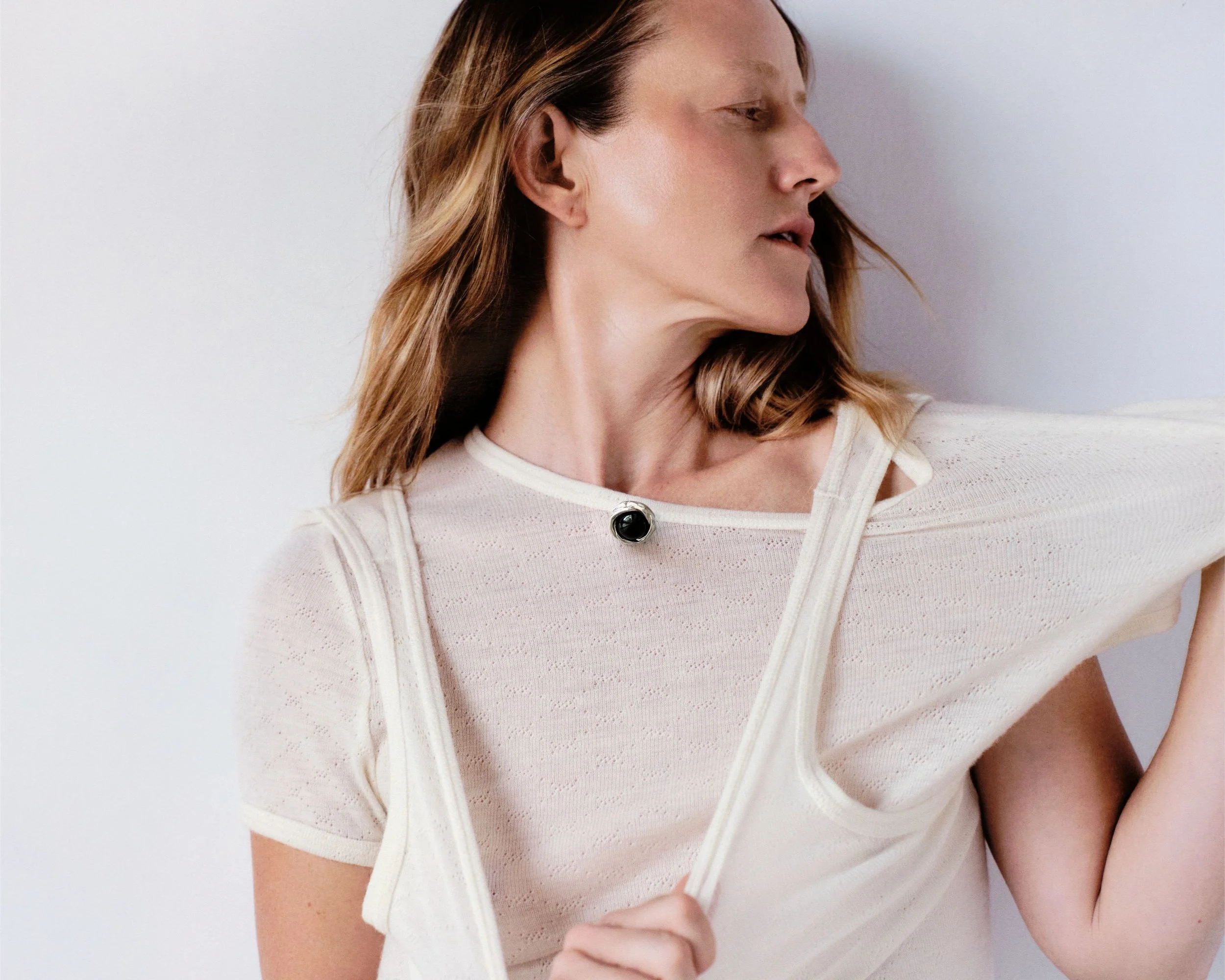
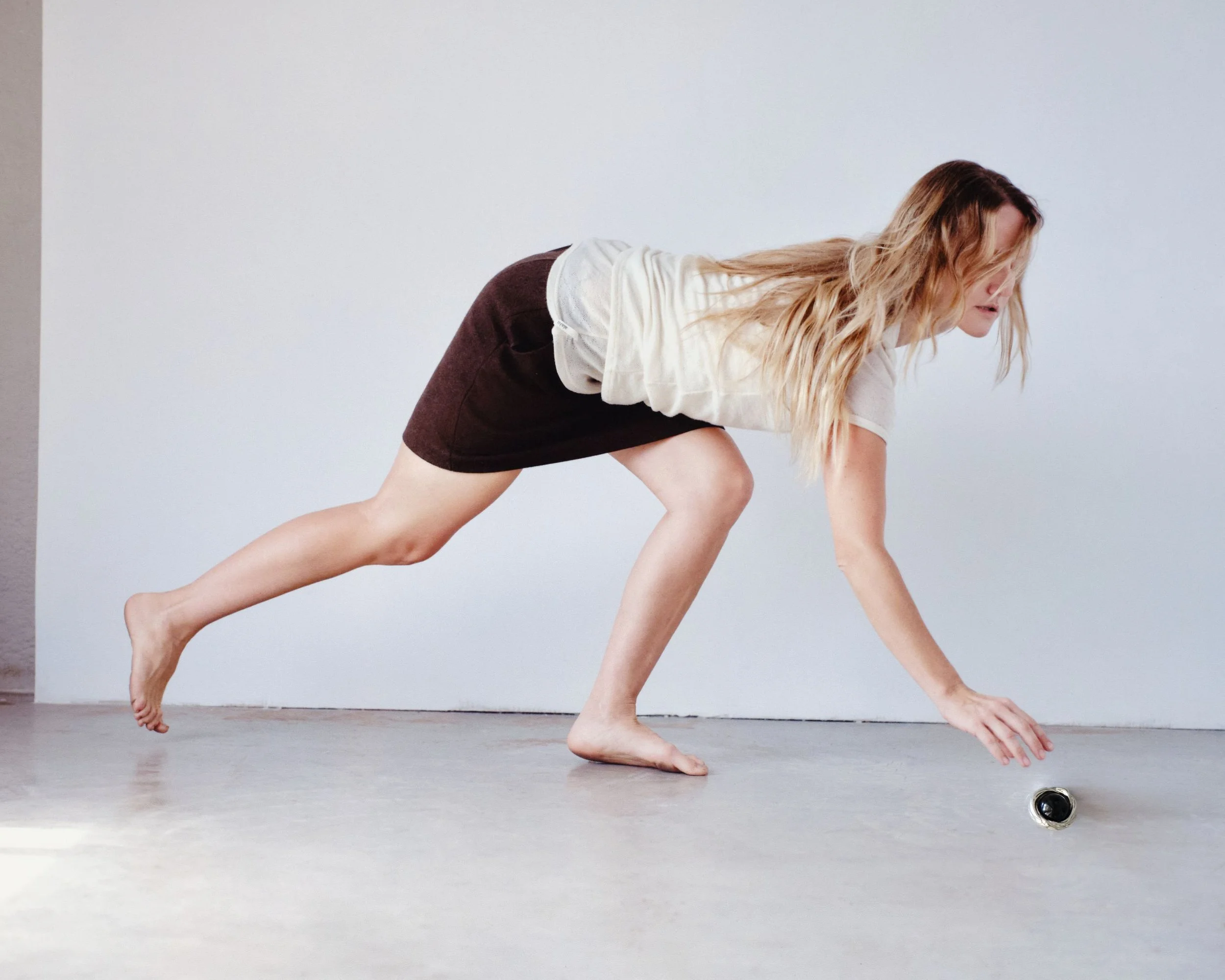
In a world of fast fashion, this collaboration celebrates 'things made slowly'; how does working so closely with an artisan like Caroline help reinforce aiayu’s commitment to longevity and the idea that a garment can be renewed over time?
A button may be tiny, but it has the ability to transform a garment – to renew it, elevate it, and give it new meaning over time. Through this collaboration, we wanted to highlight how thoughtful craftsmanship can extend the life of a piece and encourage a deeper, longer-lasting relationship with the things we wear. Working with Caroline reinforces something that has always been central to aiayu: the belief that longevity is created not only through quality materials and craftsmanship, but also through the small, considered details that make a piece feel personal and meaningful.
“The partnership felt like a continuation of that respect for craft: taking small, sculptural elements and letting them resonate together. Jewel to button, stone to textile – each elevates the other and adds longevity to our favourite garments.”

Caroline, with your background in architecture and fine art, how did your journey lead you to view jewelry as 'tiny sculptures,' and how did that specific perspective influence the way you approached the design for this collaboration with aiayu?
Time has always been my greatest fascination. I don't think I'll ever be finished with it. Time can feel layered, folded, dense as fog or fleeting as lightning. To me, architecture and jewelry are both ways of engaging with time. Both disciplines hold an extraordinary amount of time within them. They ask for patience and carry the awareness that they will outlive us.
While studying Architecture and Fine Art at the Royal Danish Academy, I designed and built a model of an imaginary museum. Alongside it, I made a series of tiny brass sculptures at 1:50 scale. When the project ended, I couldn't let them go. I turned one into an earring, and that became the beginning of my practice of moving freely between architecture, objects and jewelry. In my practice forms, meaning and time move across scales, cross-pollinating one another.
This collaboration with aiayu felt like a natural continuation of that idea. A form that once belonged to the ear found a new home on a garment.
You mentioned that the button was given space to 'step forward' as a new typology; could you walk us through the hands-on process of creating these pieces and how long does it typically take to bring one of these small sculptures to life?
Moving the piece from the body to the garment gave it a new freedom. An earring belongs to the ear, whereas a button can appear on a cuff, at a collar, or quietly on a sleeve. Somewhere between a button, a brooch and a piece of jewelry depending on where it sits.
Every piece begins in wax. I sculpt by hand, returning to the same form again and again, allowing it to slowly reveal itself. Sometimes that takes weeks, sometimes years. I have many unfinished ideas that are still waiting to find their final form. Some are only missing a small detail, others simply haven't found their right moment yet.
Once the master is complete, it is cast using the traditional lost-wax process before each button is carefully finished by hand and set with its stone. From the first wax cast to the finished silver button, the process takes around two to three weeks.
There is a profound intentionality in creating a piece of art that can be worn with any clothing item; how do you find the balance between maintaining your signature aesthetic and ensuring the buttons remain versatile enough to breathe new life into timeless essentials?
At the heart of Corali is an ongoing exploration of how to create forms that are at once organic, sculptural, and capable of transcending time, while remaining as quiet, simple, and pure as possible.
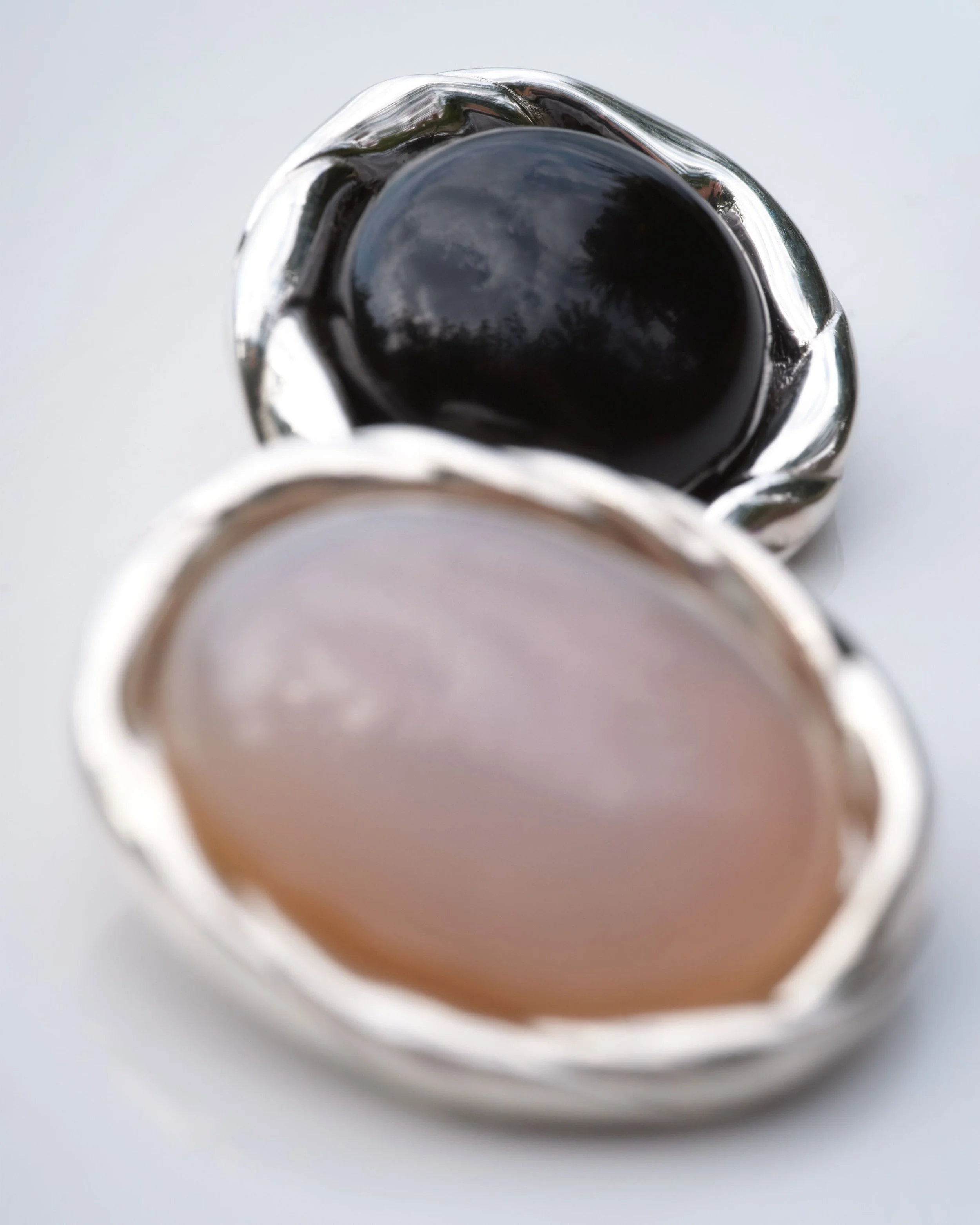
I often think of my pieces as tiny sculptures, or simply as objects with a distinct presence. They are quiet enough to move effortlessly between denim, silk and wool, yet present enough that you sense they want to become something more than a button. I like that they inhabit the space between function and jewelry.
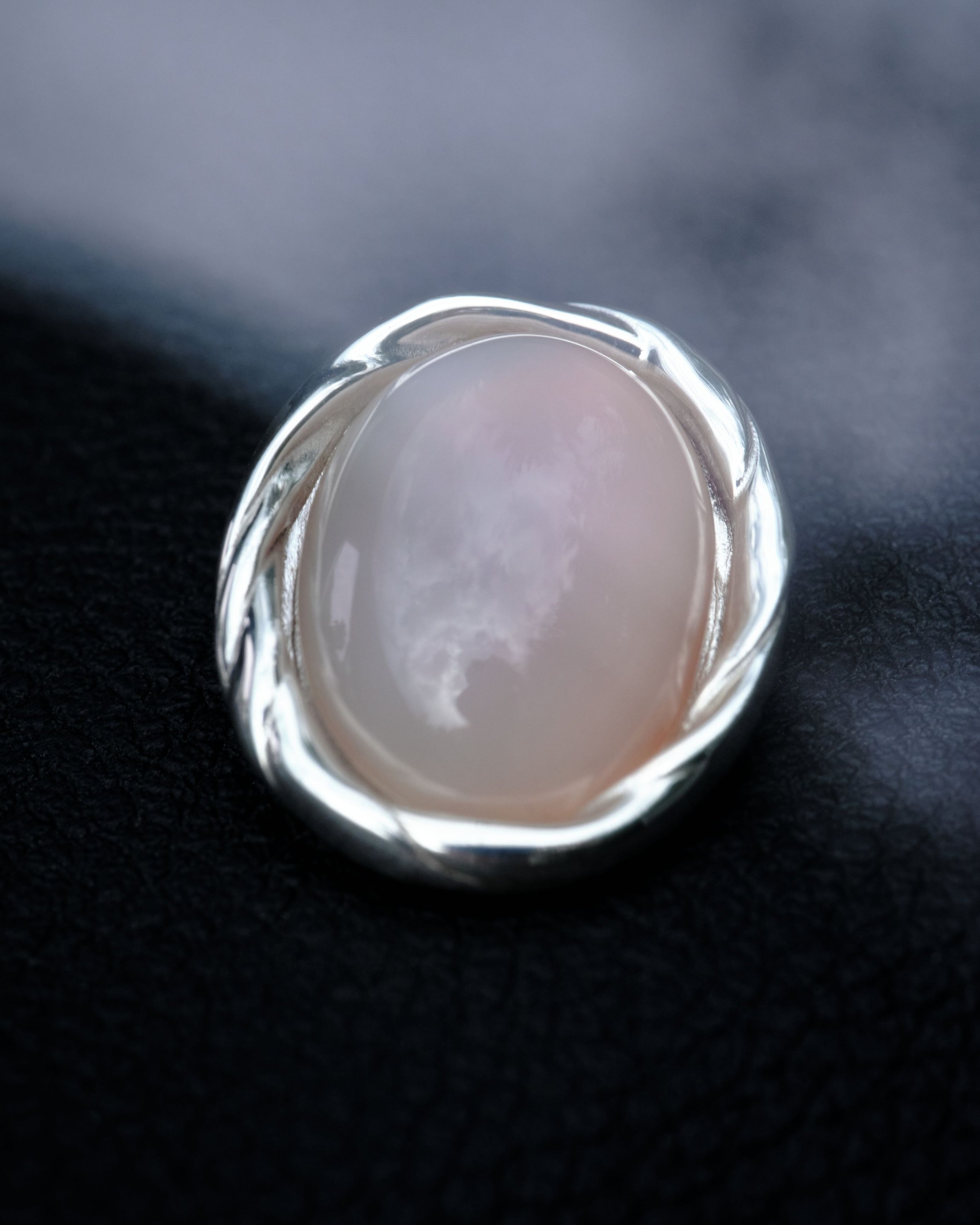

“Moving the piece from the body to the garment gave it a new freedom. An earring belongs to the ear, whereas a button can appear on a cuff, at a collar, or quietly on a sleeve. Somewhere between a button, a brooch and a piece of jewelry depending on where it sits.”
The concept of sewing these buttons on or taking them off 'like pieces of jewelry' suggests a ritual; how does this intimate, hands-on interaction between the wearer and the object deepen the connection between the wearer and the garment?
I hope it encourages a deeper and slower relationship with our garment. That we care for the things we own instead of replacing them.
There is something beautiful about sewing on a button. It takes only a few minutes, yet it asks for your full attention. Almost like tending a garden. Perhaps that small ritual can become a moment of pause. A reminder that caring with our hands is also a way of caring for the objects that accompany us through life.
And finally Maria, how did the beauty of this collaboration with Caroline open new doors and unlock fresh creative possibilities for aiayu's future?
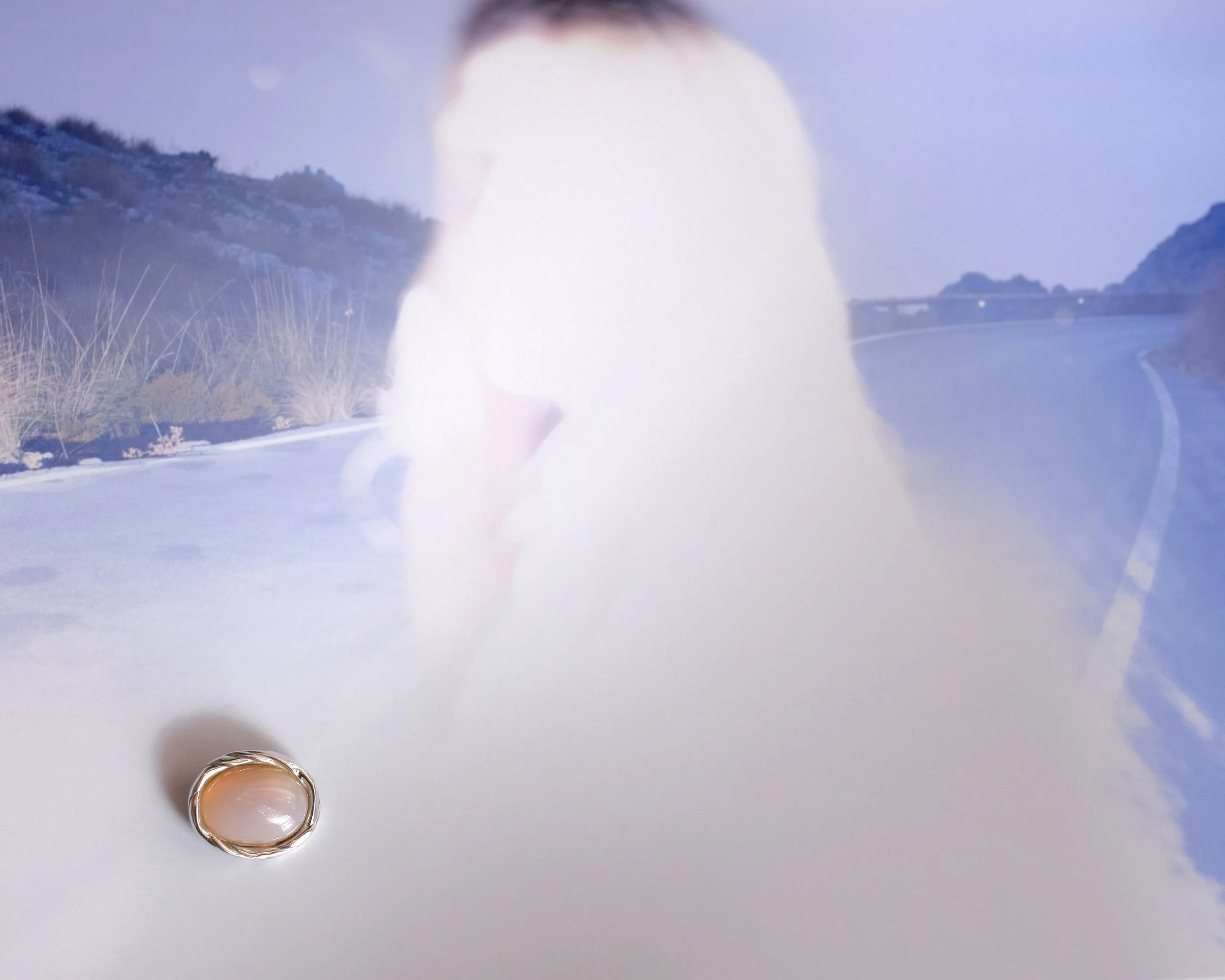
My hope is that this collaboration encourages people to slow down and notice the small things – and to reimagine what they already own: to reuse, recombine, and make it truly personal. For aiayu, it unlocks a future where these tiny sculptural elements help garments evolve rather than be replaced: adding longevity, holding memories, and layering meaning. A button becomes a jewel, a repair becomes a token, and the pieces we treasure stay with us for longer.

For more information about Aiayu, visit their website. To view/purchase the collaboration, visit here.
For more information about Corali, visit their website.
YOU MIGHT ALSO LIKE


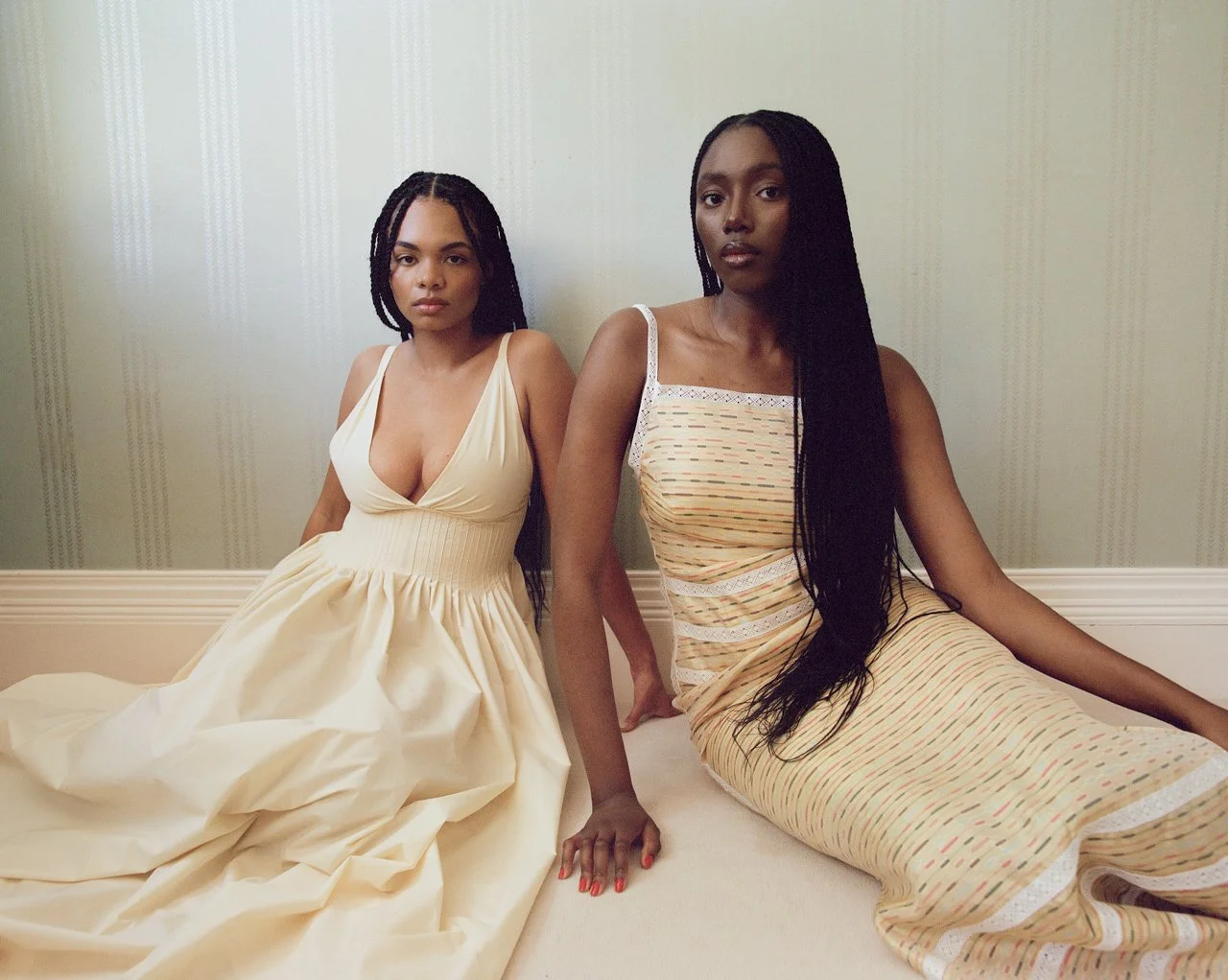
We spoke with Kindred Black founders Jennifer and Alice about redefining beauty as a collection of curiosities rich with history and symbolism. Their timeless approach transforms skincare vessels into collectible art and ingredients into meaningful narratives, alongside the recent launch of their first jewelry collection designed as personal talismans.