
KABN
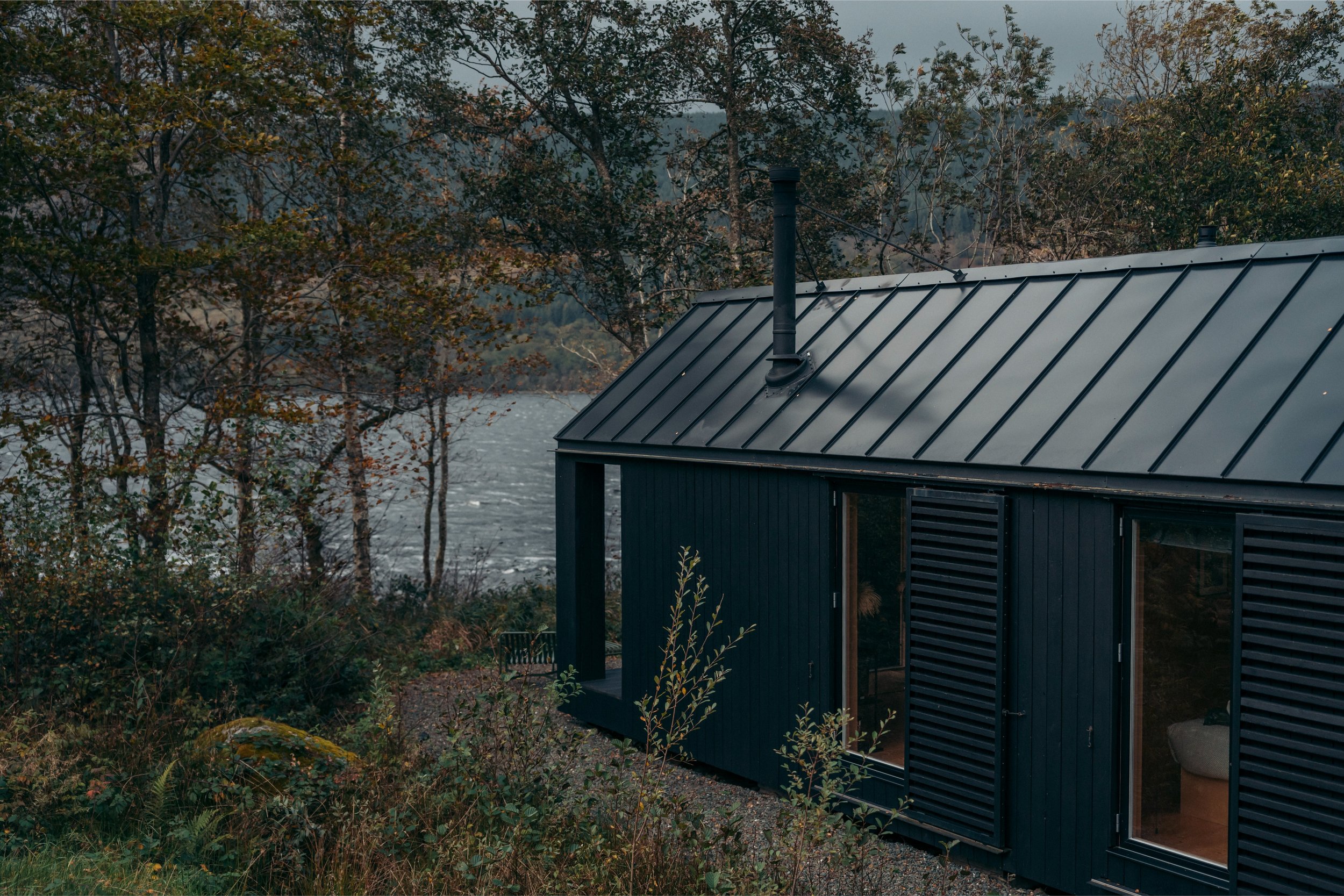
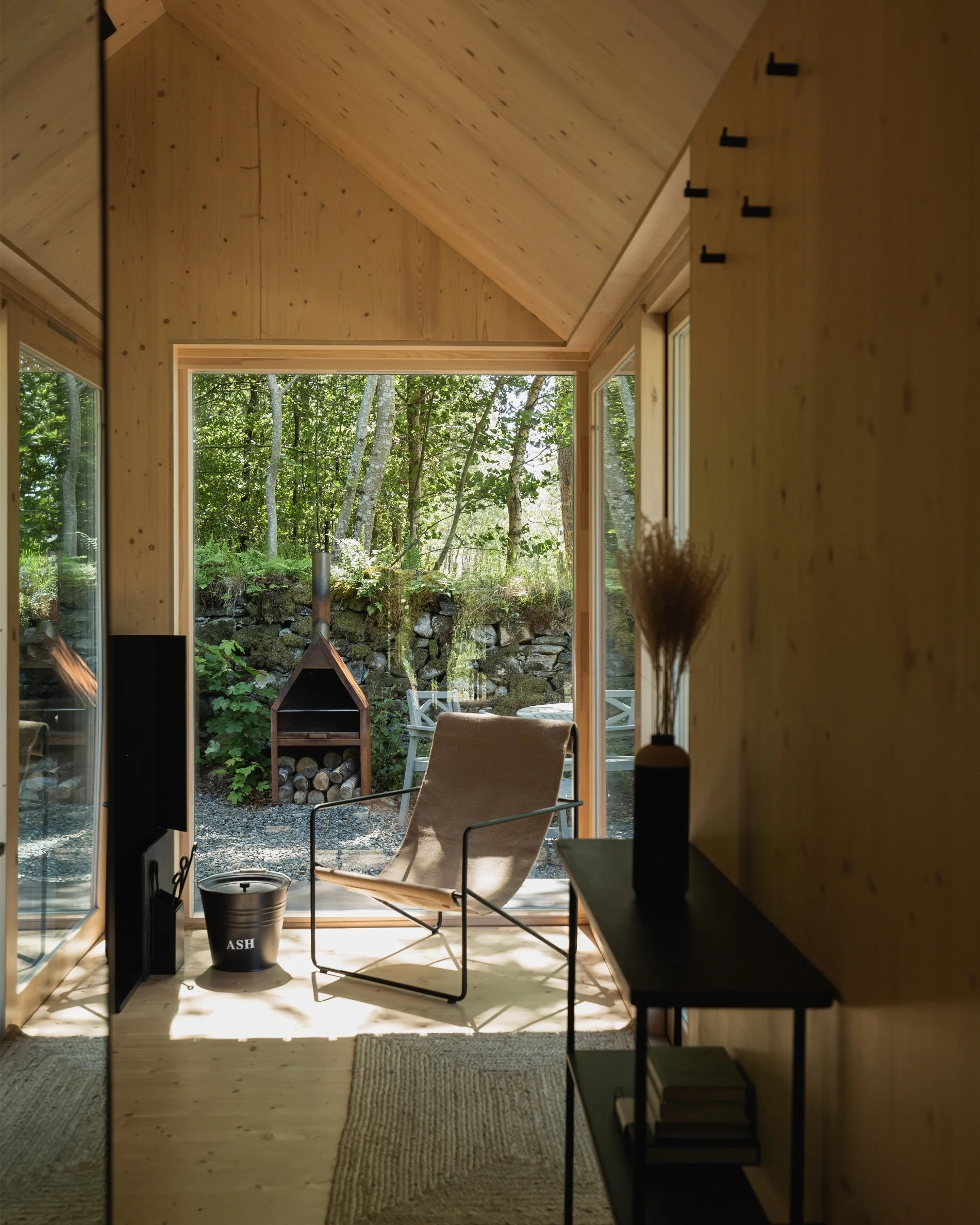
Set in remote locations in the Scottish Highlands, KABN's cabins encourage an intentional experience that puts the surroundings front and center.
Their minimal design practice removes distractions and creates an environment that inspires slowing down. We spoke with Amber Pledge, who, together with Charlie, runs the hospitality project that prioritizes the outside. Read about how their practice developed through collaborations with local artisans and a minimal impact on the land.
Interview JENNIE BARCK
Images courtesy of KABN
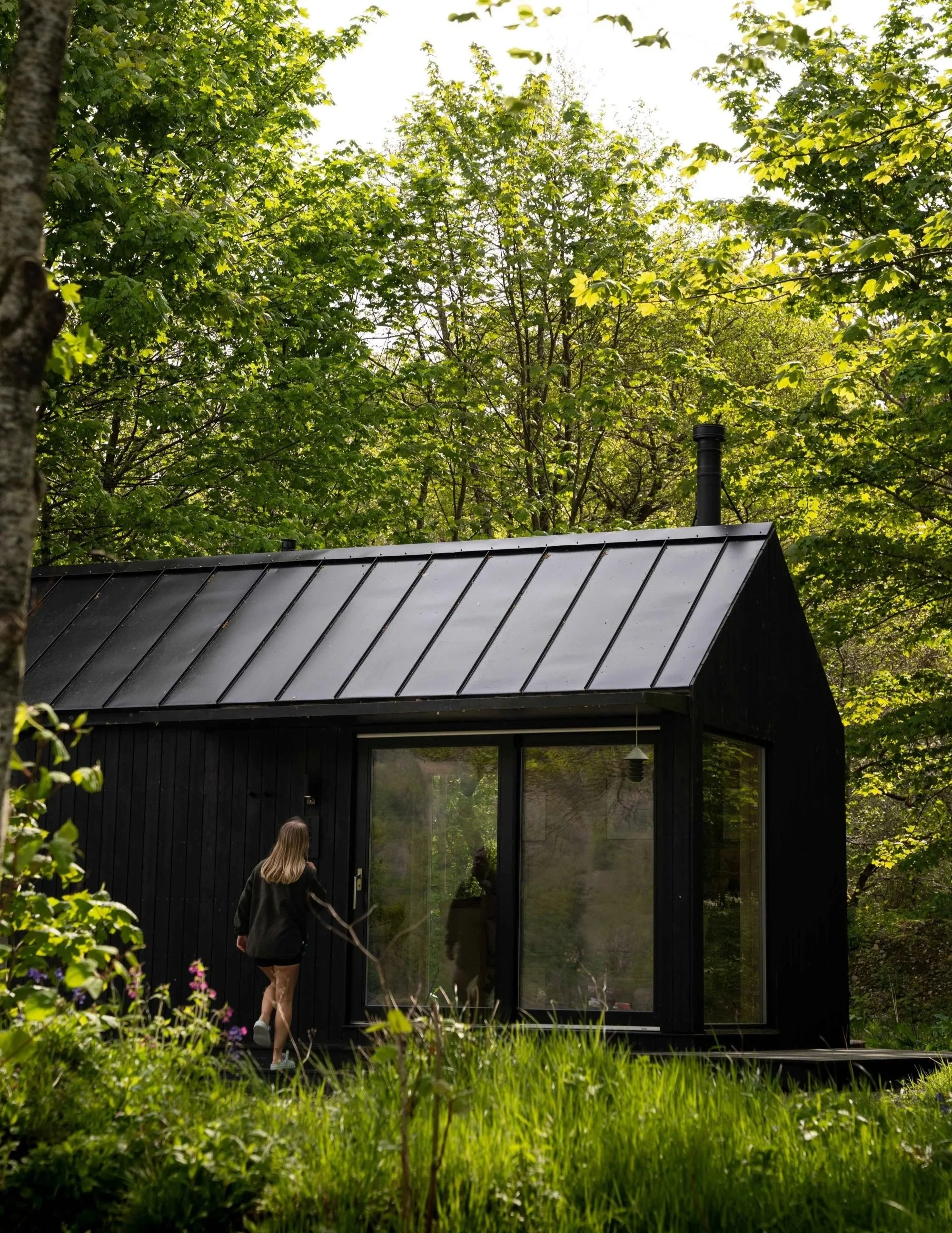
photo by Sam Firth
I wanted to understand more about your background. You've talked about resorts that inspired the cabin experiences, but are there any particular encounters that impacted you?
It's a good question. It's hard to put my finger on one specific experience, but we spent a lot of time traveling before we set up the business, and we always focused on going to remote places. We love landscape hotels or design hotels in nature. Our favorite holiday of all is Safari and just being in the middle of the wilderness in a tent and seeing the animals. That's what we adore more than anything. It kind of reinvigorates you and reminds you how you're such a small part of the world. It sounds a bit cheesy, but it is transformative when you go on Safari, that feeling you get. And I think when we came to Scotland, we saw that there were all these amazing vast landscapes; and you get a similar sort of feeling. Okay, we don't have the lions. But we do have really beautiful, wild landscapes here. And you can feel really remote in Scotland in no time at all. You only have to drive half an hour outside of the major cities, and you can be on your own for the whole day on a walk, which is pretty rare. I grew up south of London, and there is nowhere you can go where you won't bump into someone else on a walk. It's just so much more densely populated than Scotland. We just saw the opportunity. We love Scotland. We love the landscapes, but we struggled to find the kind of place that we wanted to stay in from a design perspective. Most of the places that were on their own in the middle of nowhere were quite run-down, derelict, very low-key experiences. We asked ourselves if we could create something that's more to our aesthetic, a bit more modern, a bit more minimalist, but in really beautiful locations where you can feel like you're on your own, but still in a beautifully designed space. So that was the route to how we got here.
You can see it comes from an appreciation of nature and the wilderness around.
When I went on Safari, I suddenly felt so much more connected to the landscape, the wilderness; I felt I wanted to do something to protect it. It's only if you spend time in nature that you really value it and see this is worth changing behavior and doing things differently for. To then create a place where other people can come and stay and have that similar kind of feeling and experience. I think that's the ultimate goal.
READ FULL INTERVIEW ON SUBSTACK
YOU MIGHT ALSO LIKE
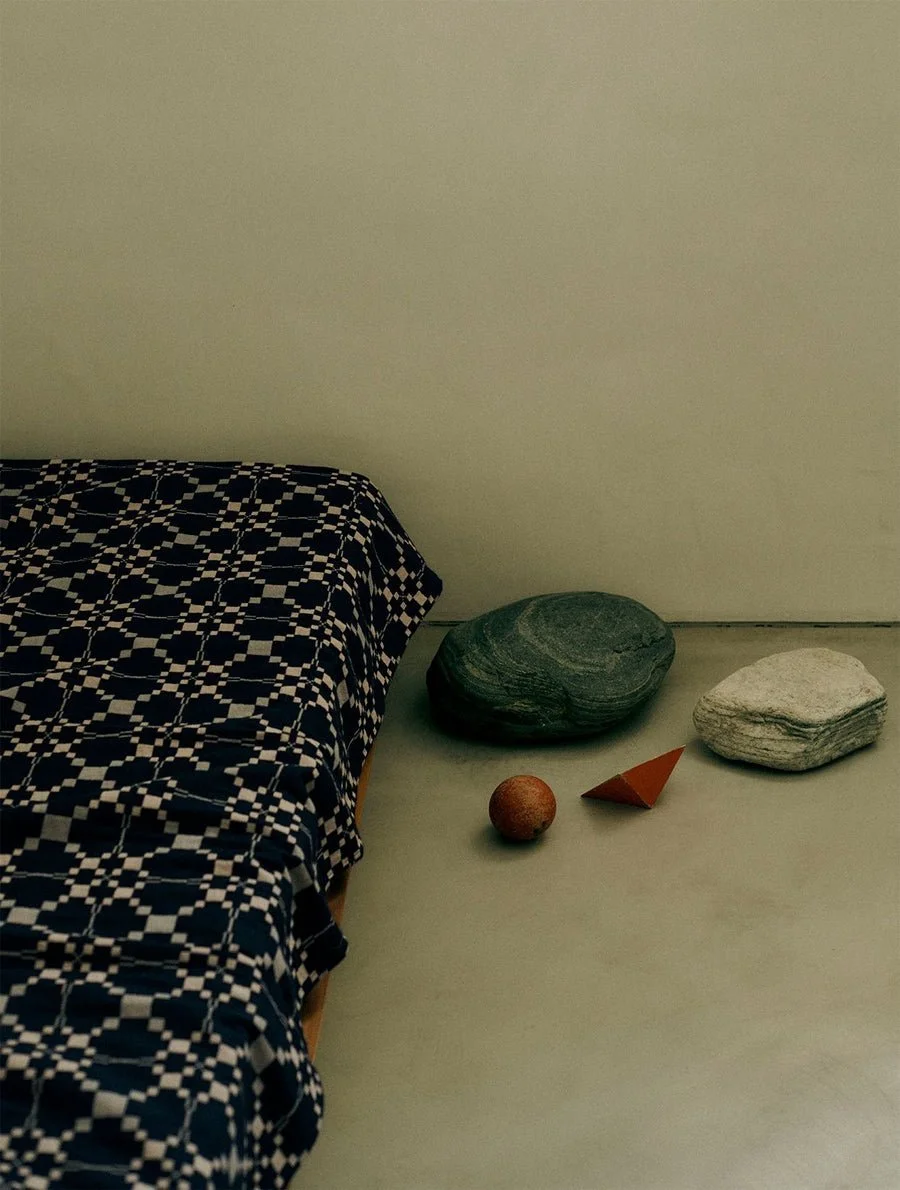
We spoke with co-founder Amber Pledge about KABN, the slow work of making hospitality meaningful, and the land worth protecting.