
Eyes on CPHFW AW26
The Future is Hand-Made with Copenhagen Fashion Week’s NEWTALENT & One To Watch
Interview EMILY PETRUCCIONE
Introduction NICOLE GAVRILLES
Images courtesy of COPENHAGEN FASHION WEEK
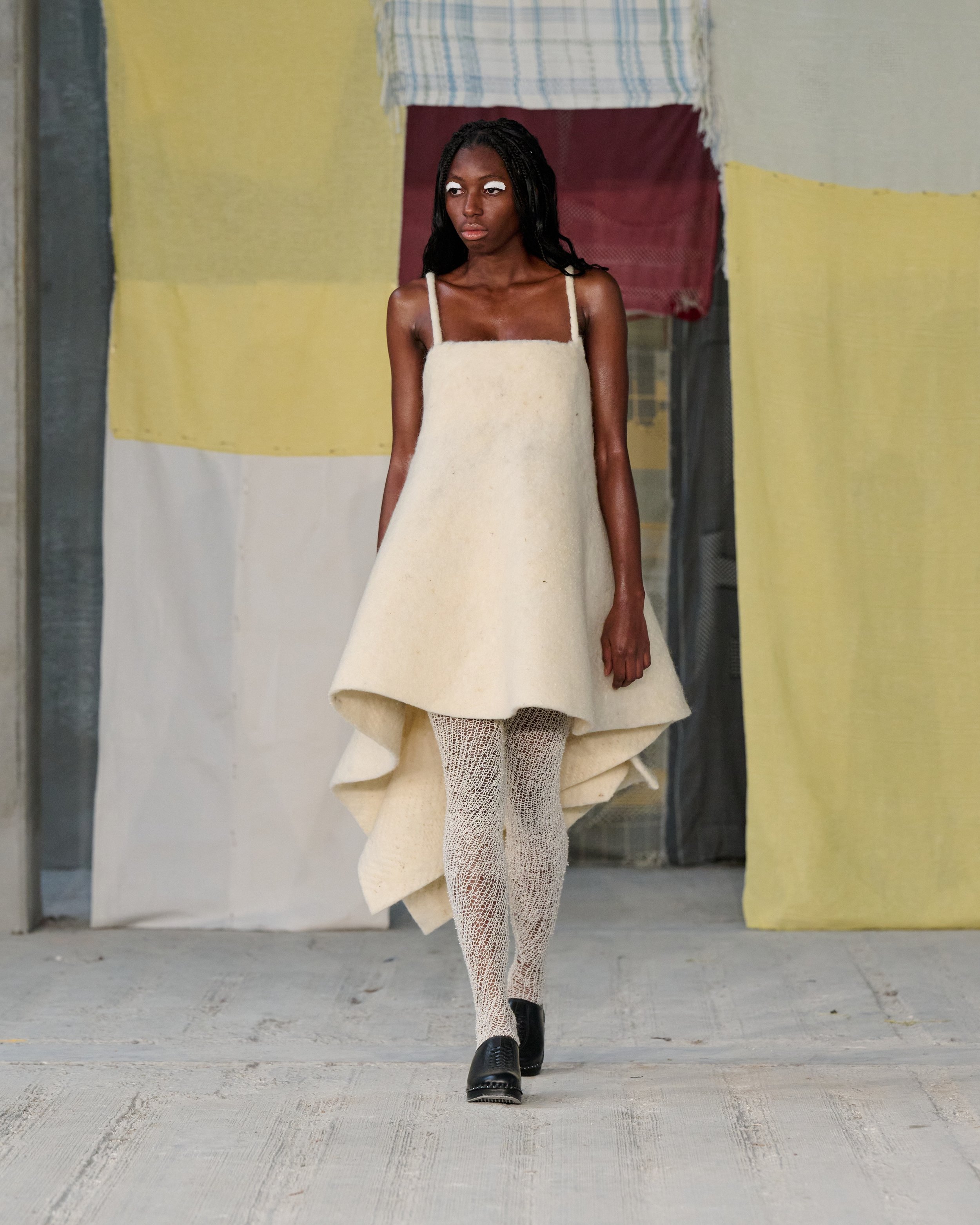
STEM AW26 runway, photo by James Cochrane
We spoke with the founders of Stem, Bonnetje, and Taus to discuss their AW26 collections, which debuted at Copenhagen Fashion Week this past week. Each designer shared how they are redefining the industry through a shared devotion to upcycling and natural fibers. From unique, handmade construction to the deep-rooted storytelling in their textiles, these three labels illustrate why the New Talent scene in Copenhagen is currently fashion’s most exciting frontier.
TAUS
Upcycling is central to Taus’ ethos. Could you share some of the standout upcycled elements that define your latest collection and how they came to be?
Upcycling is often where our design process begins, and it strongly shapes the birth of each collection. This season, our upcycling practice is most clearly expressed through a tailored jacket and trouser set made from 1970s furniture fabric, sourced by Juho’s mother during her frequent visits to local flea markets in Finland. In addition, we reworked tapestry into a cocoon-like hem on a dress otherwise crafted from deadstock jersey, creating a silhouette reminiscent of Paul Poiret’s designs and the cocoon shapes of the 1910s. We also explored the suit as an archetype, upcycling some of Juho’s late grandfather’s suits and their linings into skirts, dresses, and reimagined tailoring pieces.
Is there a particular piece from your current collection that has a meaningful backstory or unique evolution you’d love to highlight? What makes it special?
Two pieces that feel especially meaningful to us are a long, high-necked tailored wool coat with a hand-bleached hem, and the previously mentioned two-piece set made from furniture fabric. The narrative of the collection is heavily influenced by the Weimar Republic, World War lI, and the lives of queer individuals of that time. We wanted to reflect this history not only visually, but also emotionally, by incorporating constricting, tight-fitting garments that subtly alter the wearer’s posture, mood, and sense of autonomy over their own movement. Alongside this, we have begun exploring ways to commercialize our upcycling practices, which led to pieces such as a skirt constructed from old suit trousers, a design we have grown particularly fond of.
What role does imperfection, such as uneven dye or visible seams, play in the aesthetic and philosophy of your upcycled pieces?
Imperfection is a crucial part of both our aesthetic and our values. It is something we want to share with those who wear our clothes, as well as those who encounter them. We believe that imperfections carry layers of stories and should be celebrated rather than hidden. In our own wardrobes, we try to use every piece until it physically cannot be worn anymore, which has made us particularly fond of worn hems and marks that accumulate over time. Fashion can act as a vessel for memories and human experiences, and these are often expressed most honestly through visible signs of wear. It is also a form of subversion within our work, where archetypes and familiar concepts are twisted and reinterpreted.
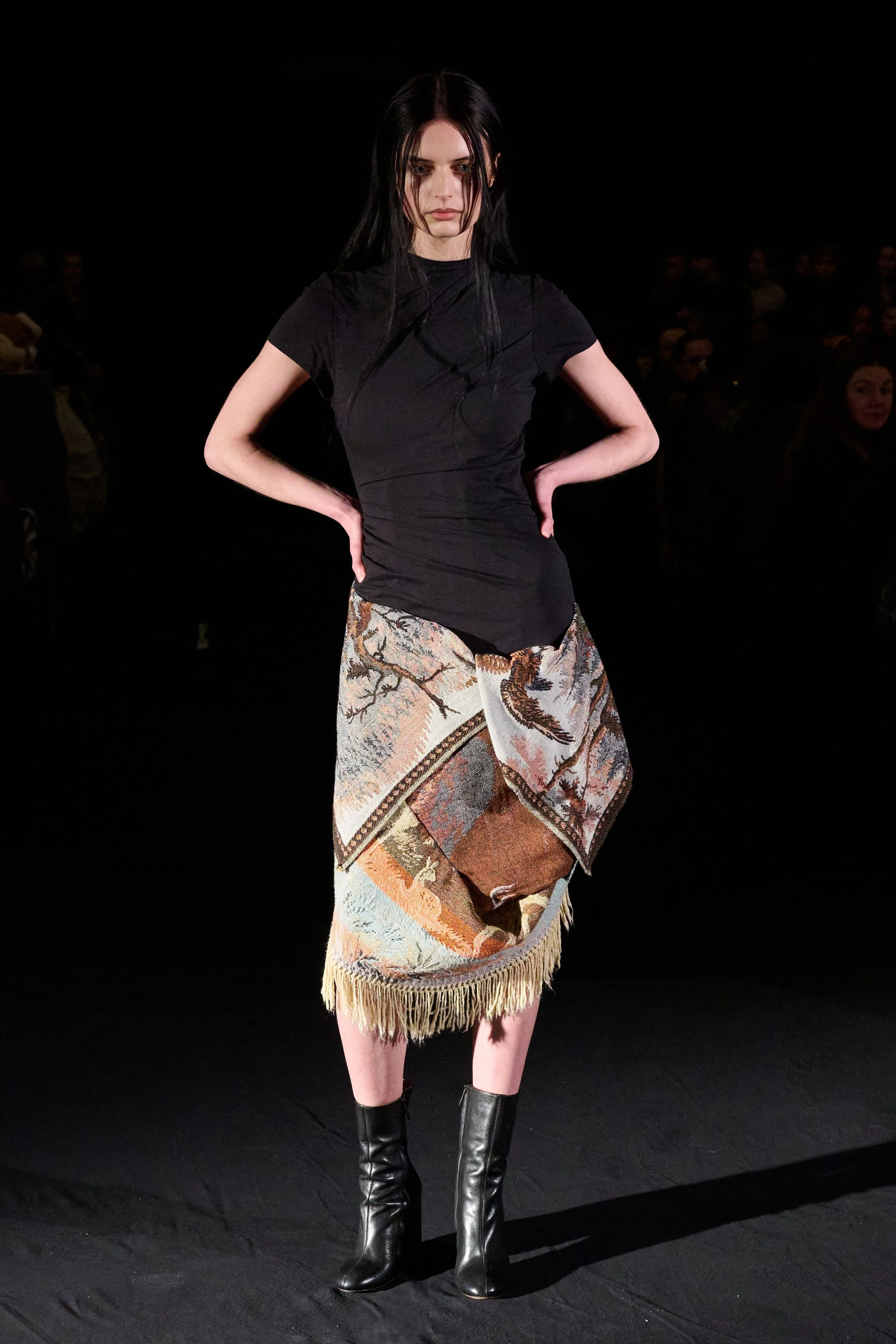
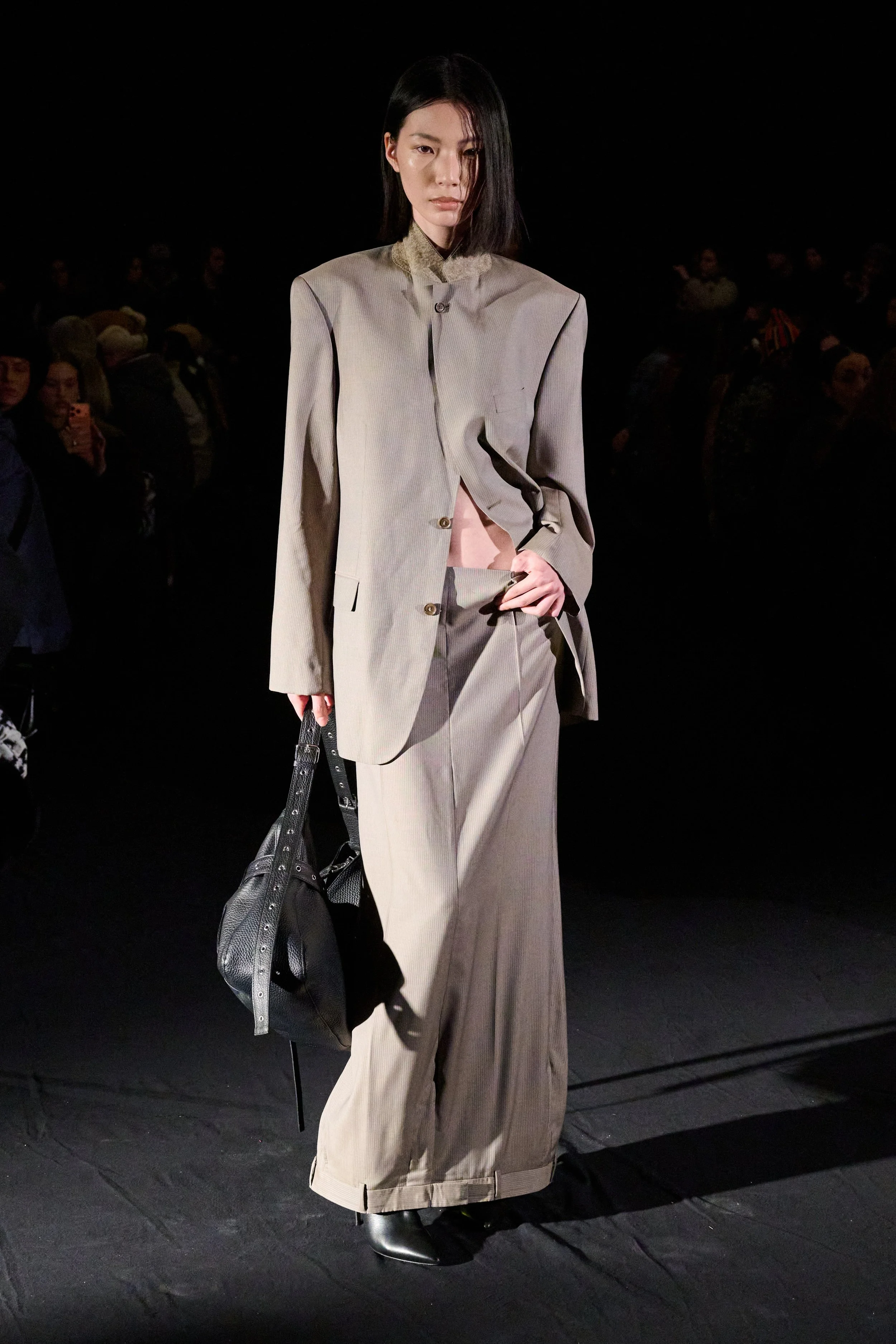
TAUS AW26 runway, photos by James Cochrane
STEM
Your work is rooted in a zero-waste textile system that makes production visible. What piece in this collection best embodies that transparency and why?
The entire core collection is all created using the no-waste production system, but this time using wool! (Pattern pieces are woven directly on the loom with a loose weave structure in between. Using a specific cutting technique, these loosely woven areas unravel into fringes that line the seams of all garments, becoming part of the design and ultimately using the entire fabric.
My favourite piece is the cardigan, the silhouette is based on the original cotton shirt I launched the brand with in 2021, but weaving the piece using Stem ‘Elastic Wool’ gives it a completely different expression. It really encompasses how I often describe my way of working: ‘Form follows technique’: the techniques I work with dictate the aesthetic and final outcome of the pieces, the no-waste production technique determines where the fringe will be on the garment.
What was the catalyst for this season’s collection?
Wool! The collection is called ‘To Wool’, which can be read as an ode to wool, but also as if ‘to wool’ is a verb, like an action. Wool is so versatile, it can be twisted, felted, it has so many characteristics! During the presentation guests are invited to take part in a needle felting workshop with raw Danish wool to engage with the material.
I have been developing an extreme high-twist wool yarn which I’ve called ‘Elastic Wool’ yarn for a few years, and for this collection, I have finally industrialised the yarn and woven with it on industrial looms in Prato, Italy, so I’m excited to showcase these pieces! Until now if you want a stretchy garment, it's either knitted or has synthetics in it, but with this yarn, I am able to make 100% wool woven stretchy garments, we’re even sewing with wool thread, so the garments stays 100% wool.
I was also lucky enough to do a residency at Sjølingstad Uldvarefabrik, a wool mill in Norway. I felt truly inspired there and got to play around on the needle felting machine. I felted just parts of a wool fabric to create pleats- I’m excited to show these pieces too!
Your signature zero‑waste weaving and “pulling” methods keep evolving — what’s new or different about how you’re using them in this latest collection?
Actually there's no pulling in this collection, as I have focused on some other techniques this time. Though I have continued thinking about how manipulating textile can play with something as simple as a t-shirt shape. Last collection I used the pulling technique to shape a t-shirt, this time the elastic wool is doing that.
Stem’s work aims to slow fashion down, how does this collection reflect a deeper exploration of slowness?
One of my favourite looks of the season came about after visiting Berit, a female shepherd living a few hours from Copenhagen. She tends a flock of 800 sheep! And very generously gave me two cones of yarn, spun at Hjelholts Uldspinderi - one of the only spinning mills left in Denmark. Each cone is a different shade of brown as it came from two different sheep. We then twisted the yarn so that we could create a 100% Danish wool, handwoven, stretchy vest!
The collection is also small, only 8 pieces in the core collection, the rest are show pieces where we can really put a lot of extra time into making each one. Having a small collection in my opinion is the ultimate demonstration of slowness — more focus on each piece.
“Having a small collection in my opinion is the ultimate demonstration of slowness.”
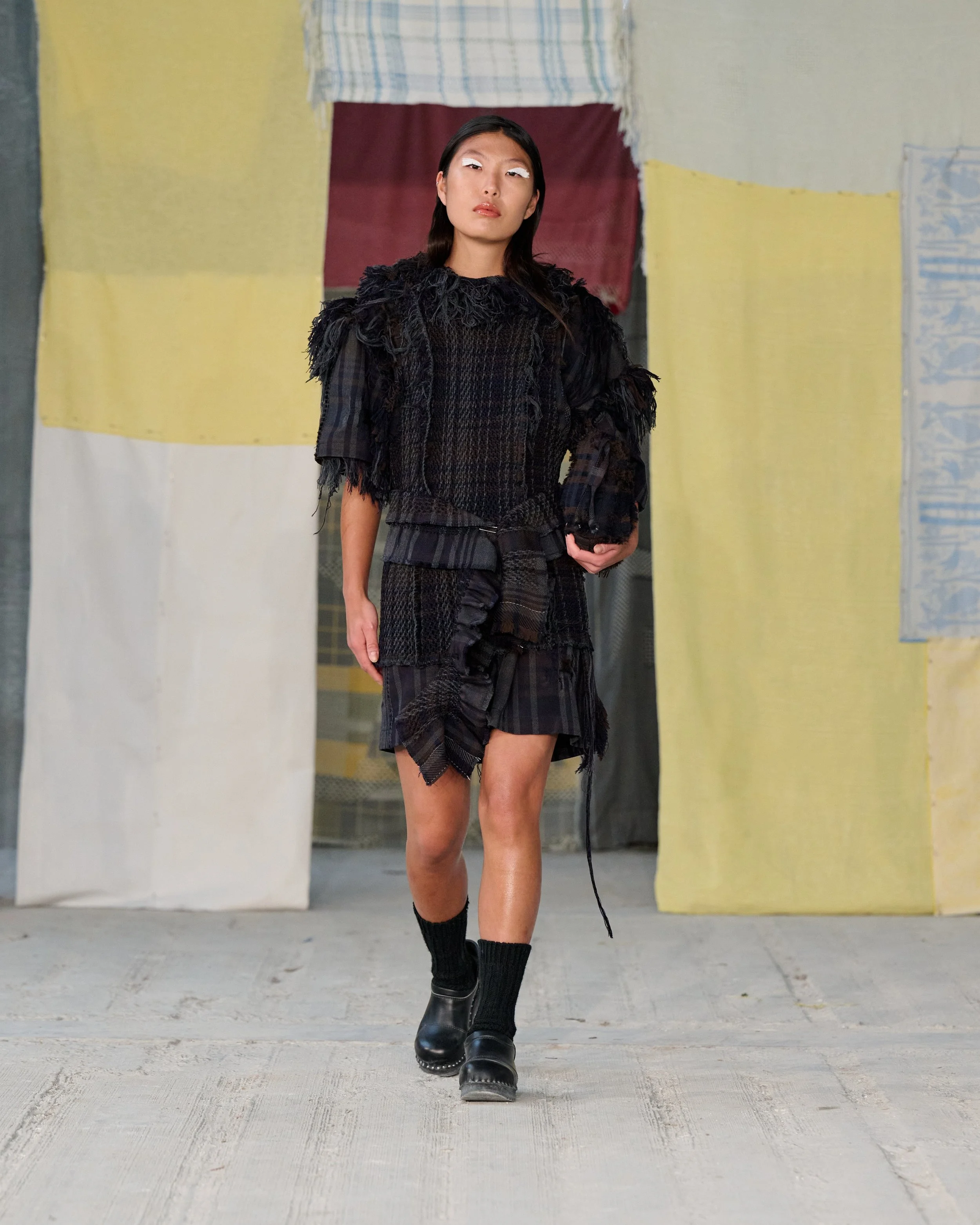

STEM AW26 runway, photos by James Cochrane
BONNETJE
What story or inspiration from this collection best reflects your idea of “beautifully reassembling” things that fall apart?
Definitely the pieces made from multiple parts of shirts or suits. By completely taking the suits and shirts apart and reassembling them, we are able to create entirely new textures and materials. What once belonged to a very specific context becomes something new when placed in a different construction and narrative.
How do you decide which suit elements to keep, invert, or highlight in your refashioned pieces?
We love suits because of their many layers and details, different materials, hidden pockets, linings, and internal constructions. Normally, we are drawn to exposing elements like the lining or pockets by bringing them to the outside. For this collection, we became fascinated by the sculptural shoulders of the suit, of which we used to create an entire dress.
By blending masculine and feminine silhouettes, what experience or message do you hope wearers to take away?
To feel special and confident.
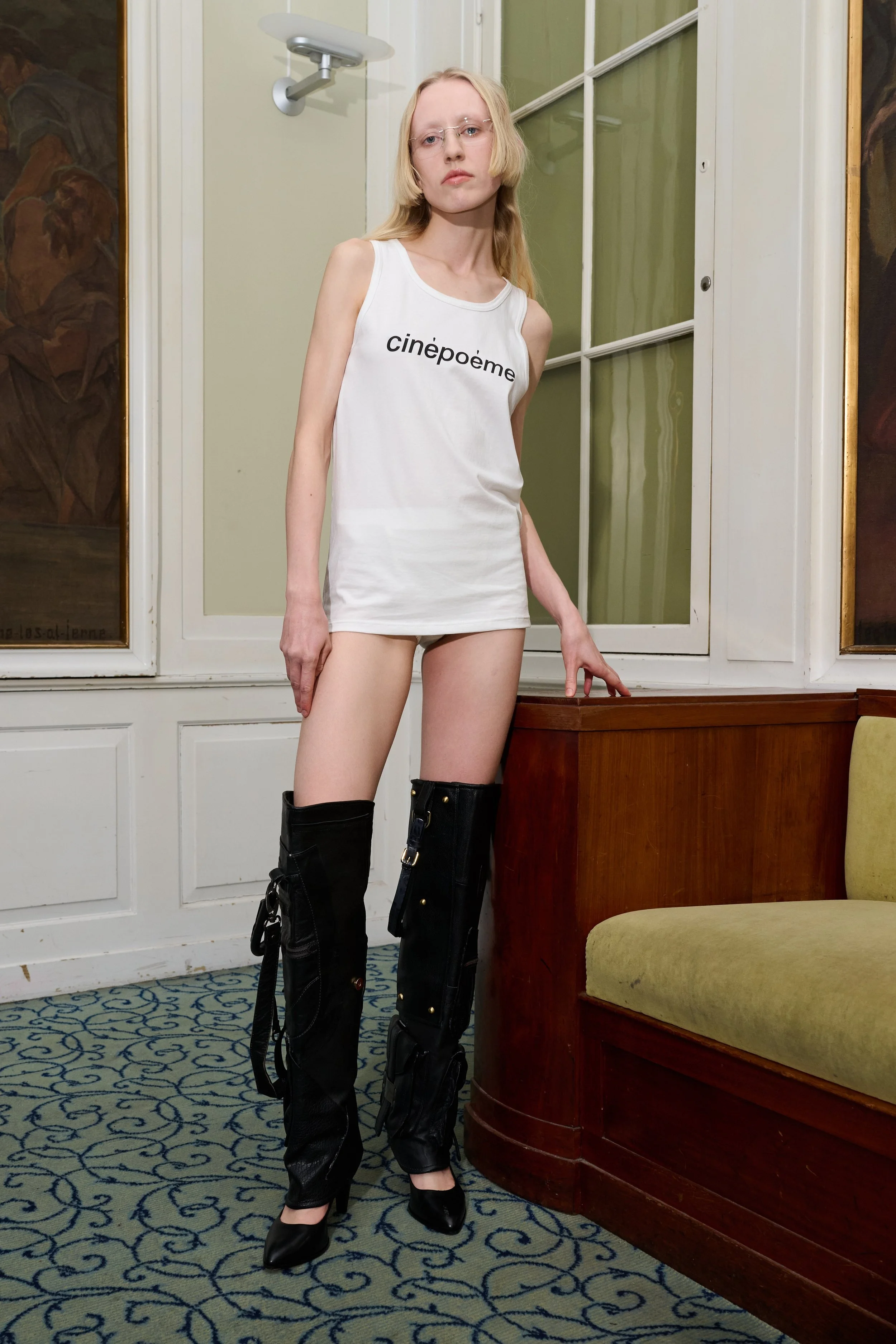
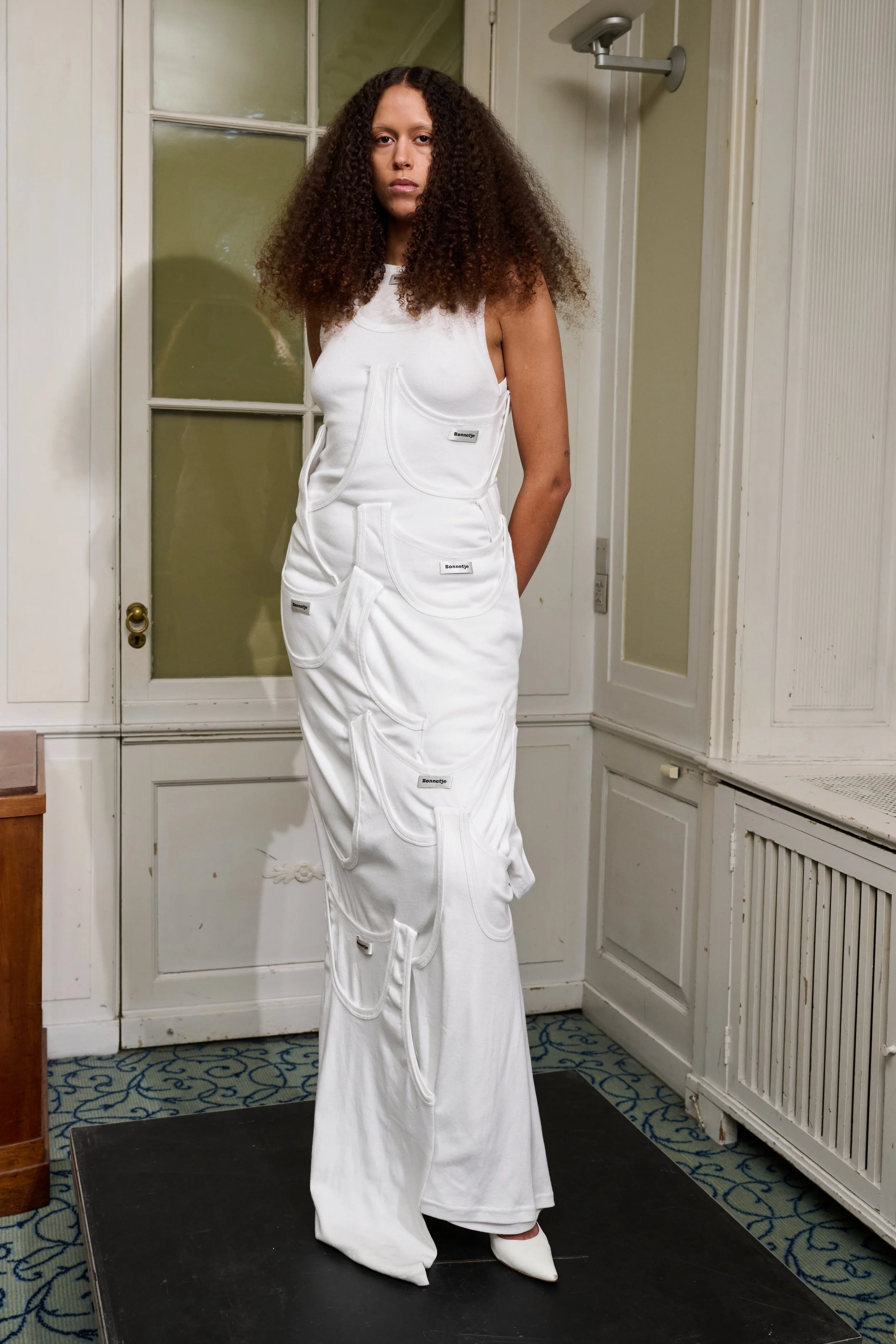
BONNETJE AW26, photos by James Cochrane
As CPHFW AW26 came to a close, we reflected on mindful production processes seen here and throughout all the shows this season. Copenhagen has been the ring leader carving a path and spotlight into a world of fashion where overconsumption is not the goal, but slowness, creativity, and innovative upcycling techniques are the stories being told.
Taus is a Copenhagen-based ready-to-wear and demi-couture studio founded in 2024 by Freyja Taus and Juho Lehiö. Rooted in craftsmanship and slowness, Taus approaches fashion not as novelty, but as dialogue — between past and present, object and body, maker and wearer. Each piece is part of a wider exploration: of identity, of class, of what it means to dress with intention.
For more information about Taus, visit their website.
Stem is a Copenhagen based brand founded by Sarah Brunnhuber in 2021. At its heart, Stem is an ongoing exploration of making, where textile production and storytelling are woven into a single process. Their innovative, zero-waste woven textile system eliminates garment production waste. Each Stem garment is crafted from recycled natural fibres using a unique weaving, cutting, and sewing process.
For more information about Stem, visit their website.
Bonnetje, a Copenhagen-based brand, specializes in cutting up old suits and reassembling the pieces into new silhouettes. Anna Myntekær and Yoko Maja Hansen co-founded the Danish fashion brand after graduating from Amsterdam’s Gerrit Rietveld Academie. Before launching their label, Hansen worked at Maison Margiela under John Galliano, while Myntekær interned with a couturiere and later worked with Cecilie Bahnsen. Their brand is known for deconstructing men’s suiting into feminine, avant-garde pieces, often using upcycled materials.
For more information about Bonnetje, visit their website.
Follow on instagram @taus.studio @stem______ @bonnetje.official
–
Interview published for ONE Magazine Online
YOU MIGHT ALSO LIKE
We spoke with Kindred Black founders Jennifer and Alice about redefining beauty as a collection of curiosities rich with history and symbolism. Their timeless approach transforms skincare vessels into collectible art and ingredients into meaningful narratives, alongside the recent launch of their first jewelry collection designed as personal talismans.