
Houdini Sportswear
Dancing With the Mountains: How Houdini Puts Regenerative Business Into Practice
Interview LILIAN LIU
Images courtesy of HOUDINI


AW 25/26 by Dominika Baerova
“Most of what we do today hurts the system. Nothing is designed to partner up with nature.”
— Eva Karlsson, Chief Creative Officer of Houdini Sportswear
As many companies quietly scale back their sustainability efforts, Swedish brand Houdini Sportswear is proving that impact-led business models still outperform.
I met Eva Karlsson, co-founder and Chief Creative Officer, for lunch on an unseasonably warm fall day in downtown New York, a few days after hosting her and a number of impact leaders for a panel conversation. I was curious to dive deeper: What is behind Houdini's success?
THE ORIGIN STORY
In the late 1980s, mountaineering meant bulky jackets, heavy fleece, and no stretch – gear that worked, but was cumbersome. A group of friends in Stockholm who climbed and skied together began experimenting with lighter, stretchier fleece in garments designed to cover critical parts of your body and offer insulation without overheating. The difference was revolutionary.
Eva has a warm, calming presence. “It wasn’t a company yet,” she smiles. “It was just creative friends doing fun stuff, responding to a clear need.” In the climbing community, Houdini was already a magic reference and meant “to get out of a tricky situation”. The gear became known as “Houdini gear”.
Durability and versatility were at the heart of it from day one. Most of the group were women which was rare in the mountaineering world at the time. “Mountaineering was very masculine, all about conquering the mountain. We wanted to dance with the mountains and to be part of them,” Eva says. The company formally started in the 1990s, with a small turnover for the first eight years, growing through word-of-mouth and placement in carefully chosen stores.
“When we really got started, we already had a fantastic foundation with rich customer feedback, trust, and common goals,” she explains. “Now we’d call it a regenerative way of looking at customers and users that is relational and built on trust.”


AW 25/26 by Dominika Baerova
FROM PATAGONIA TO HOUDINI: THE JOURNEY OF AN UNCOMPROMISING INNOVATOR
Before joining Houdini, Eva spent years with Patagonia, where she saw firsthand how companies could operate differently. “When Patagonia switched from cotton to organic cotton, you didn’t just get a powerpoint presentation at Headquarters. You took a bus to the field and saw it for yourself.”
Eva's leadership combines natural sciences and aesthetics, and she approaches design like an architect: building things that last and bring beauty to life. “If you find the right balance, you can have performance, sustainability, and style,” she says. “I was longing to do something more uncompromising, and explore if and how a company could become a force for good." Houdini became that endeavour.
“Mountaineering was very masculine, all about conquering the mountain. We wanted to dance with the mountains and to be part of them.”

Eva Karlsson, co-founder and Chief Creative Officer of Houdini Sportswear


PLANETARY BOUNDARIES AS A DESIGN TOOL
Houdini’s Planetary Boundaries Assessment emerged from a desire to look beyond climate and acquire a holistic understanding of the entire planetary system. “Everybody was focused on carbon,” Eva says. “But if we don’t talk about chemicals, biodiversity, land and oceans, our efforts to reduce our impacts on climate will fail. With a better understanding of the Earth’s systems, we can find ways to align our efforts.”
Houdini collaborated with scientists from the Stockholm Resilience Centre, turning the Planetary Boundaries framework into a practical tool used in daily operations, including their Designer’s Checklist, which asks questions like:
Does this product deserve existence?
Will it last long enough?
Is it versatile enough?
Will it age with beauty?
Nothing added that isn’t needed, right?
Is it fit for sharing, reparing, remaking and reselling?
Does it have a next-life solution?
Eva explains: “Before the design process even starts, our designers and material scientists ask: What about carbon? Biodiversity? Ocean systems?” This framework also led Houdini to explore solutions for microplastics, dyes, and molecular chemistry, and more – asking how each decision affects the biosphere. “It’s about exploring ways to work with nature, not against it.”
“But frameworks alone don’t make people tick. It’s the combination of science and spirit – deep ecology, indigenous thinking, the emotional and rational. That’s what drives team culture and change for us.”
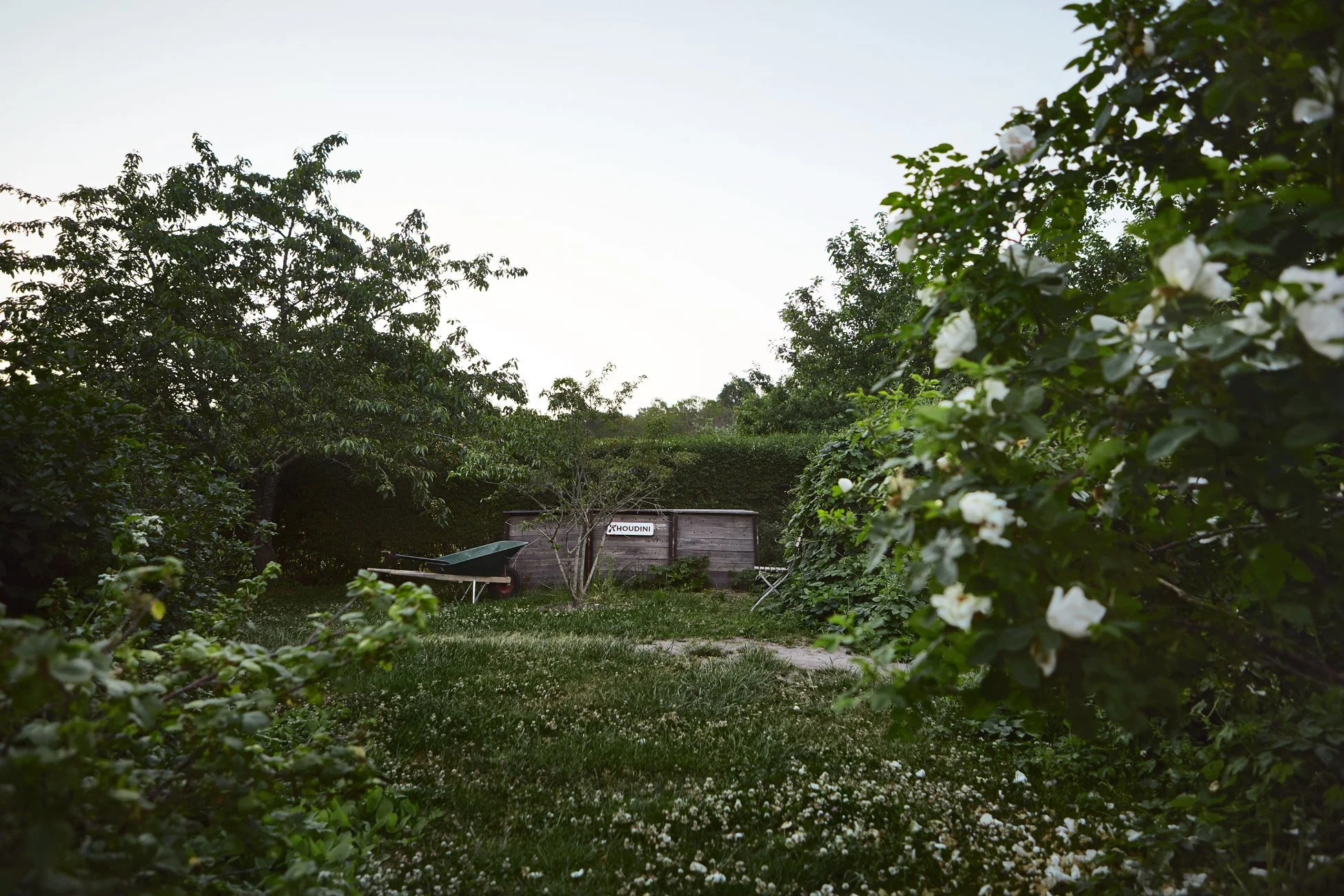
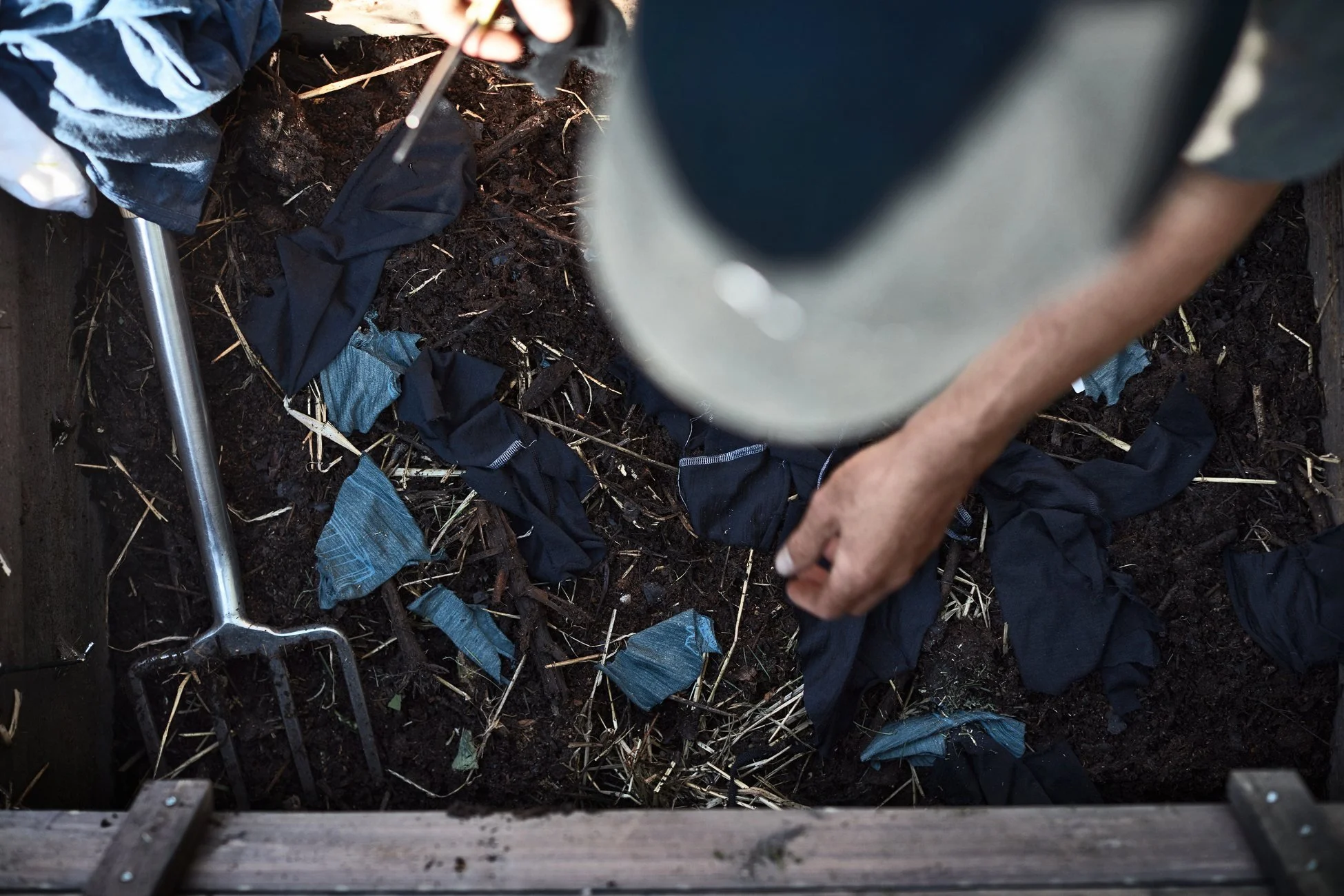
All their wool garments are biodegradable and since 2018, Houdini has a clothing compost at Rosendals Garden in Stockholm.
BUILDING A CULTURE OF SHARED RESPONSIBILITY
At Houdini, sustainability and impact isn’t confined to one department.
“We measure and have KPIs, of course,” Eva explains. “But frameworks alone don’t make people tick. It’s the combination of science and spirit – deep ecology, indigenous thinking, the emotional and rational. That’s what drives team culture and change for us.” She adds: “It’s about caring for clothes and feeling connected, even spiritually, to what we create.”
With just 40 employees, “but doing the work of 400”, as Eva puts it, the company is deeply values-driven. “People here are passionate. Our framework helps us navigate, but it’s our shared values that make it work.”
REDEFINING WHAT GROWTH MEANS
According to Eva, growth must be redefined.
“The most important thing is expanding our perspective on value creation. Monetary wealth is just one part. Our value creation includes happiness, cultivating trust, personal growth of our employees, strong relationships, and genuine customer connection.”
That philosophy extends to their open-source approach (including sharing innovations like their microplastics-free fabric technologies with industry peers, complete with supplier details).
“Its beautiful to see our solutions scale beyond Houdini! However, the rate of adoption doesn’t represent anything near the transformation we need to see in our industry. Brands need to pivot from outdated technologies. If policy-makers and big retailers demanded change, it would help drive that shift,” Eva notes. “We’re too small to do it alone, but it’s time for the industry to move.”
For Houdini, sustainability is inseparable from profitability.
“Our impact work is a catalyst for creativity and innovation and a driver of our growth,” Eva says. “Our circular business model, including care and repairs, resale, rental and subscriptions, in addition to products that are built to last, cultivates loyalty. Returning customers become ambassadors. It’s grassroots marketing.”


“Eva’s dream? Creating “regional biomes” – closed-loop systems where fabrics, production, and even food systems are locally interconnected, empowering local communities to lead beautiful, convenient and regenerative ways of life.”
FUTURE FRONTIERS: ECOLOGY, MATERIAL INNOVATION & COMMUNITY
Eva’s dream? Creating “regional biomes” – closed-loop systems where fabrics, production, and even food systems are locally interconnected, empowering local communities to lead beautiful, convenient and regenerative ways of life. One of the most tangible examples is The Houdini Menu, a project that brought Houdini’s regenerative philosophy to life. In partnership with Rosendal Gardens in Stockholm, the team composted their worn-out 100% natural wool base layers, turned them into fertile soil, and used this to grow vegetables that later became part of a fine-dining experience.
“We wanted to see if a garment could go all the way back to nature and contribute to new life,” Eva explains. “The result was food grown from decomposed clothing – a beautiful symbol of how we can design to partner with natural systems rather than deplete them.”
This project, along with Houdini’s broader vision of regional biomes, demonstrates a new kind of regeneration: one that merges ecology, material innovation, and community.
Collaborations remain central to this ethos. “We love working with like-minded partners and learn so much through these projects,” Eva says. “This journey is our generation’s adventure. Our way to climb the unexplored peaks.”
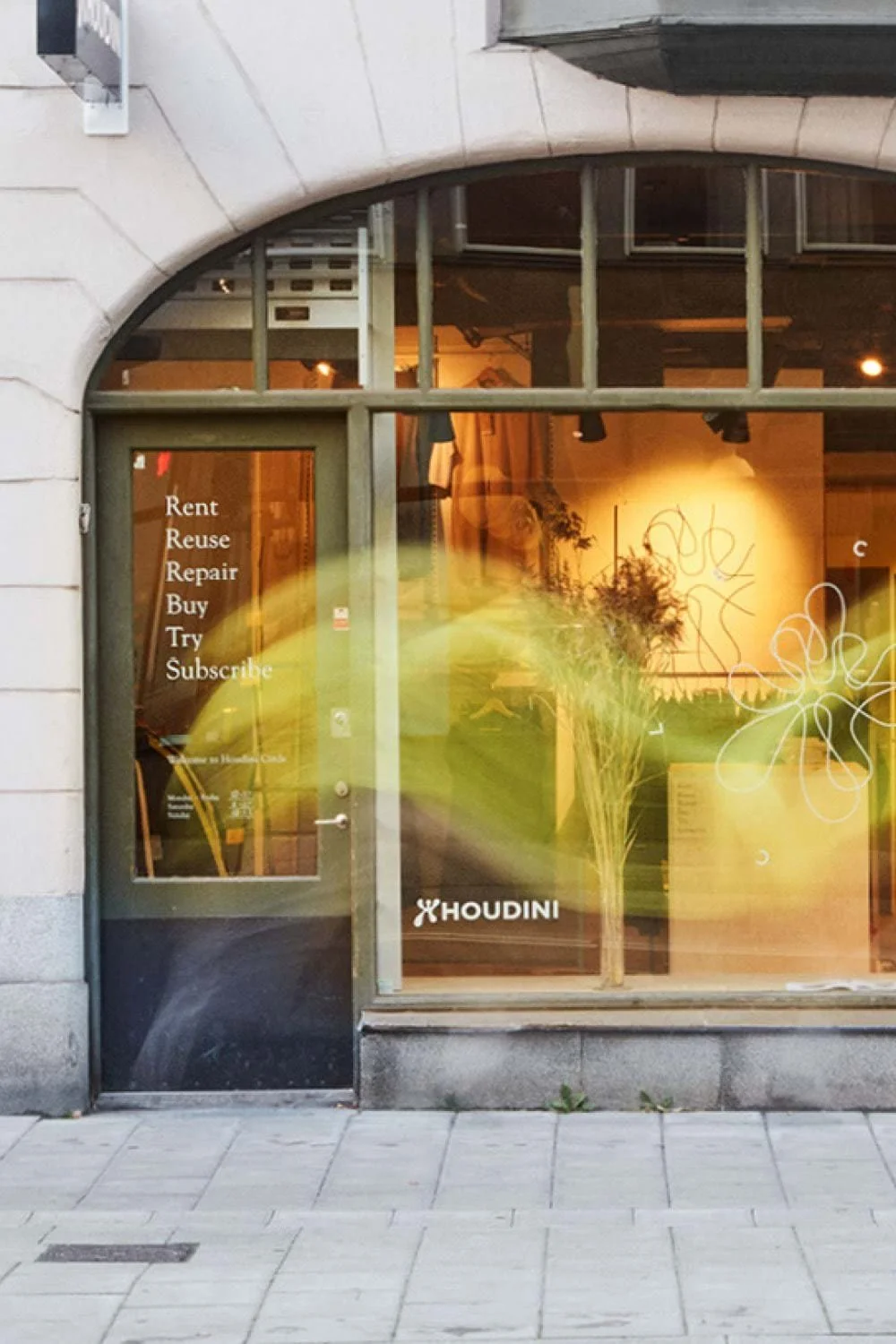
Houdini Circle on Norrlandsgatan 12, Stockholm.
Lilian Liu is an award-winning sustainability strategist and the founder of Blossom. Through strategy and implementation, Blossom helps mission-driven companies and organizations grow value through sustainability – supporting profitability, stakeholder loyalty, and long-term resilience. More information at www.theblossom.co
Eva Karlsson is the co-founder and Chief Creative Officer of Houdini Sportswear. Since the start in 1993, Houdini has been reimagining the future of outdoor apparel. With cutting edge material technology, refined aesthetics and circular design, Houdini is setting a new standard for top tier functional clothing. More information at houdinisportswear.com
Images are provided by Houdini Sportswear.
Follow on instagram @lilianliu @houdinisportswear
–
Interview published for ONE Magazine Online

YOU MIGHT ALSO LIKE




The first of our One | At Home Series, photographer Vanessa Granda opens the doors to her peaceful home, sharing how she built a space around comfort, intention, and the art of slowing down.