
Paradero
Shaped by the land, the people who tend it, and the pace it invites you into.
Words EMILY PETRUCCIONE
Images courtesy of PARADERO & HOTEL WEEKEND
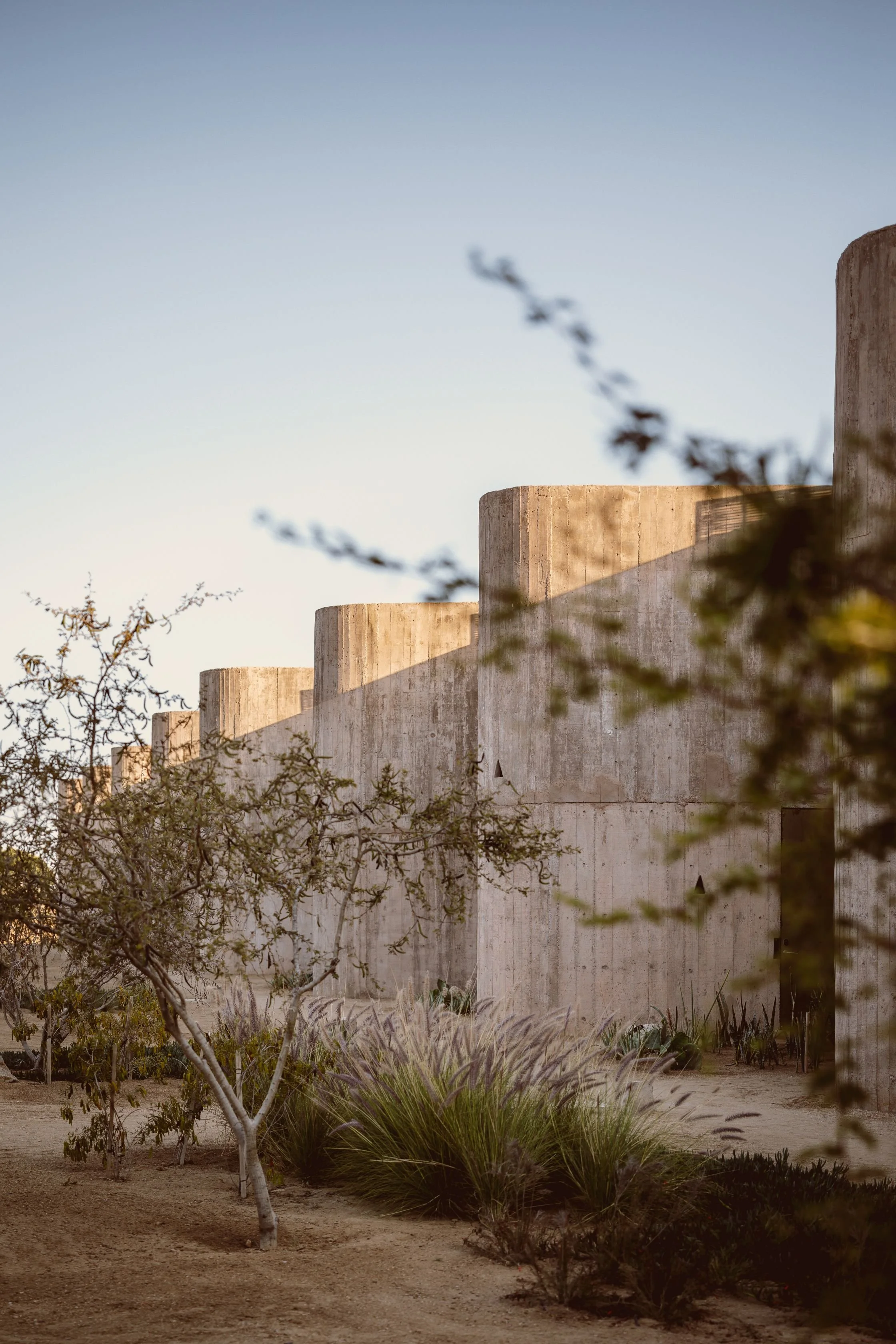
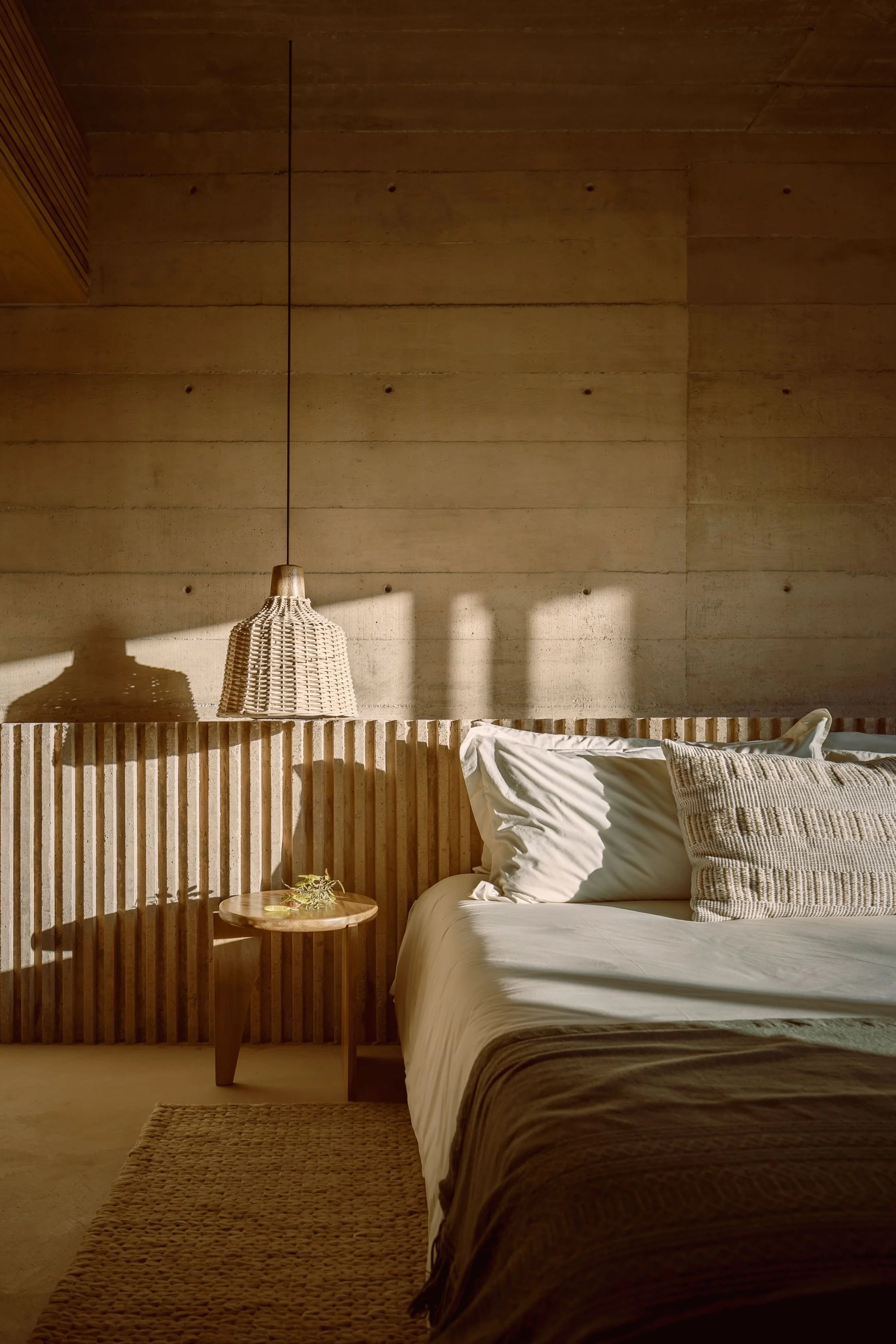
Paradero does not announce itself as a luxury destination. Instead, it unfolds gradually through landscape, human presence, and an attentiveness to place that feels increasingly rare in what is considered luxury hospitality.
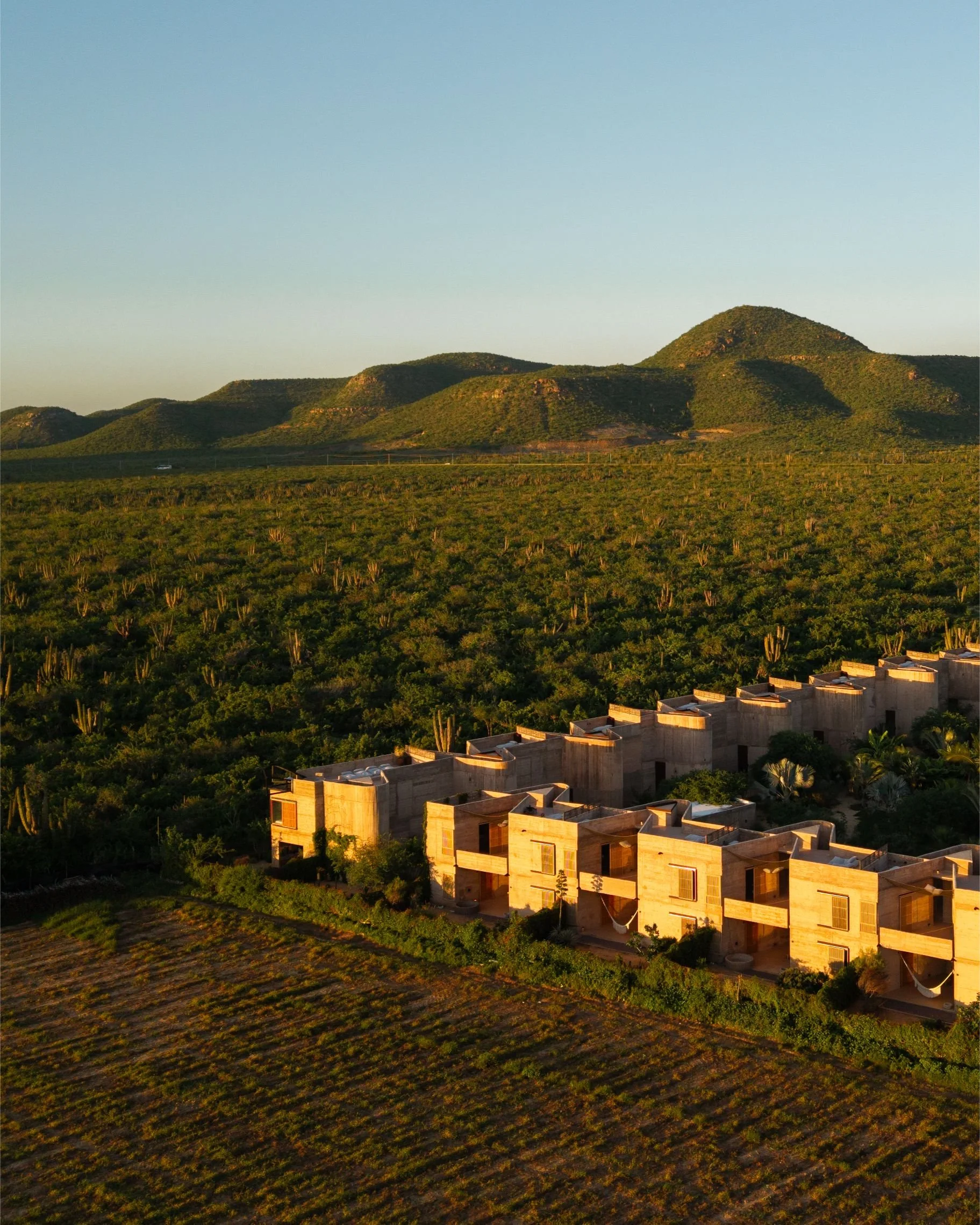
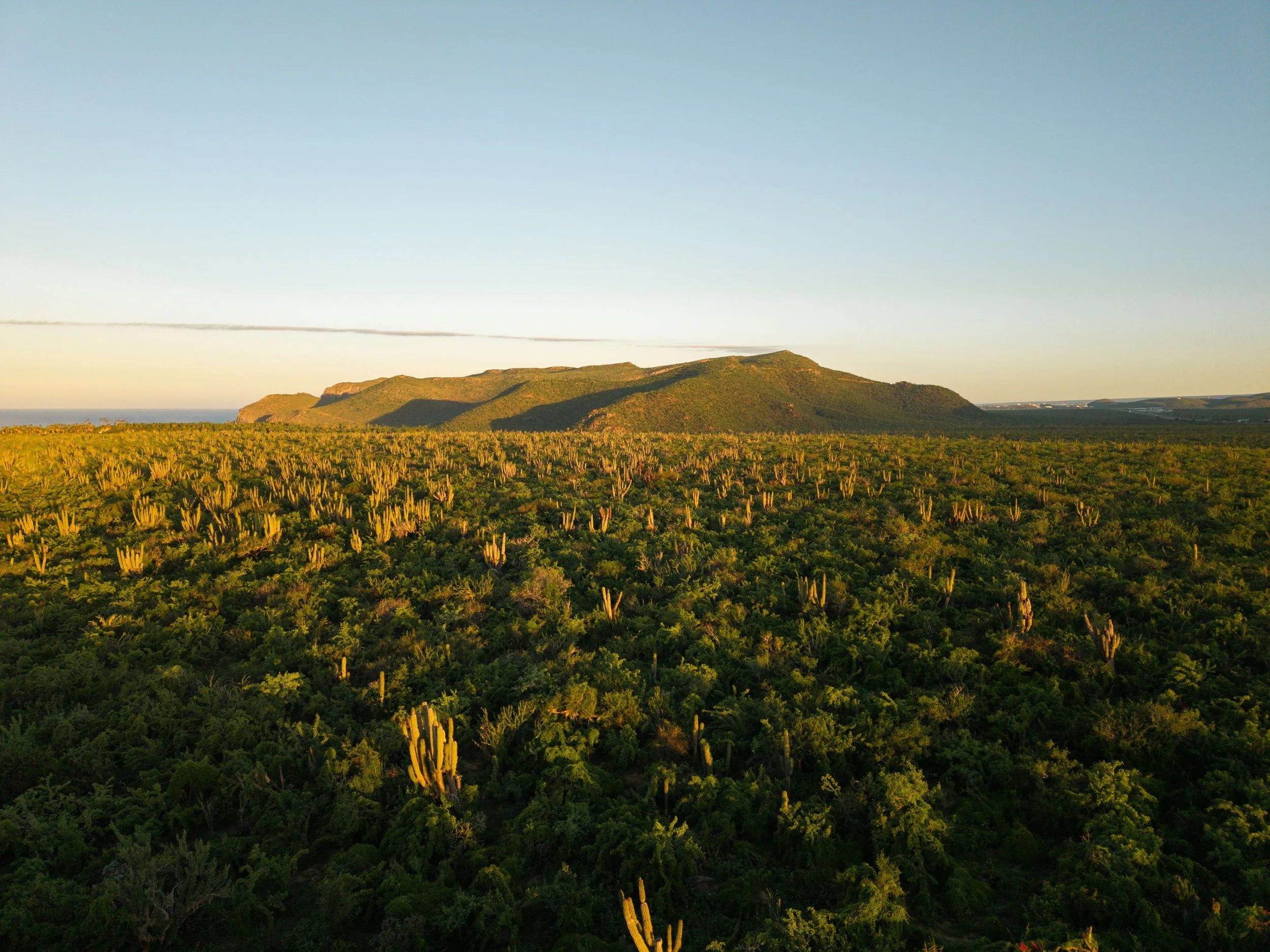
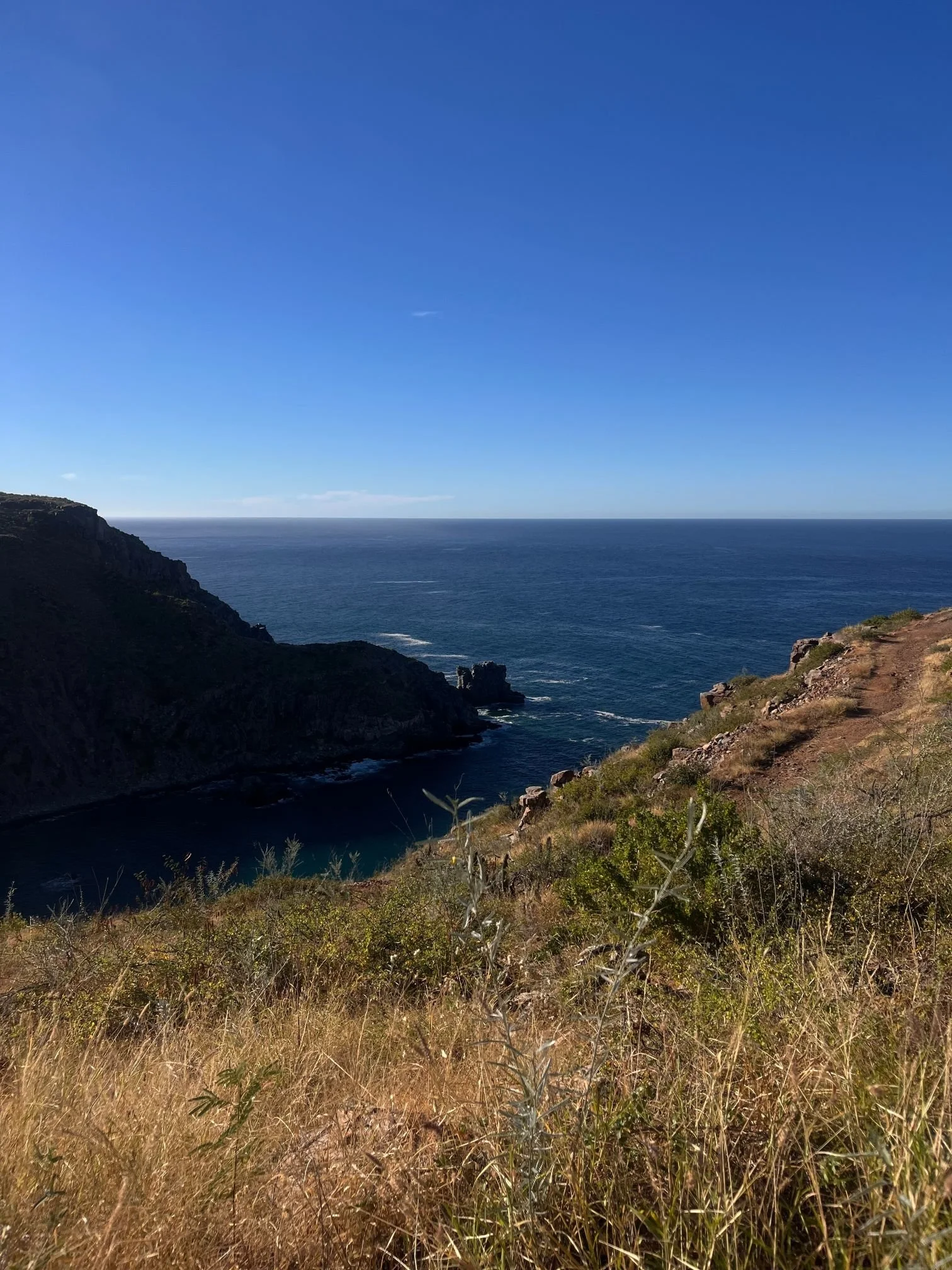
Located just inland from the Pacific in Baja California Sur, Paradero is built within its own agricultural community – 60 acres of land, to be exact. It is desert meets mountains meets sea. I was blown away by the distinctiveness of the terrain and its surrounding beauty. I had never been to this side of Mexico before and wasn’t sure what to expect.
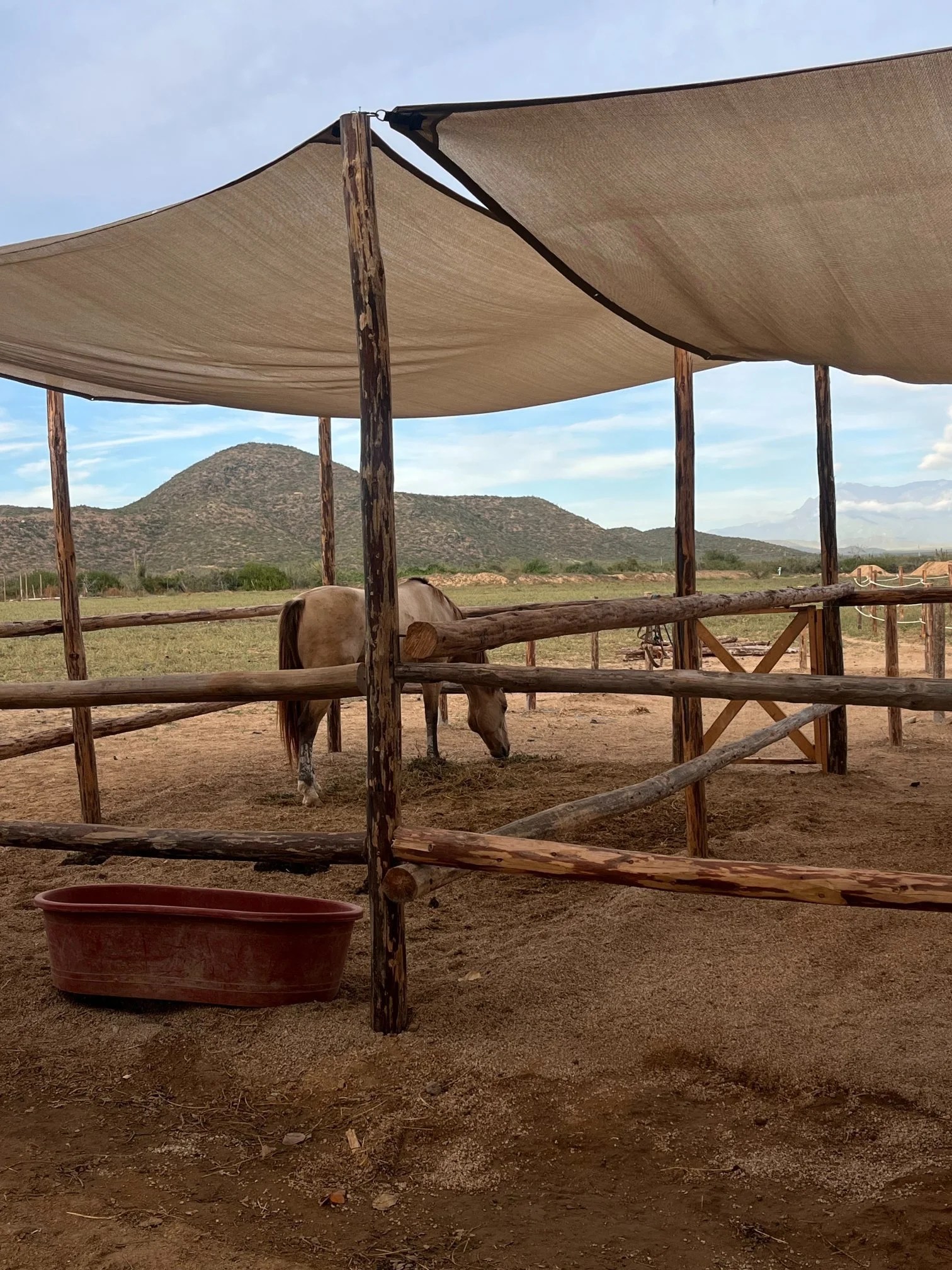
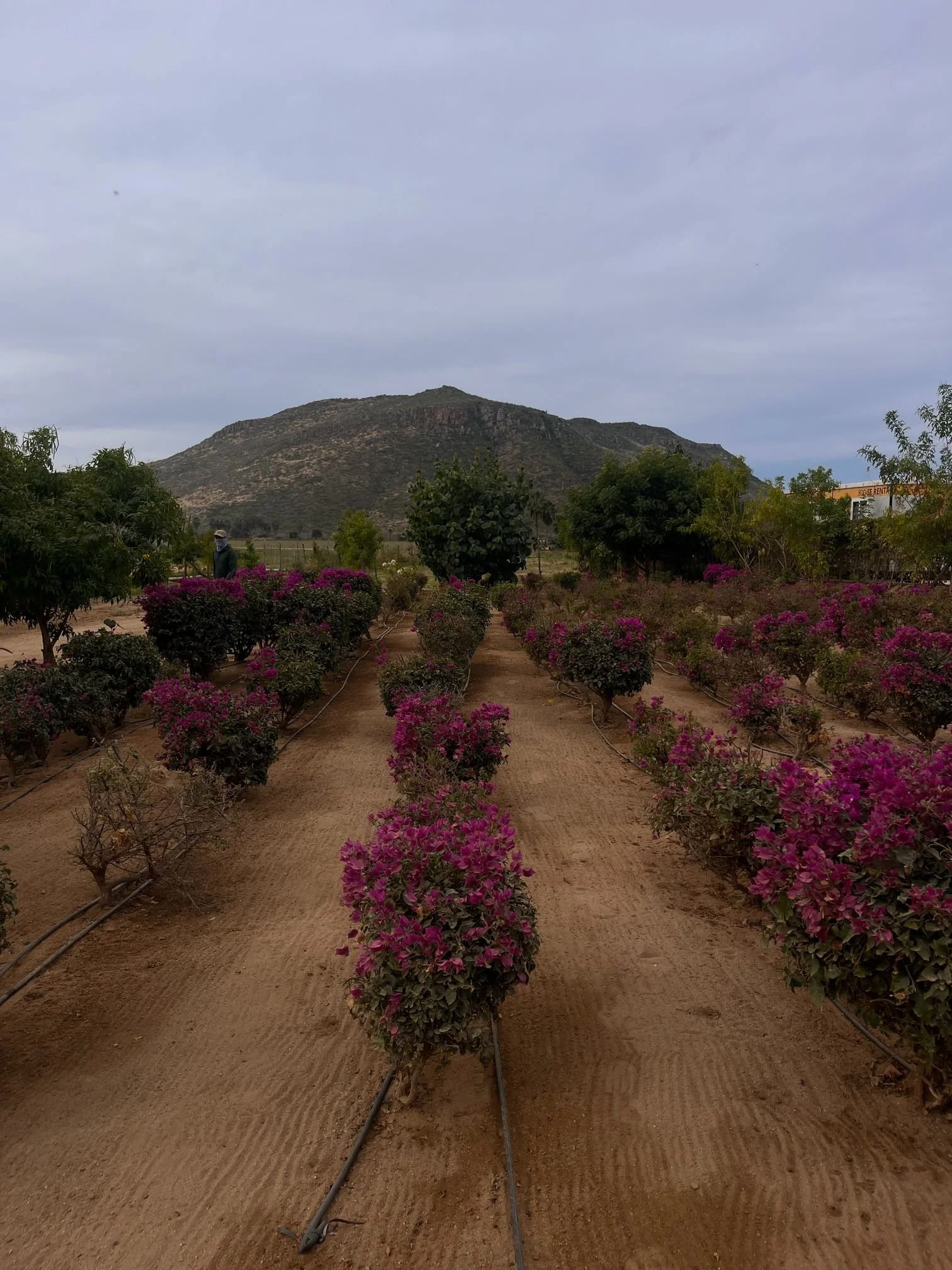
A little over an hour north of the Cabo airport lies Paradero. The drive is straight and smooth, one cleanly paved highway surrounded by mountains and the subtle scent of salty sea air. Eventually, you turn onto a dirt road and pass through a gate, welcomed onto the grounds of Paradero. As you continue, you’re met with glimpses of vegetation and vast gardening practices; colorful florals, golden-haired horses being bathed by workers listening to Spanish music. The land immediately feels alive.
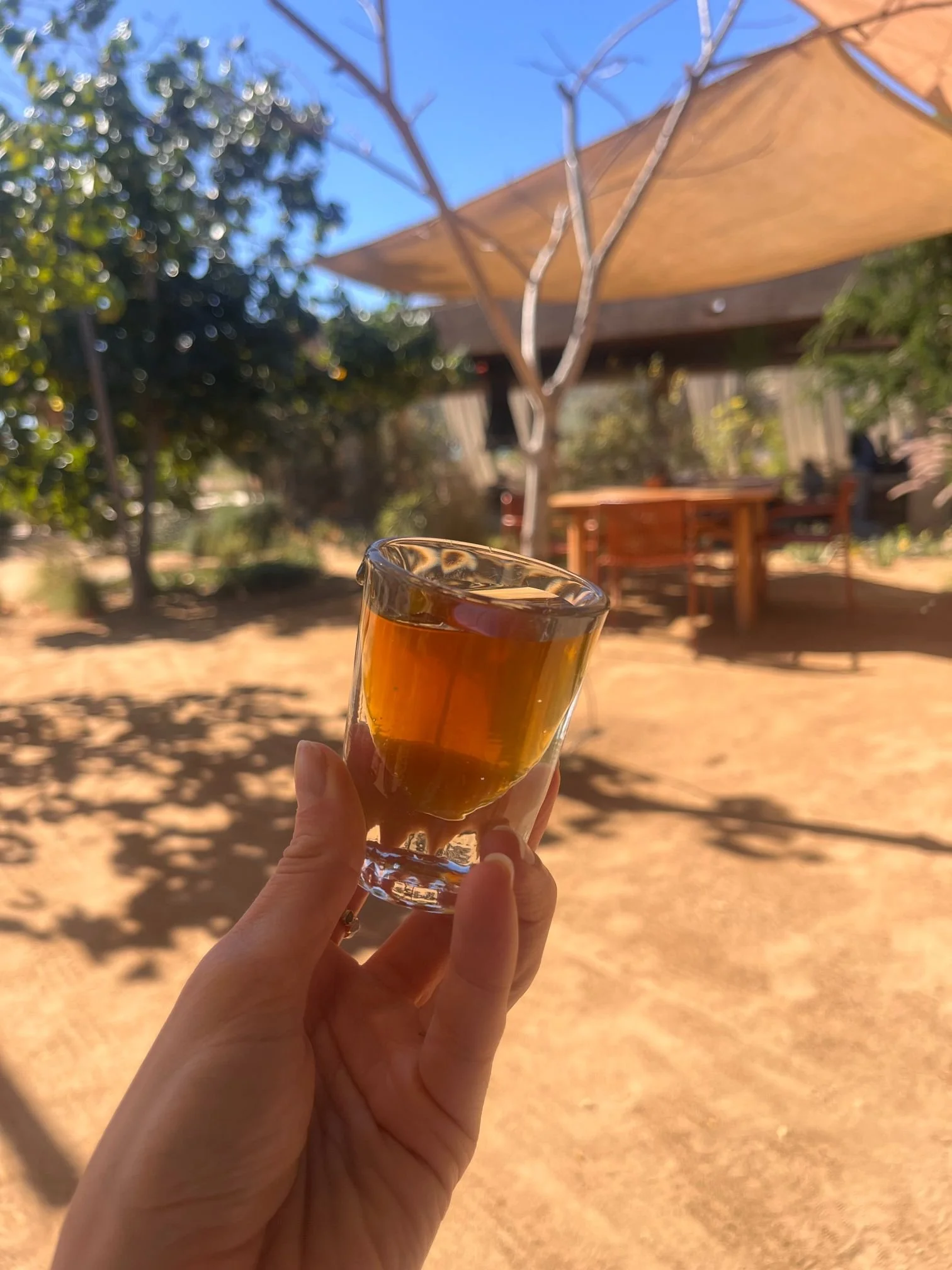
The standards of hospitality are set the moment you step out of the car. You’re greeted by the concierge, the property dog – a black lab named Agent – a glass of fresh hibiscus water (that looks just as good as it tastes), and a guided tour of the property while your bags are stowed in your room.
It is hard not to let excitement build at this point.
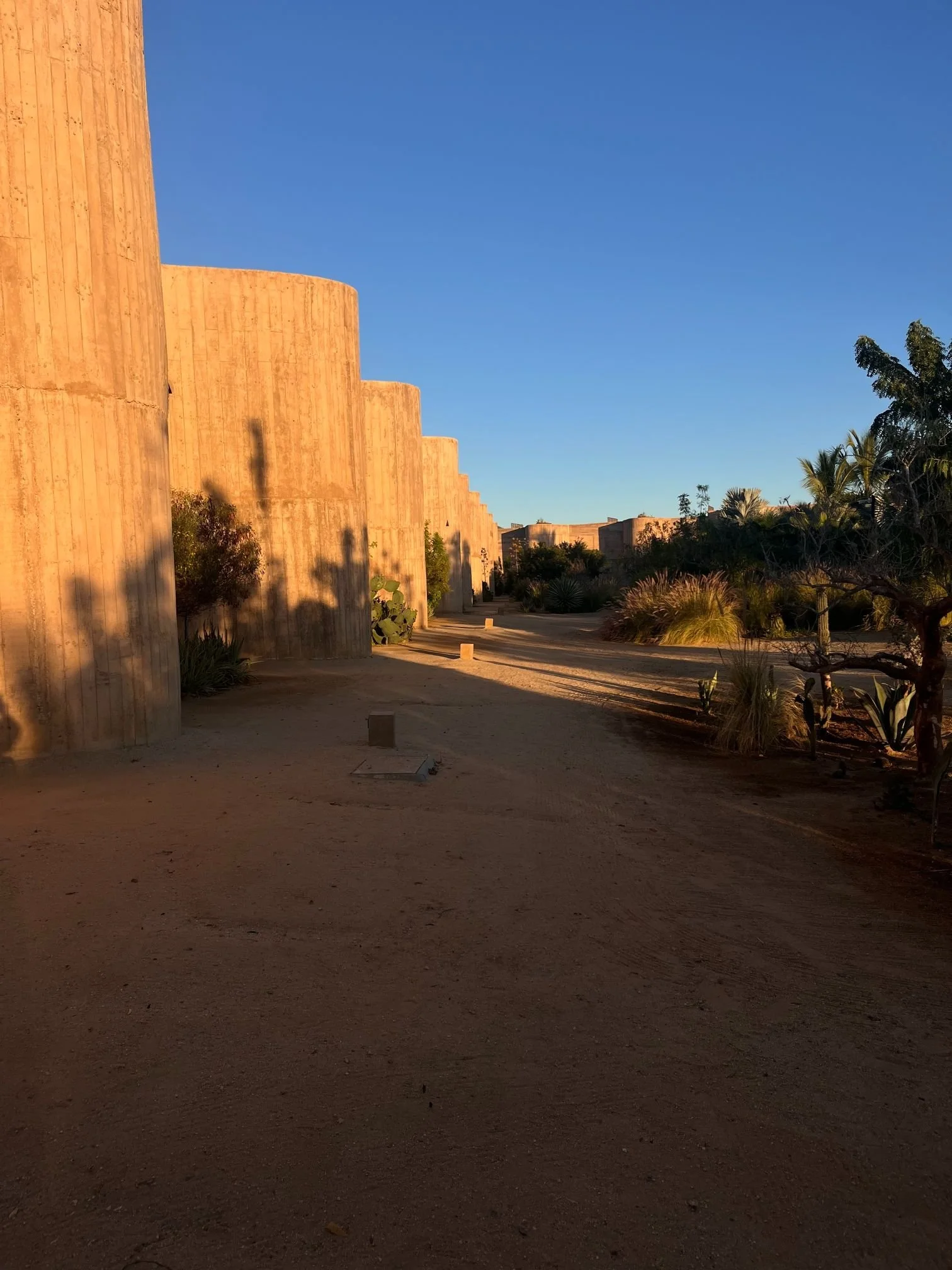
Every detail of Paradero is intentional, beginning with the entrance – a winding hallway that offers a first taste of the property’s brutalist architecture alongside the meditative sound of ocean waves crashing. You’re immediately put at ease and the tone is set for your time there.
THE ARCHITECTURE
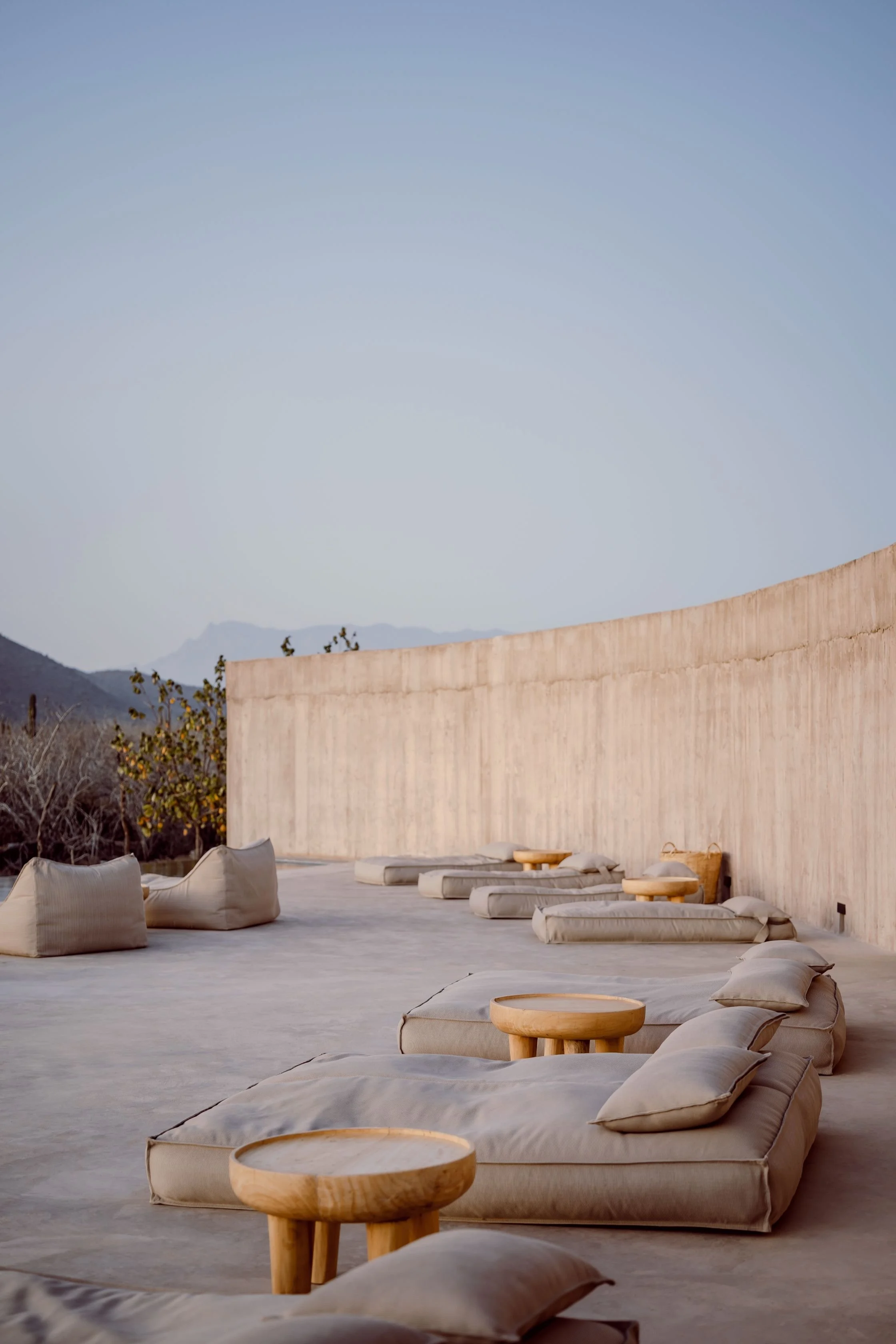
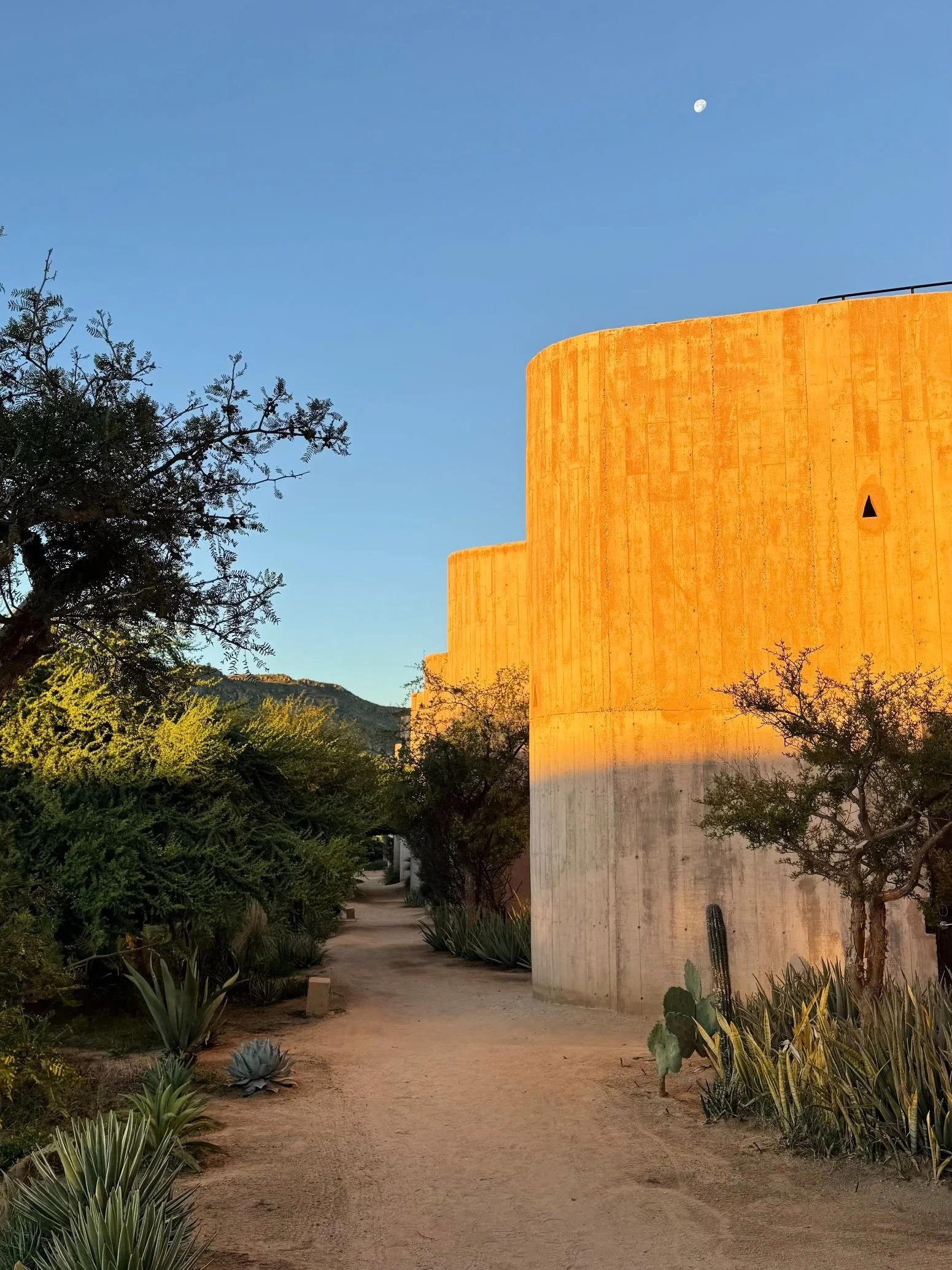
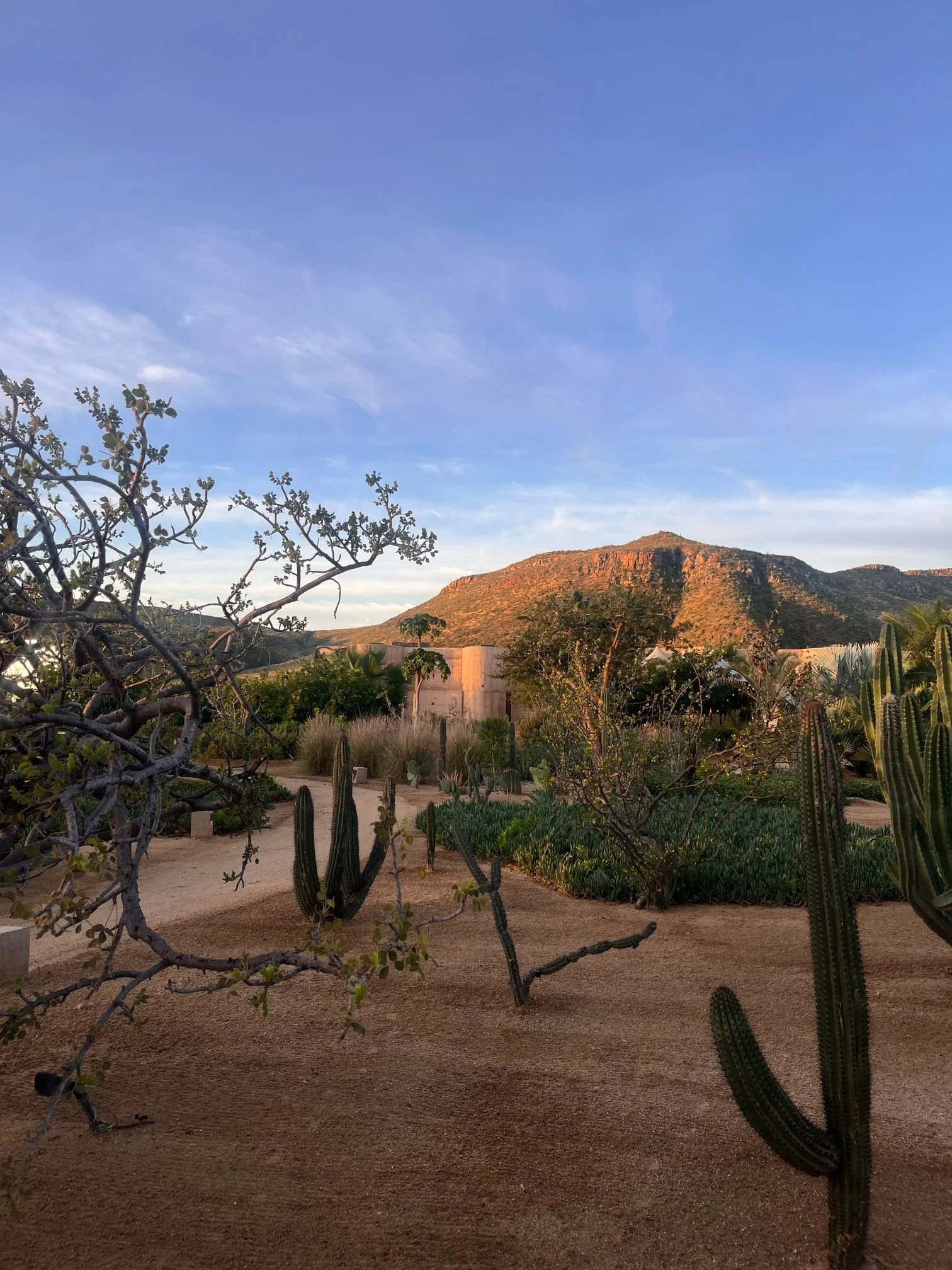
The architecture at Paradero is intentionally subdued. Low profile concrete structures mimic the tones and textures of the surrounding desert, blending in with a sense of timelessness while still feeling like a reflection of contemporary design. What becomes clear is that there is no major distinction between building and environment – no attempt to dominate the land or frame it as anything other than what it is.
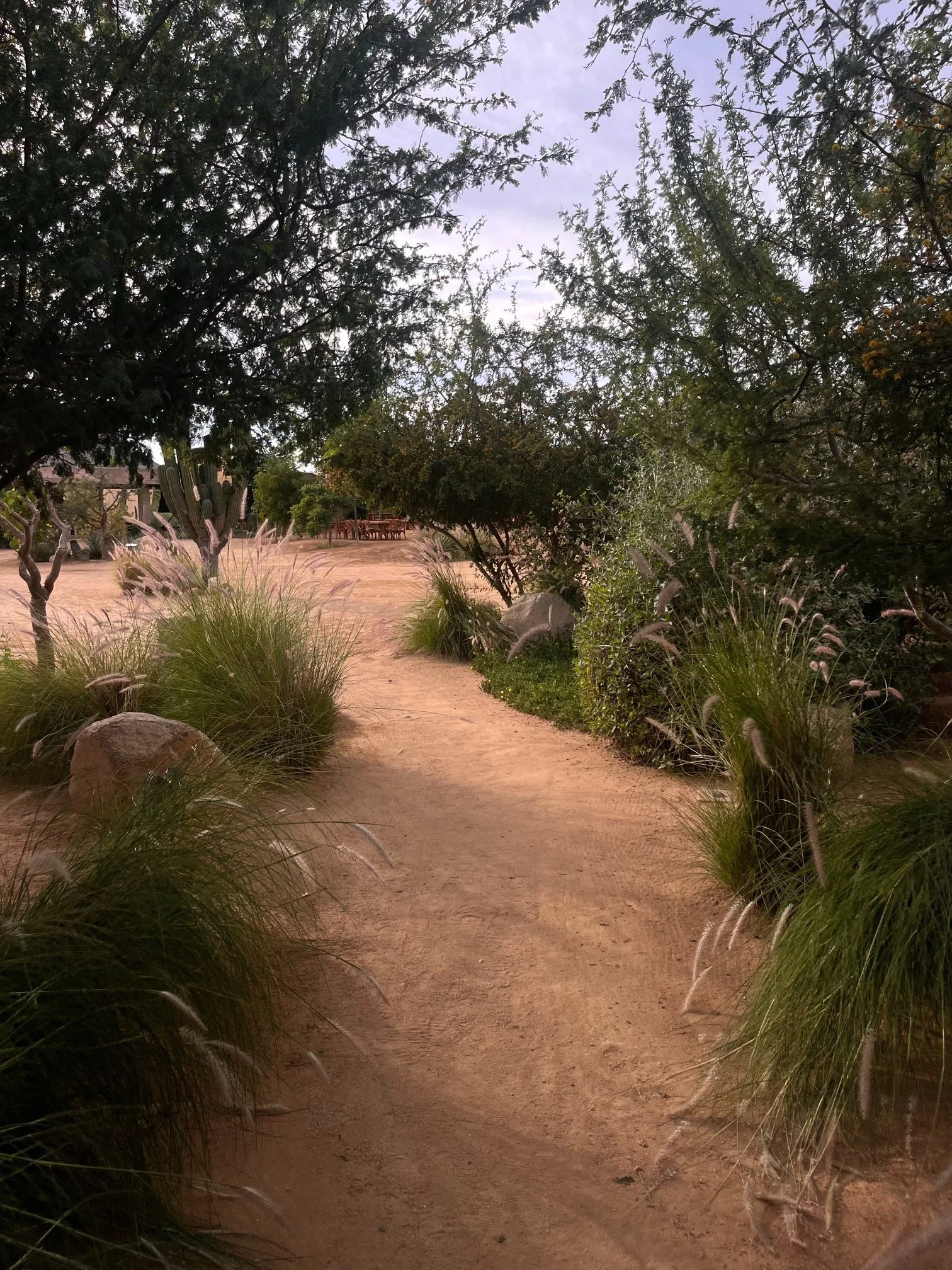
Movement through the property is slow by design. As hinted at by the entrance, paths lead guests past gardens and tended landscapes before arriving at private spaces.
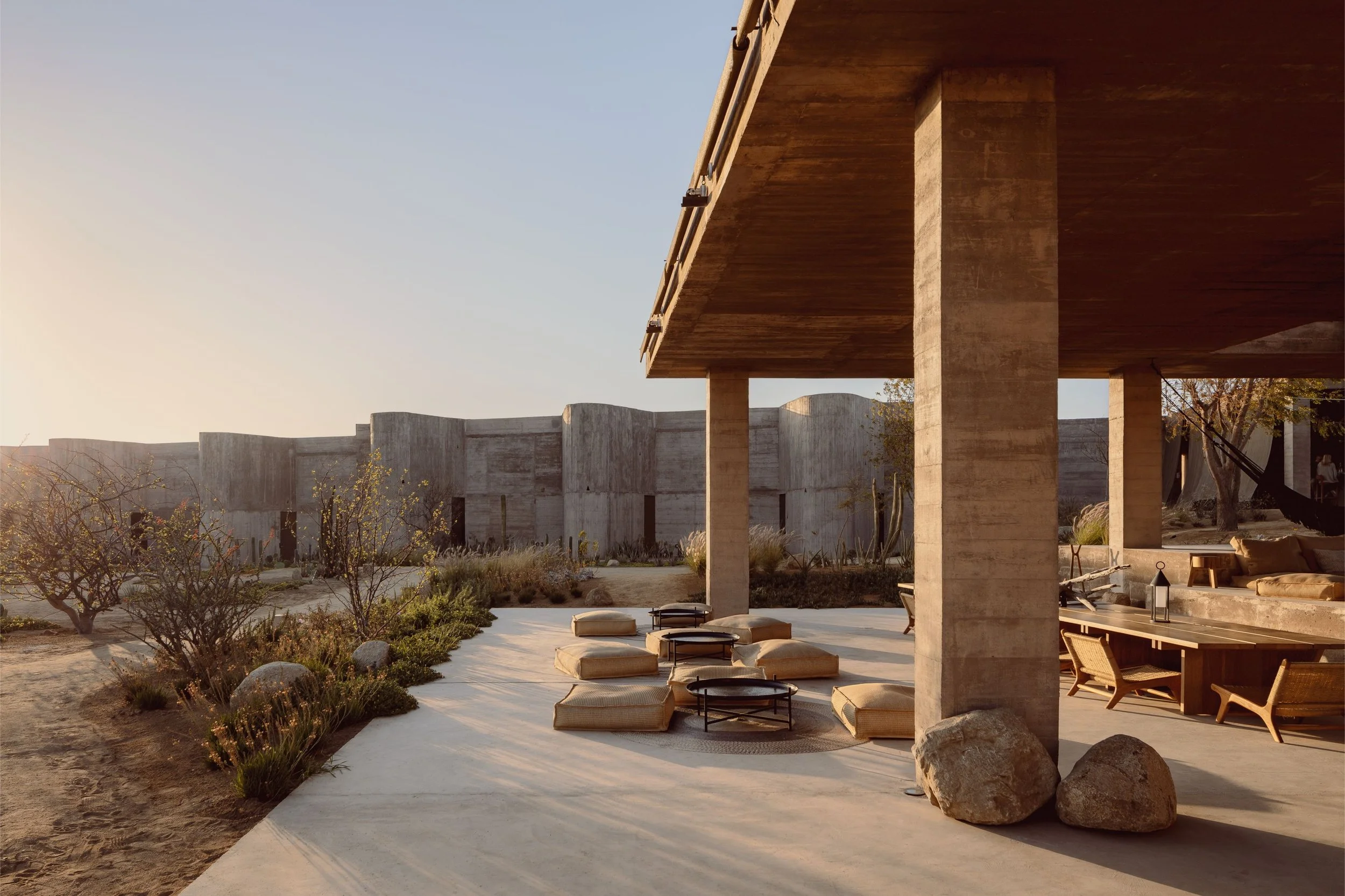
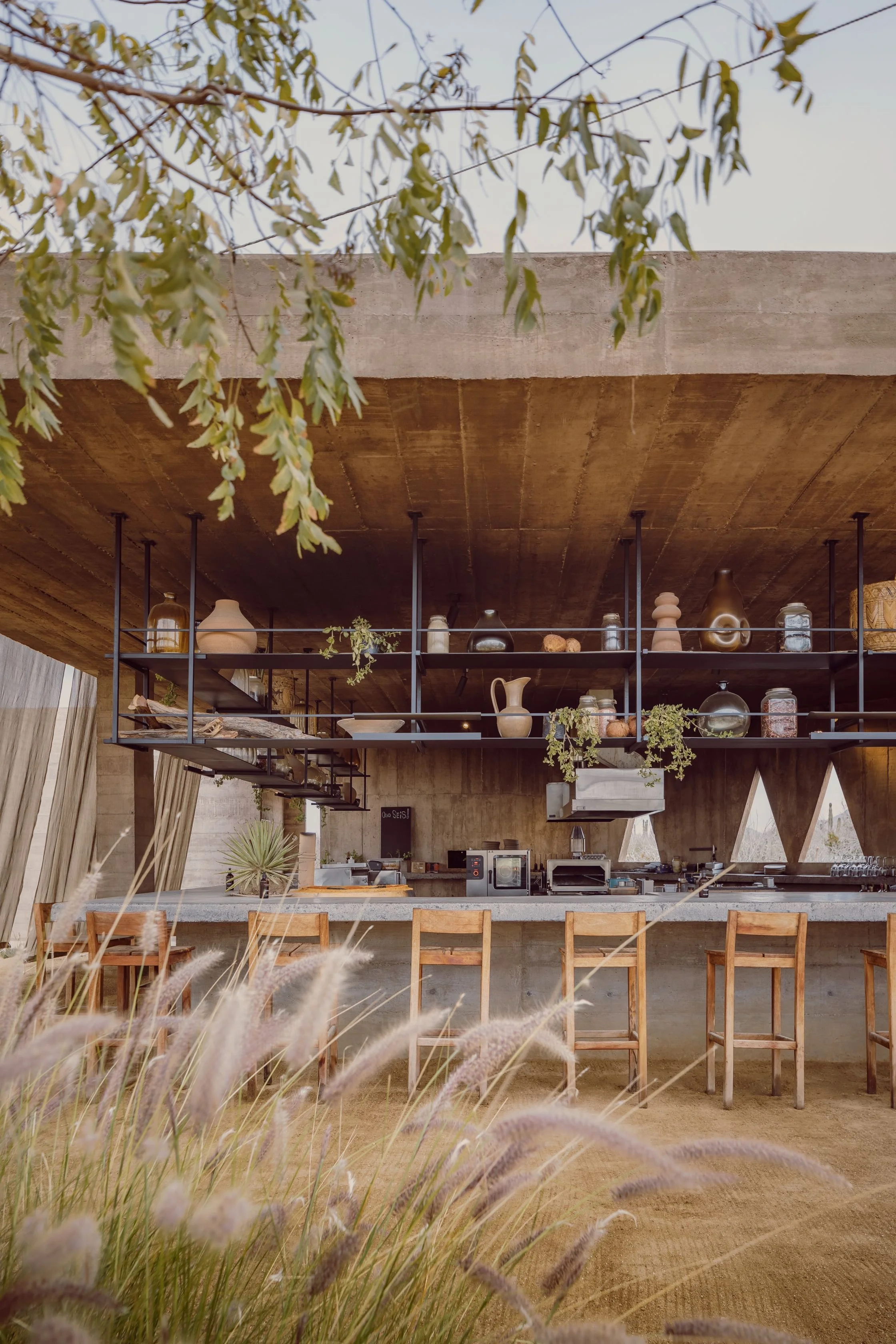
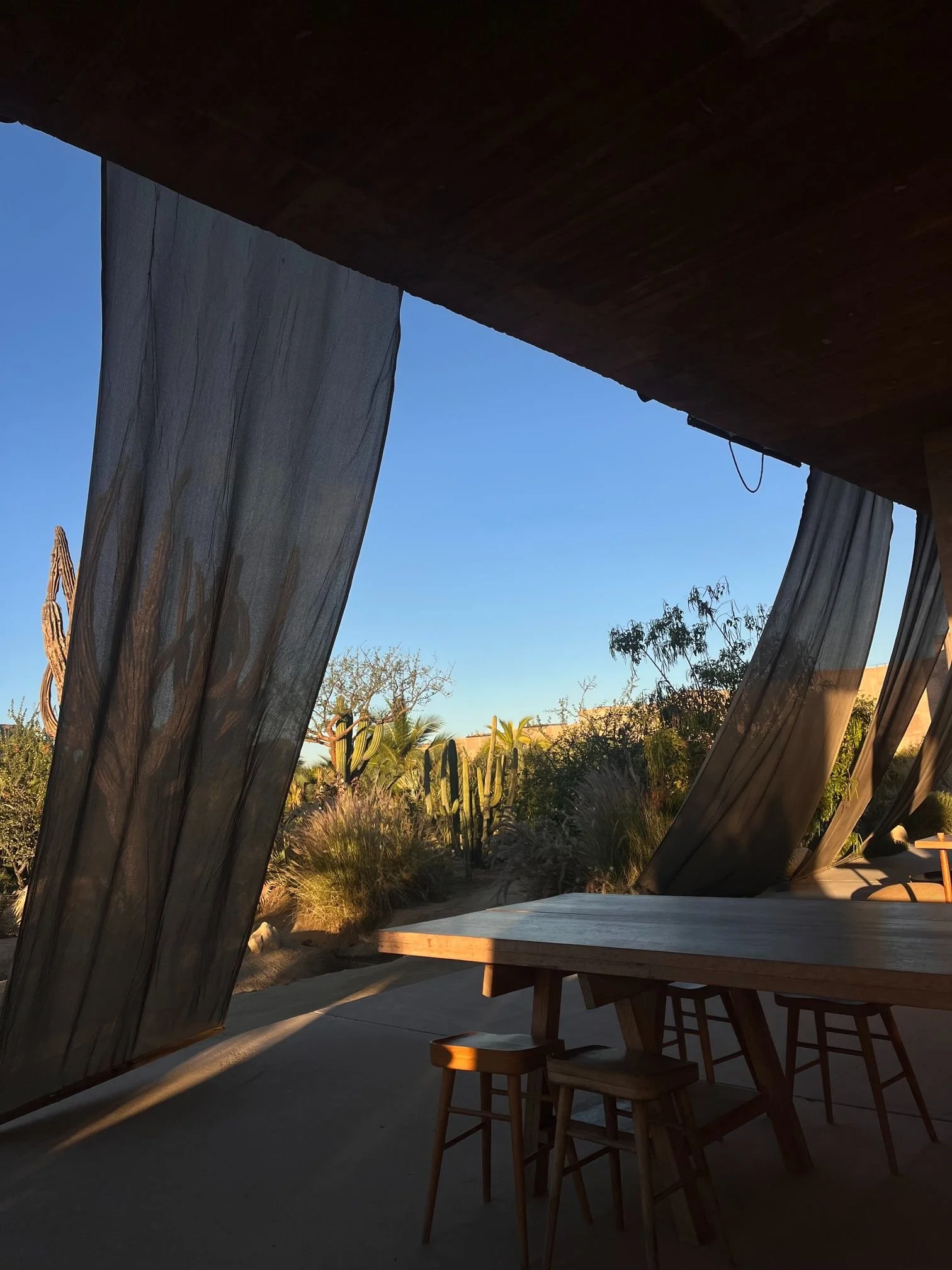
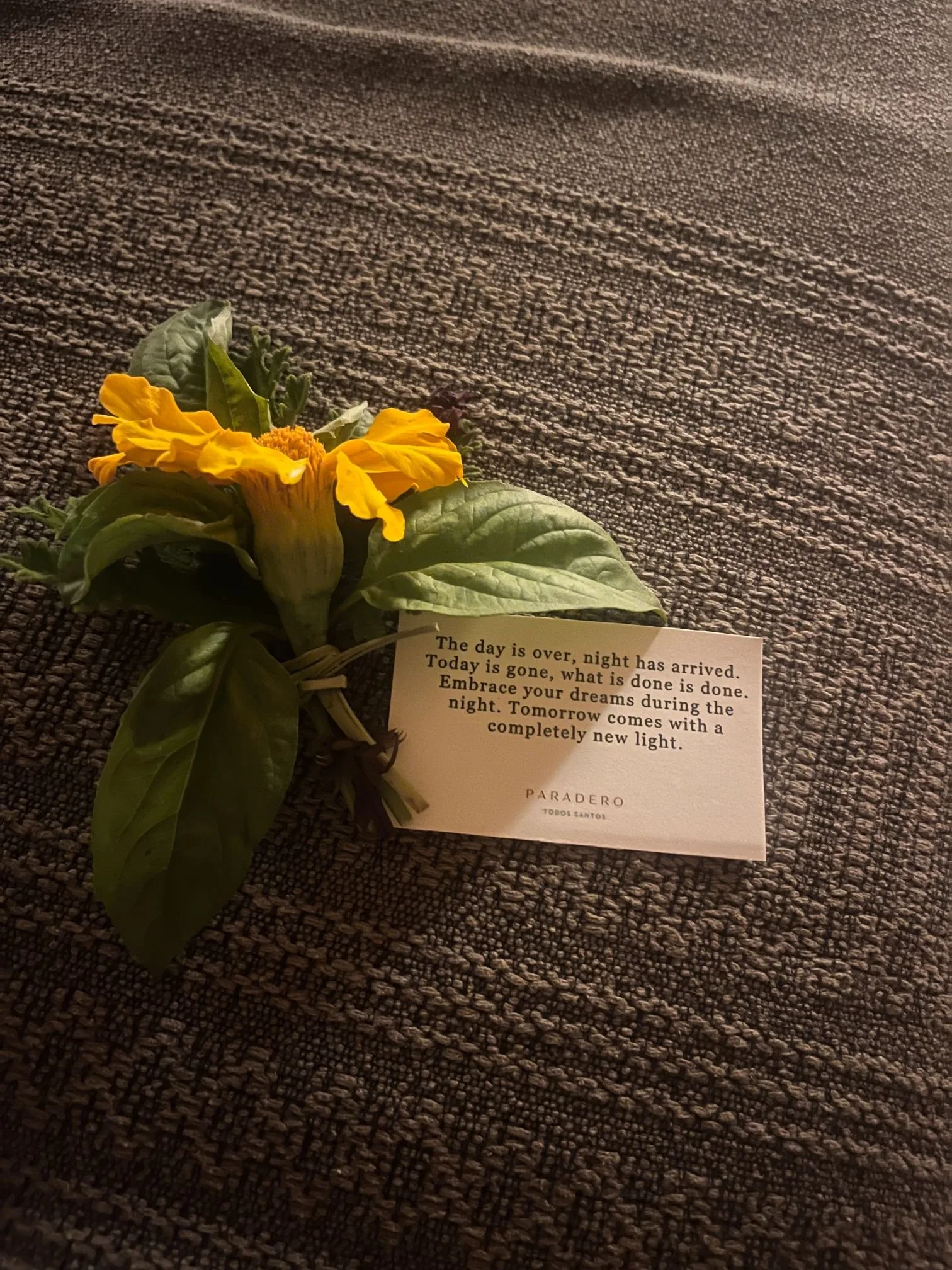
You notice its unique elements almost immediately: the open-air “lobby”; camouflaged outdoor showers and handwashing stations stocked with soaps and lotions made from in-house botanical blends; and an open kitchen and dining area accompanied by soothing music from the likes of Eddie Chacon to Bedouine, a nice touch.
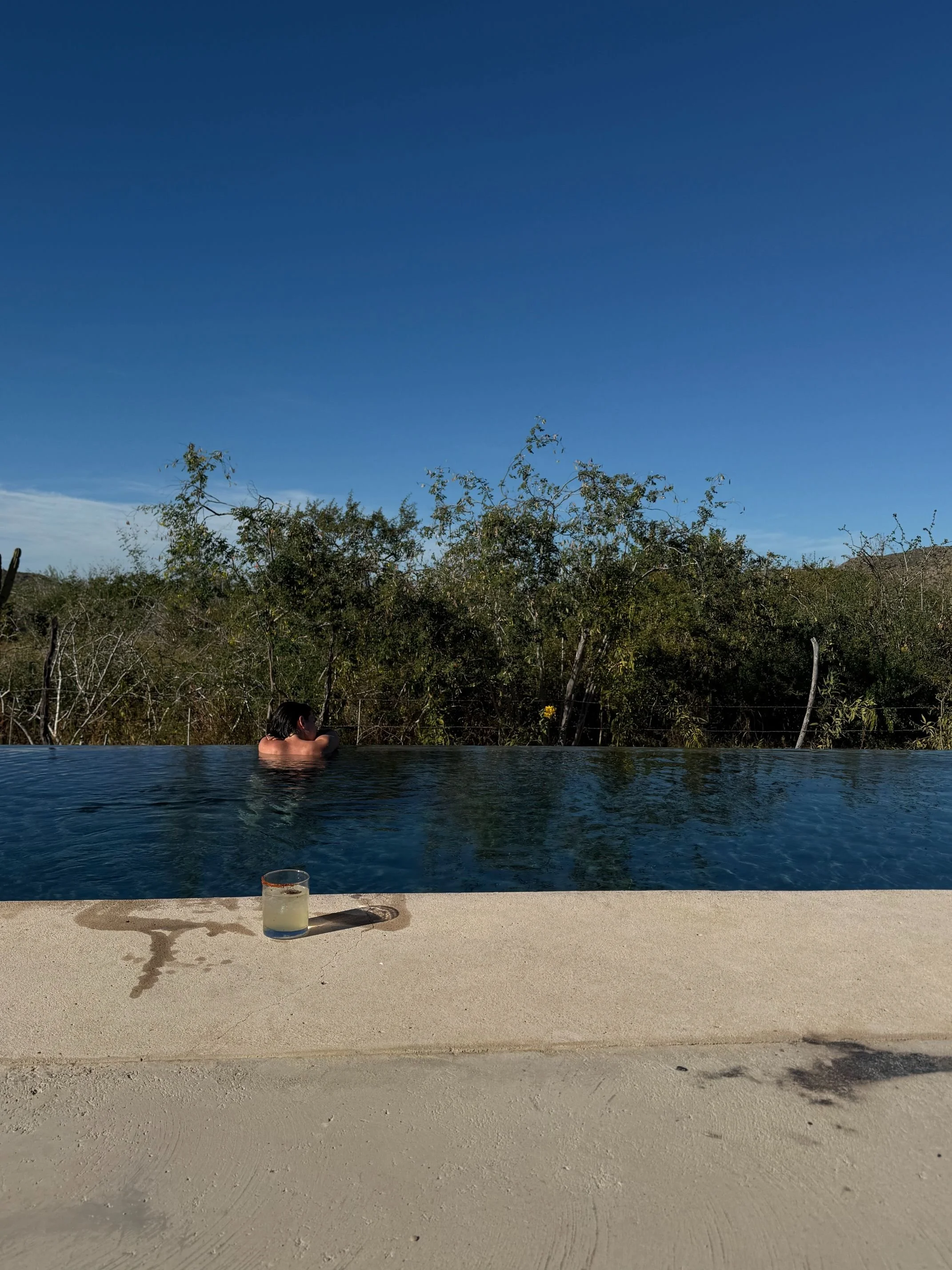
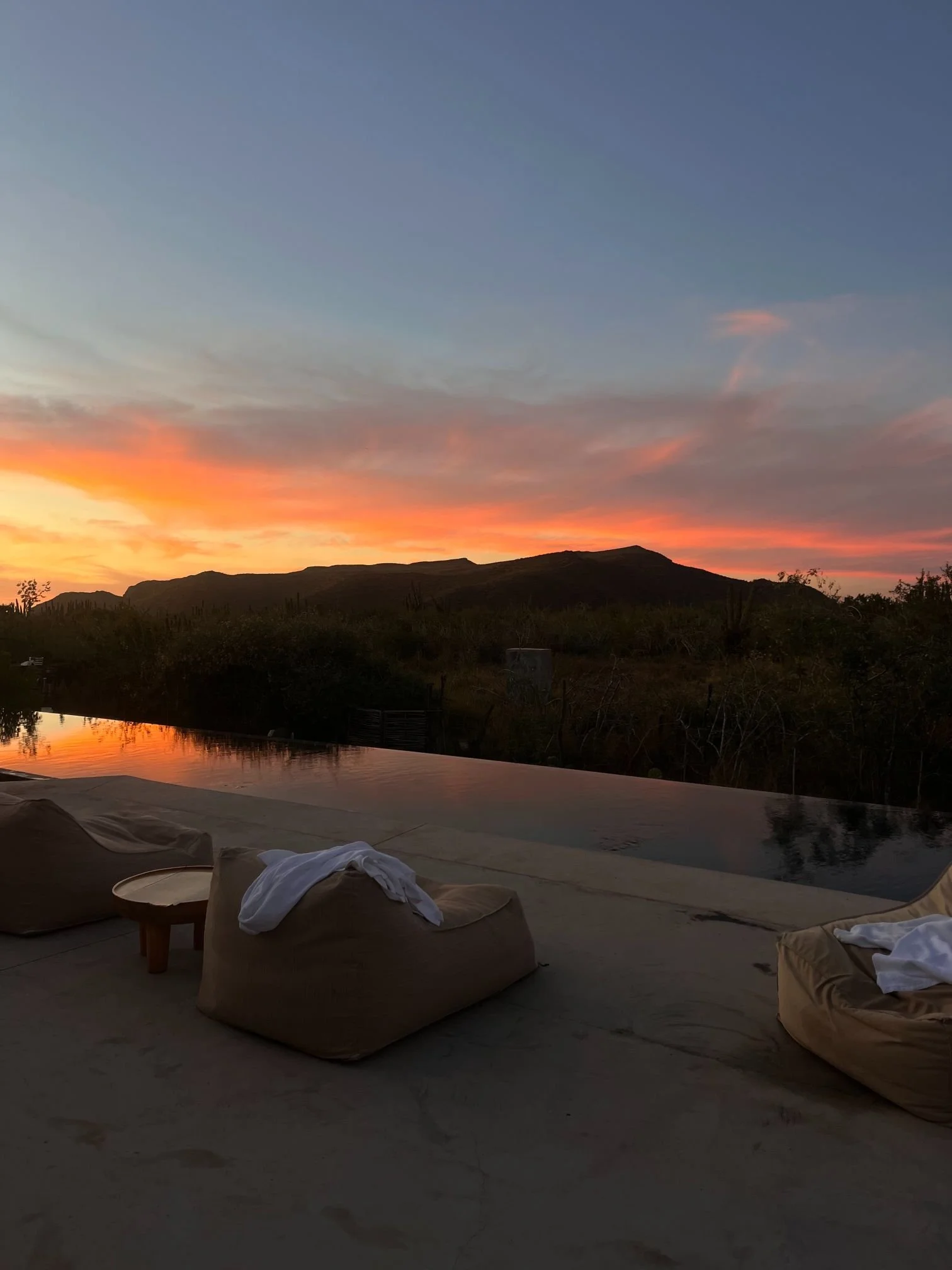
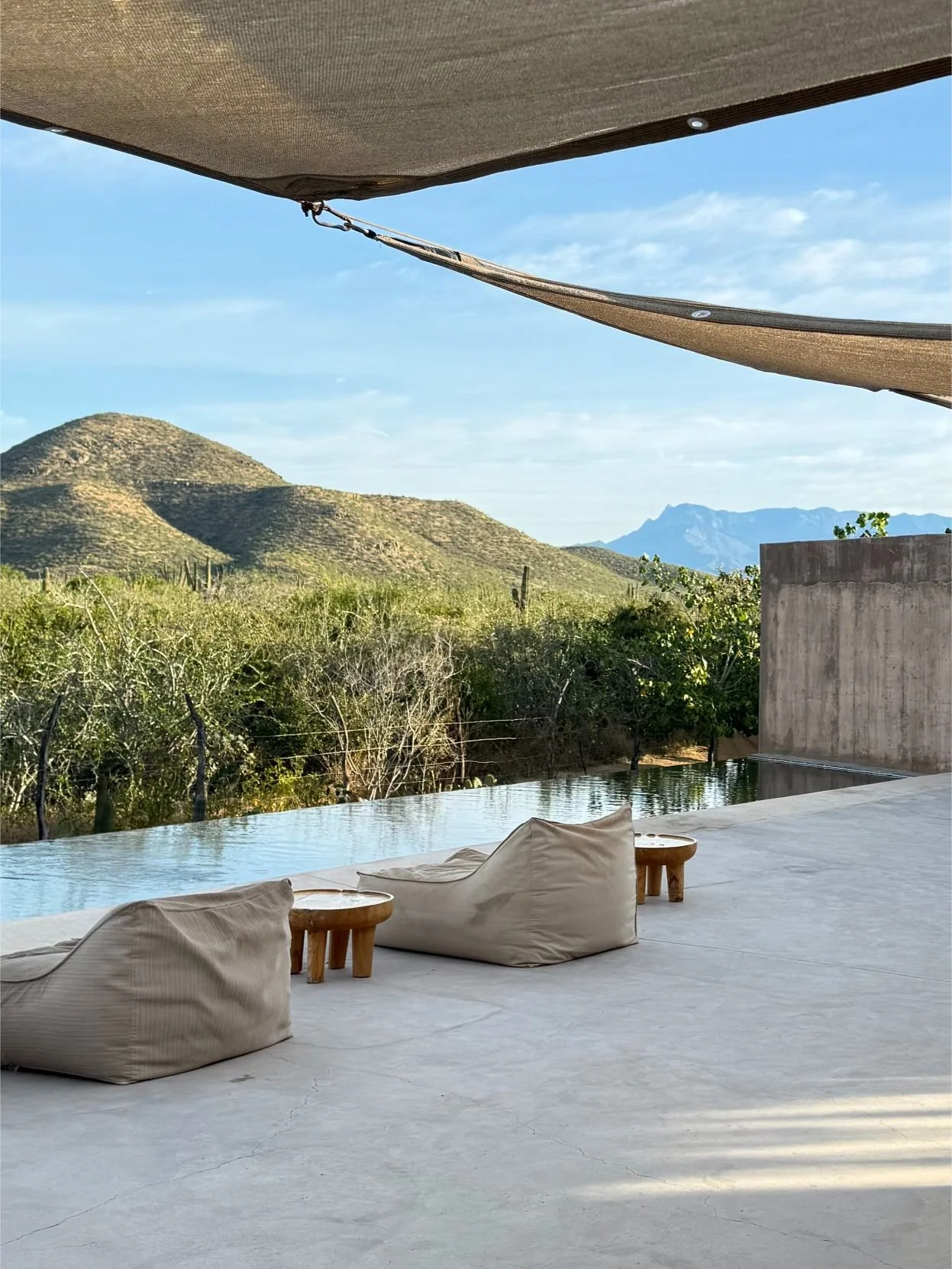
A standout feature that deserves its own callout is the serene infinity pool, with panoramic views of the surrounding mountains. Expect to spend a large amount of time here, especially in the hot tub, which offers a direct view into the kitchen. From there, you can watch as chefs prepare fresh meals using herbs and vegetables picked from the garden that same day.
The rooms are minimalist yet just as thoughtfully designed as the shared spaces. Each includes a private terrace and hammock that connects the room and bathroom, allowing for a quiet, personal relationship with the landscape – a moment to yourself at the start and end of each day.
The architecture and layout of Paradero ask for participation rather than passive consumption. You’re meant to be immersed not only in the surroundings, but in the slower nature of it all. While gently encouraged, you're easily able to match that pace.
“What becomes clear is that there is no major distinction between building and environment – no attempt to dominate the land or frame it as anything other than what it is.”
THE LAND
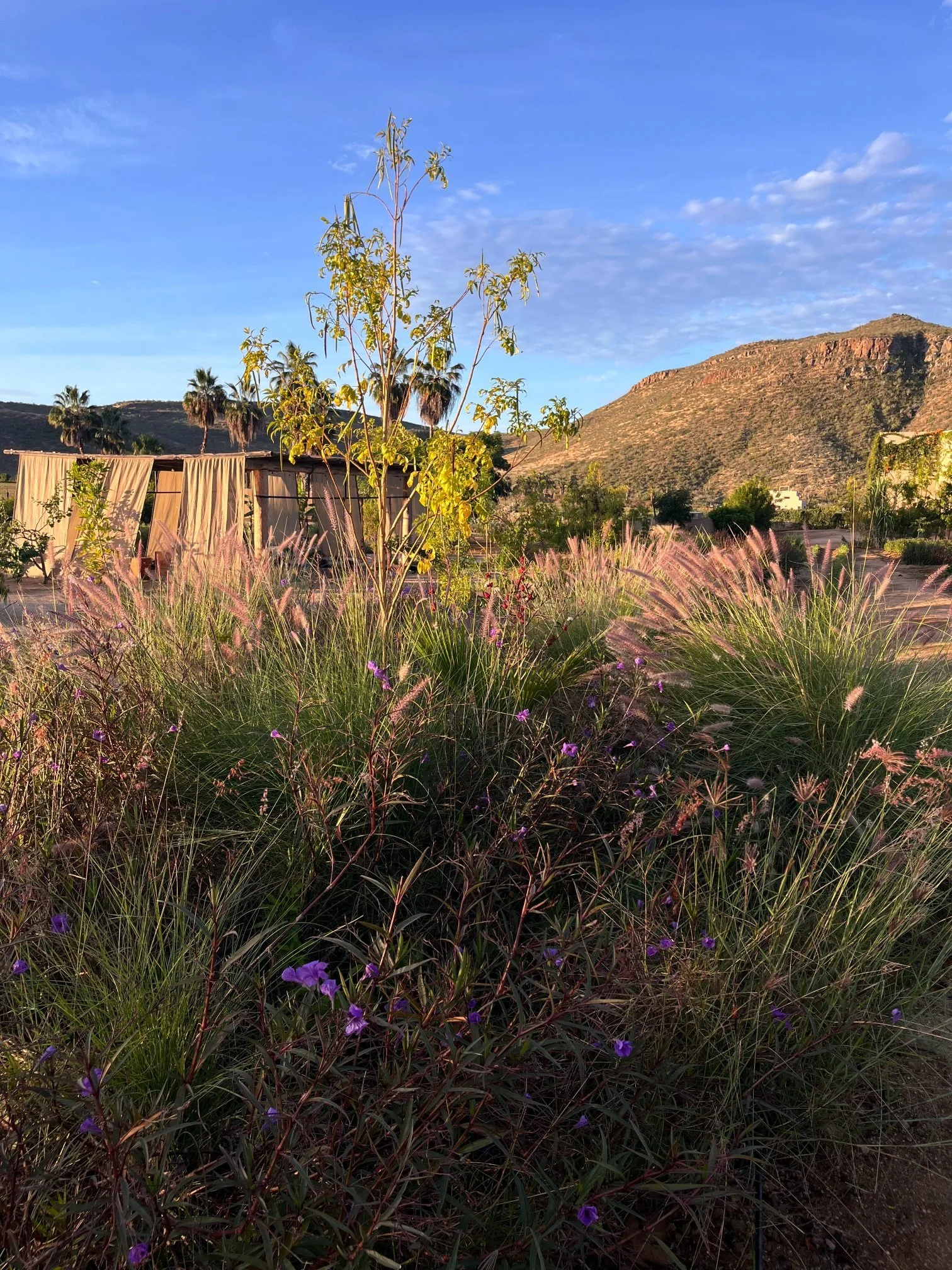
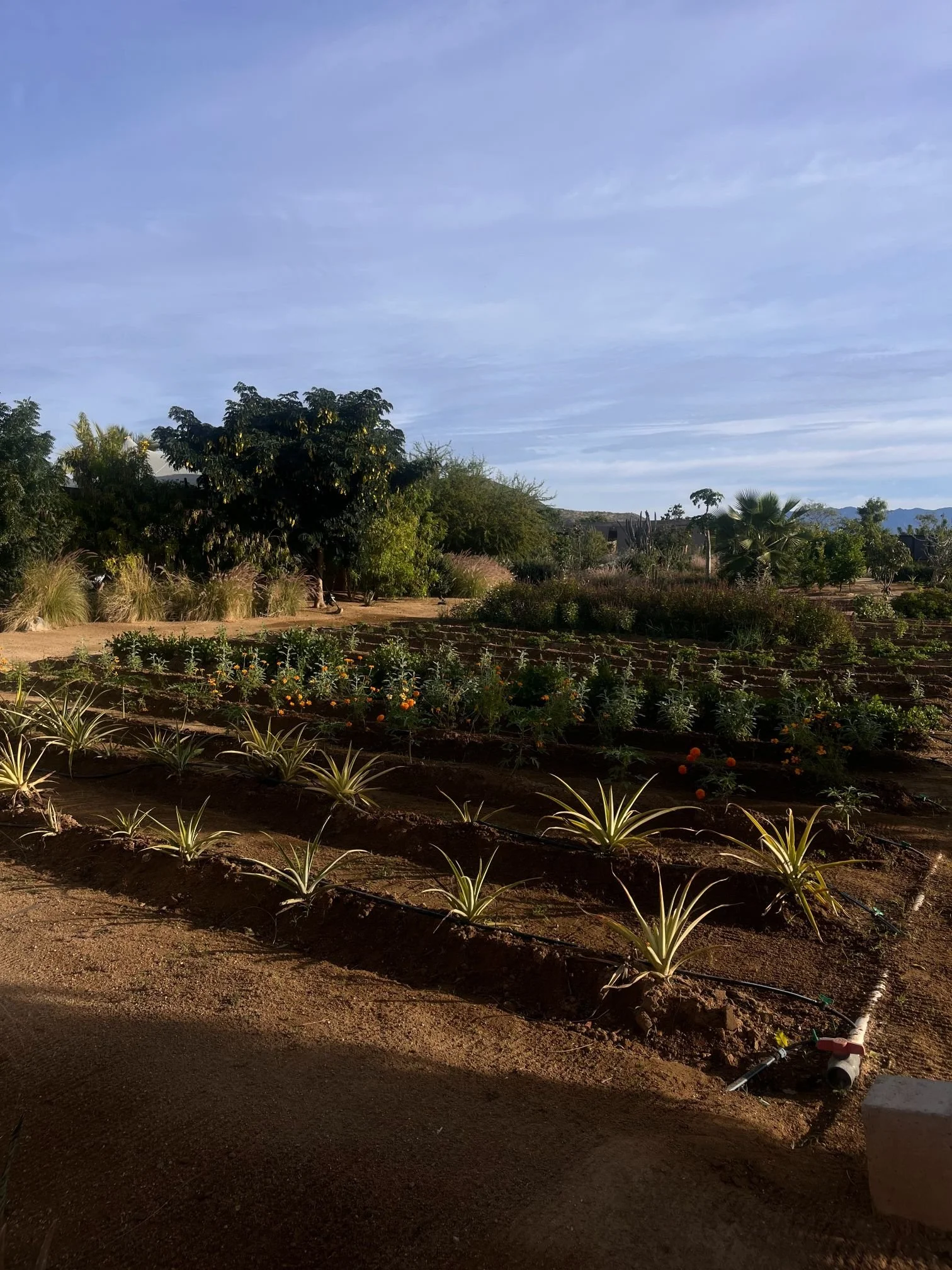
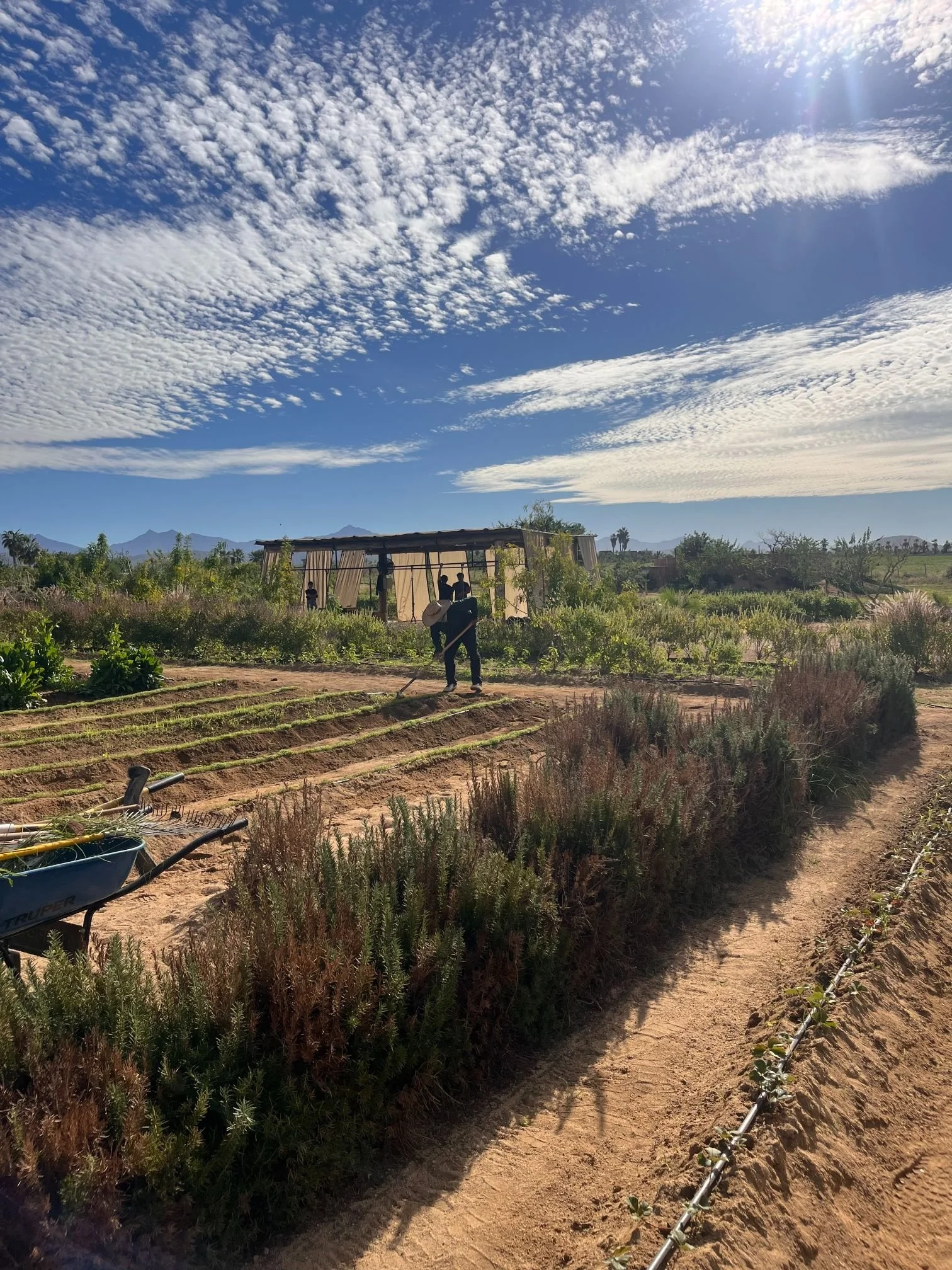
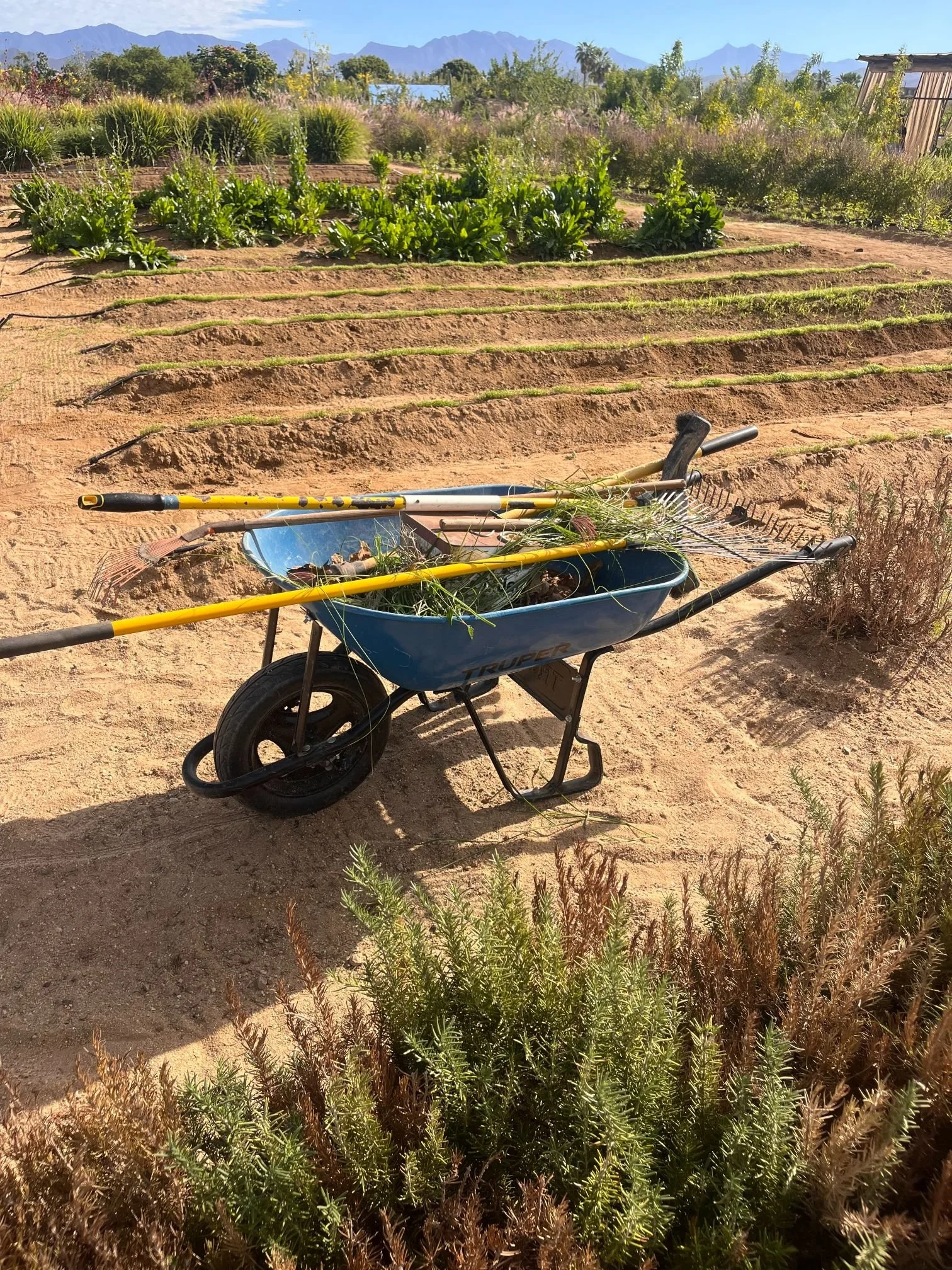
More than an aesthetic feature, Paradero’s botanical gardens are the backbone of the property. Home to over 80 endemic plant species (aloe, red verbena, yucca, to name a few), the gardens are actively tended by a team whose daily labor is visible from sunrise to sunset.
At a certain point, the sound of rakes scraping against the dirt becomes white noise – calming, steady, and woven into the background.
Visibility feels especially important here. Sustainability at Paradero is not hidden behind signage or presented as an act. It’s practiced openly and authentically, woven into the guest experience through proximity and conversation via daily farm tours, cooking classes, and casual exchanges.
The gardens serve as both ecological systems and educational space, reinforcing the idea that land care is ongoing work. Something to be respected, witnessed, and appreciated.
FOOD, ROOTED IN PLACE
At Tenoch, Paradero’s Michelin recognized restaurant, cuisine is treated as an extension of the landscape rather than a departure from it.
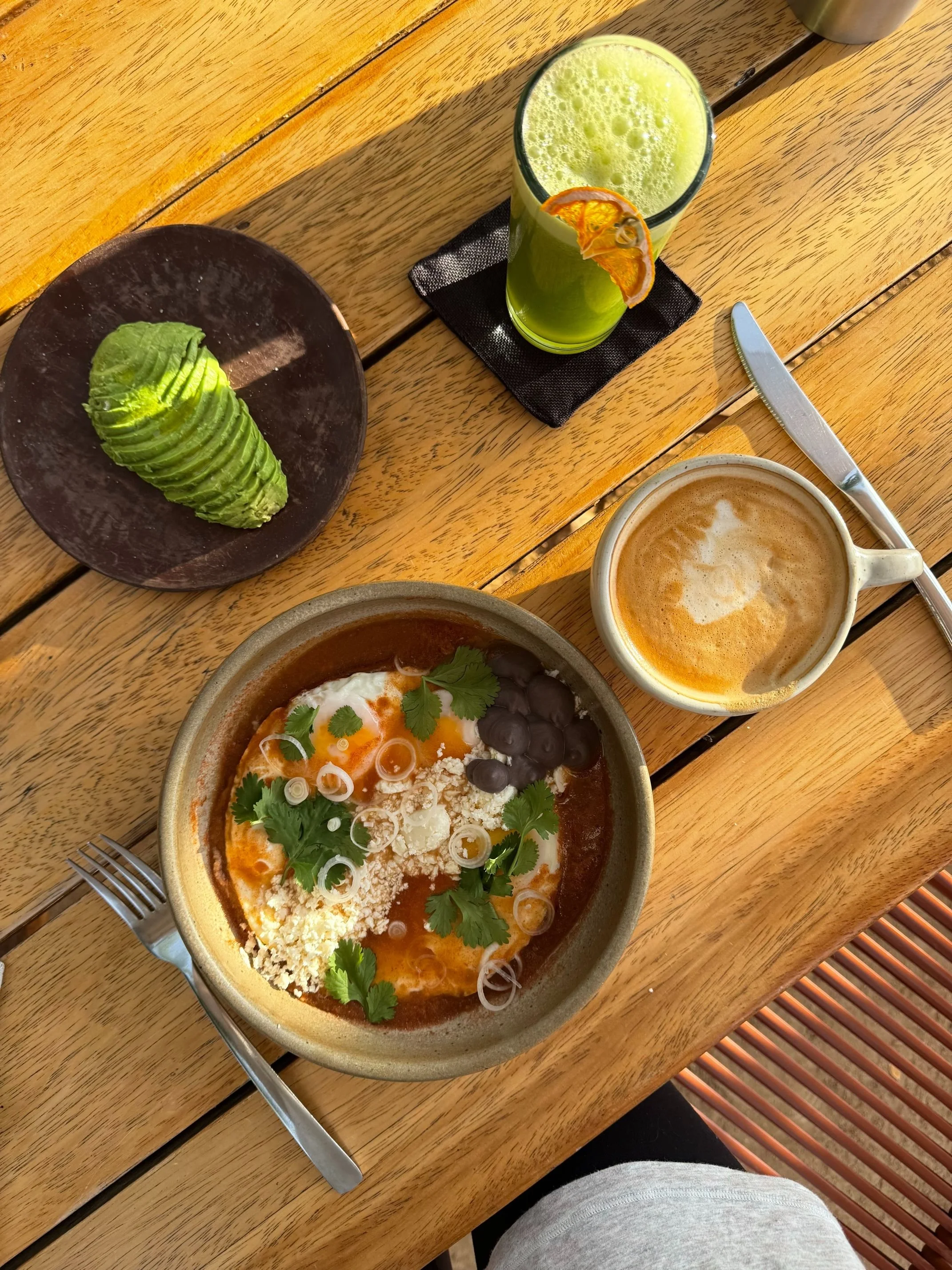
Menus are informed by local sourcing, seasonal availability, and regional techniques. Their philosophy of cooking is deeply rooted in cultural tradition, and ingredients clearly chosen with care. The approach is simple and nothing is hidden or smothered. Freshness and quality lead. Think heirloom corn tortillas, seafood caught daily, vegetables, fruits, and herbs pulled straight from the fields.
The kitchen embraces fire based cooking from the Spanish Josper oven to the Japanese hibachi grill and the Mexican clay comal – honoring tradition and best practice in every dish. Central to this is milpa agriculture, a 2,500-year-old Aztec system that cultivates a harmonious ecosystem of corn, beans, squash, fruit trees, and over 50 plant species. This regenerative practice forms the foundation of Tenoch’s ingredients, restoring the land for generations to come.
While there’s truly no need to leave the property for meals or experiences, a short drive brings you to Agricole, a cooperative farm and restaurant worth the small excursion. Like Paradero, Agricole centers on sustainable farming, organic provisions, and slow living. Their manifesto speaks to stewardship – honoring soil, respecting growth cycles, and embracing farming as cultural and ecological memory. Not to mention some of the freshest fresas con crema you may ever eat!
“Sustainability emerges not as a branded initiative, but as a shared responsibility and way of life. It’s something you feel most clearly once you leave, when the contrast becomes apparent, reminding you of its impact on both body and mind.”
SERVICE
Another defining element of Paradero is its emphasis on the people who maintain it. Gardeners, farmers, and staff are not on the outskirts of the experience, but are central to it and a key reason you leave wanting to return.
What makes the staff so special is their generosity and willingness to connect – learning guest preferences, sharing intimate knowledge of the land, and offering insight into what makes Paradero truly unique. Cesar, a man who has worked at Paradero since it opened, seemed to intuitively understand what guests were seeking. I found myself coming to share conversations about life, love, and culture with him. He made me a cappuccino one morning with a dolphin and seagull outlined in the froth – now that’s art.
While there is still a distinction between guest and staff, the comfort that develops allows for real rapport – something that, to me, makes a stay far more memorable.
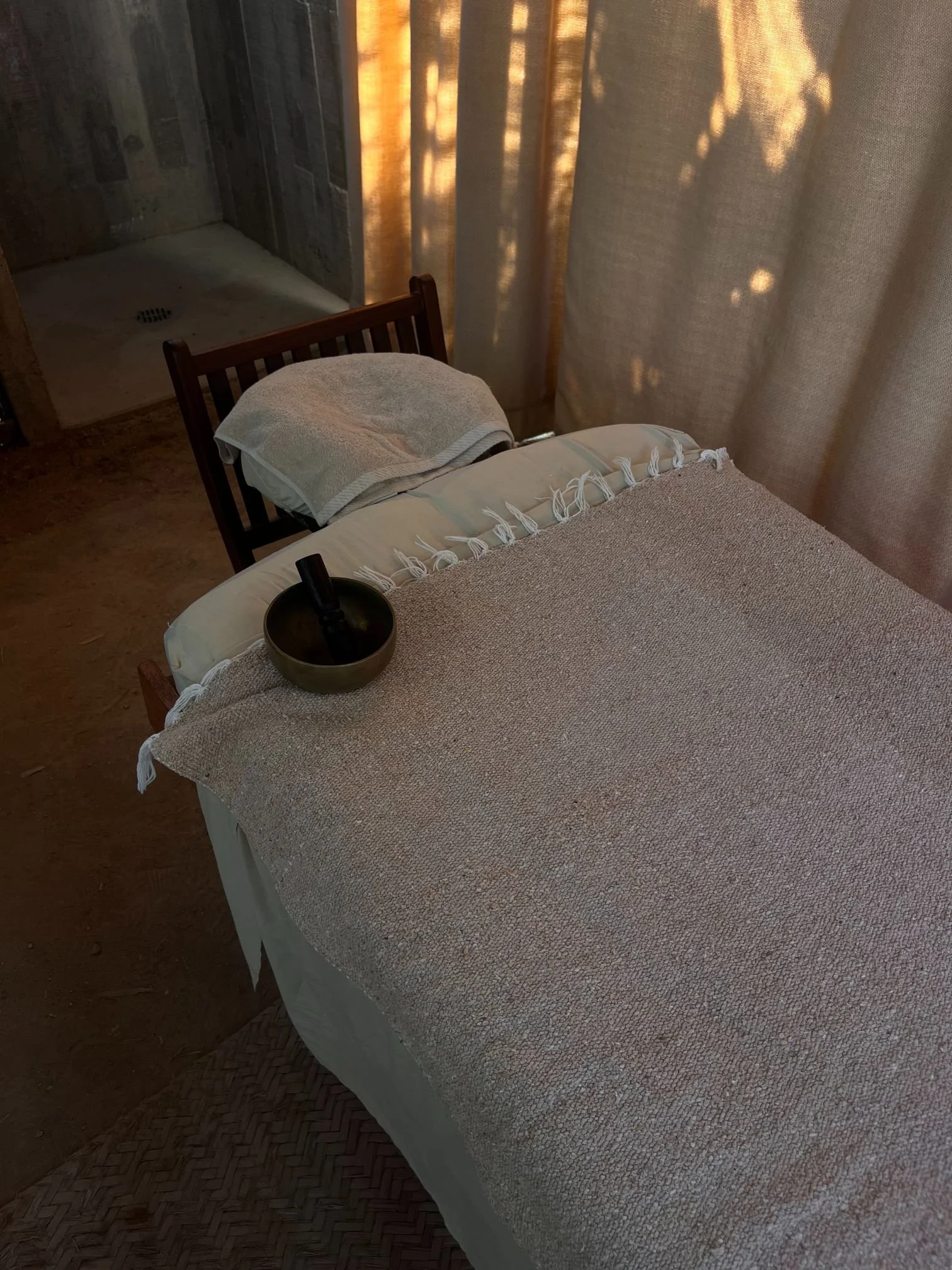
Guests are guided by the staff (who are all locals) on daily excursions included in the stay: think early morning hikes, sunny beach days with surf lessons, farm tours, guided meditations, breathwork, temazcal ceremonies, and art walks through Todos Santos – a town shaped by artists, farmers, and craftspeople.
SUSTAINBILITY
Paradero’s approach to sustainability is operational rather than symbolic. Water conservation, land regeneration, and low impact systems are embedded into daily life. From the moment guests arrive, the quiet beauty of the environment offers gentle guidance, shaping how one moves, rests, and relates to the space.
Water feels precious, sacred.
Time stretches, consumption slows.
Sustainability emerges not as a branded initiative, but as a shared responsibility and way of life. It’s something you feel most clearly once you leave, when the contrast becomes apparent, reminding you of its impact on both body and mind.
—
At Paradero, what you take away is that slow and simple is luxury. While yes, these are extremely considered accommodations that ensure guests feel at ease and cared for, it’s not about expensive hand soap in the bathroom, meals plated to the nines, or silk sheets you rest your head on each night.
Luxury here is defined through environmental responsibility, cultural continuity, and thoughtful design. It’s a place where the experience is measured not in scale or speed, but in care and consideration – offering a sense of ease and a quiet certainty that you’ll someday return.
For more information Paradero Todos Santos, visit paraderohotels.com
Article published for ONE Magazine Online, ONE Stays
YOU MIGHT ALSO LIKE





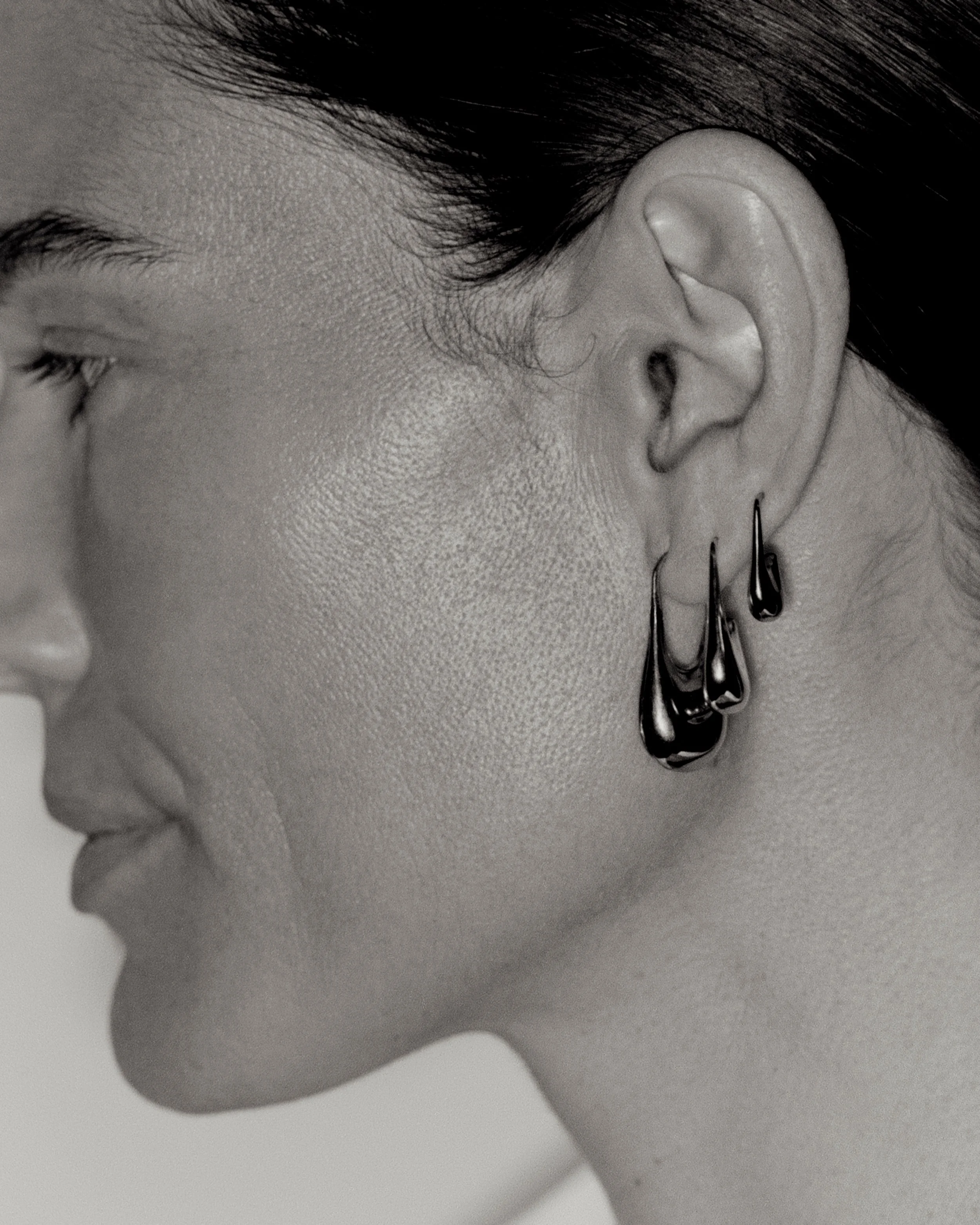

We spoke with Kindred Black founders Jennifer and Alice about redefining beauty as a collection of curiosities rich with history and symbolism. Their timeless approach transforms skincare vessels into collectible art and ingredients into meaningful narratives, alongside the recent launch of their first jewelry collection designed as personal talismans.